Tuesday, July 29, 2014

Taishō Posters

The images below are Japanese posters 
from ~the first quarter of the 20th century.

"The Taishō period^ (大正時代 Taishō jidai?), or Taishō era, is a period in the history of Japan dating from July 30, 1912, to December 25, 1926, coinciding with the reign of the Emperor Taishō". Some of the posters carry over to the early Shōwa era: Emperor Shōwa (Hirohito)^ reigned from 1926 to 1989.
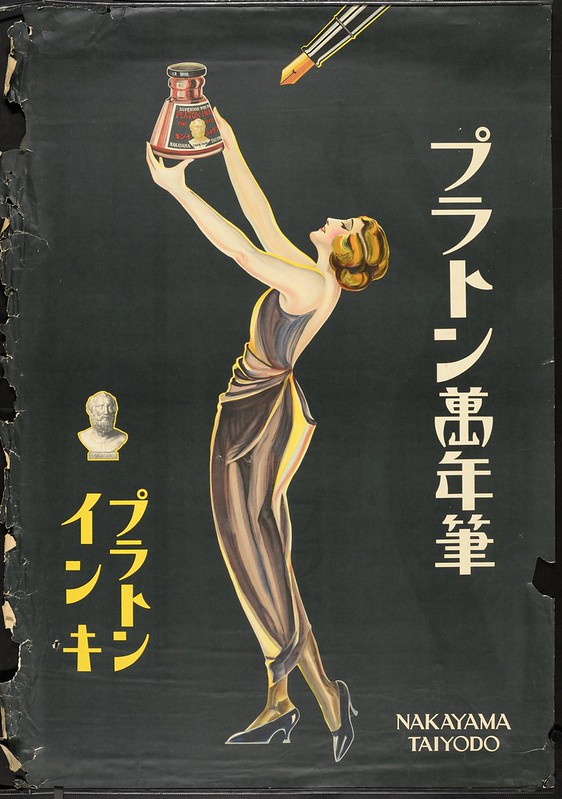


commercial print of woman holding ink bottle
Title: Puraton mannenhitshu: Puraton inki [Woman with an ink bottle]
Description: A woman holding an ink bottle. Nakayama Taiyodo. Platon ink and pen (プラトンインキ, プラトン万年筆).
Subject (company): Nakayama Taiyōdō; 中山太陽堂
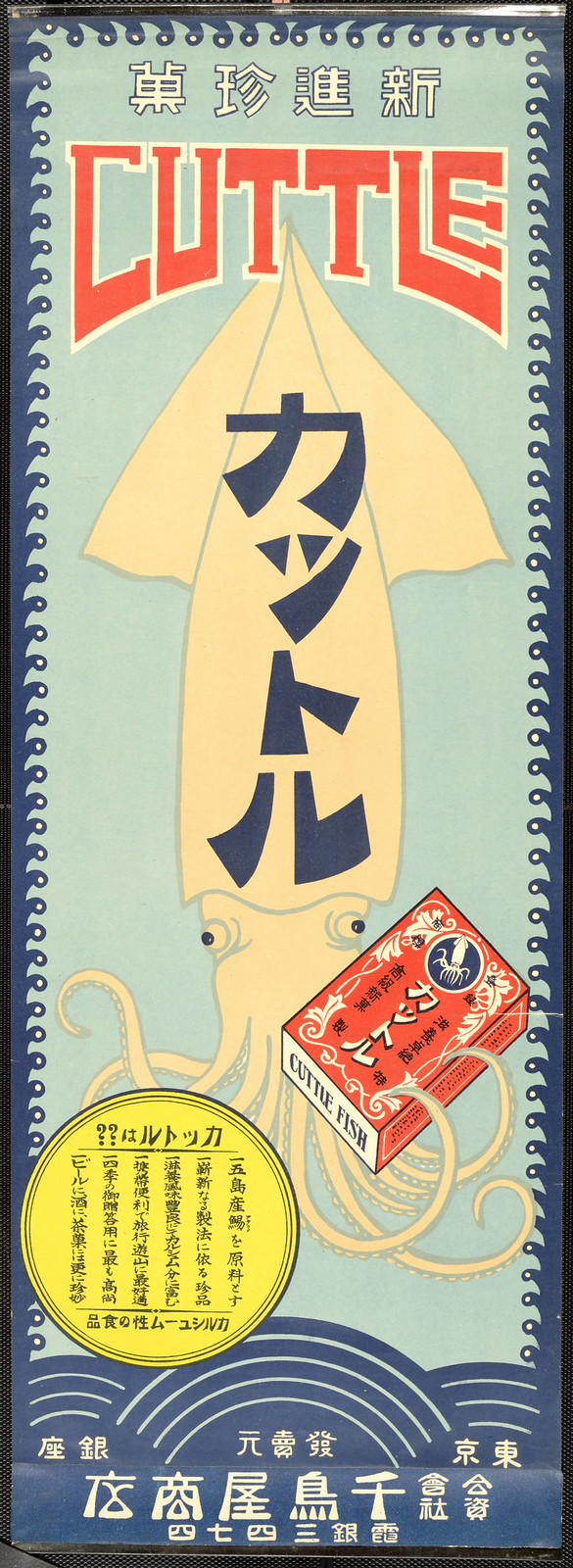


Japanese lithograph of Cuttlefish with typographic advertisement overlay
Title: Shinshin chinka Kattoru = Cuttlefish [Cuttlefish] 新進珍菓カットル
Description: A cuttlefish. "Cuttle" or "Cuttle Fish" (a snack), Chishima-ya Shoten (千島屋商店).
Subject (Company): Snack foods
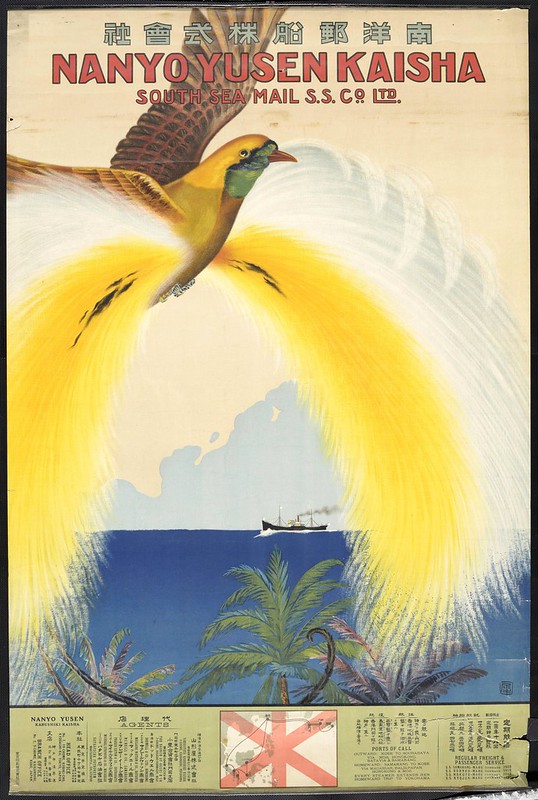


yellow bird of paradise lithograph advertising poster
Title: Nan'yō Yūsen Kabushiki Kaisha = Nanyo Yusen Kaisha = South Sea Mail S. S. Co., Ltd. [Bird]
Description: A tropical yellow bird flying over the ocean.
Subject (Company): Nan'yō Yūsen Kabushiki Kaisha; 南洋郵船株式会社
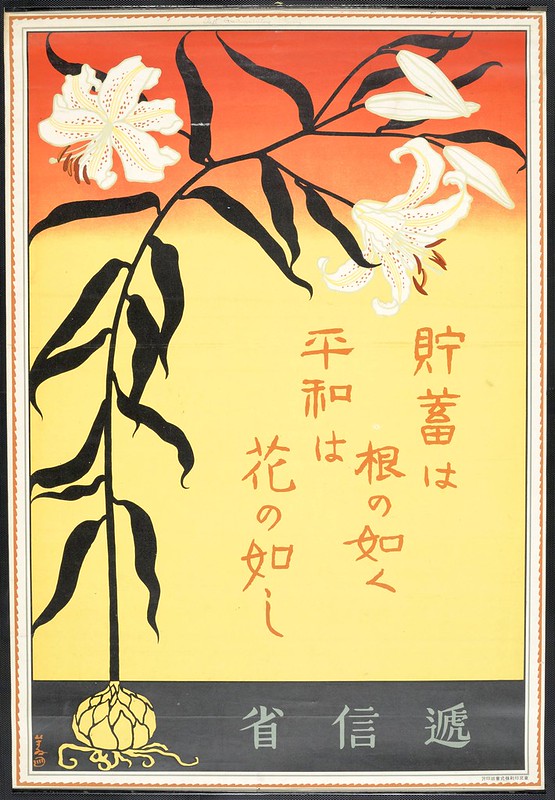


illustration of stylised lillies as part of advertising poster for a Japanese bank
Title: Chochiku wa ne no gotoku, heiwa wa hana no gotoshi [Lillies] 貯蓄は根の如く, 平和は花の如し
Description: Chochiku, chokin (Savings)
Subject (Company): Japan. Teinshinshō; Japan. 逓信省
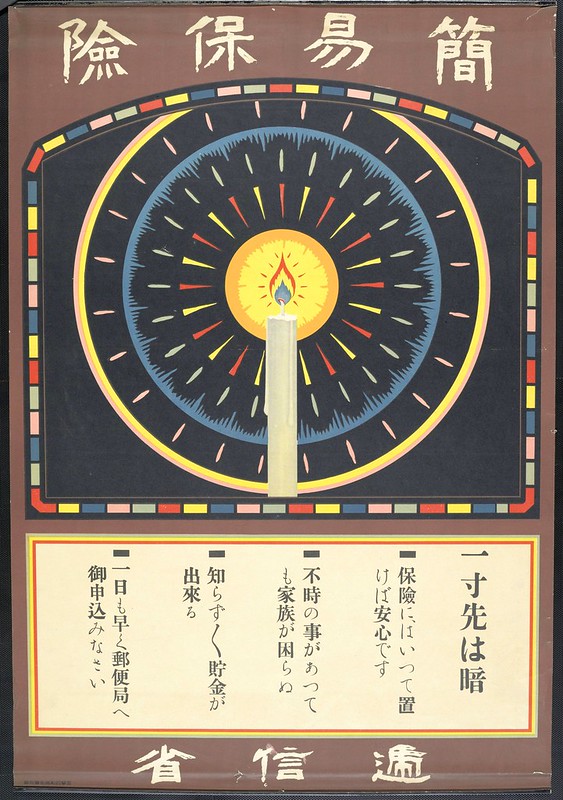


stylised graphic poster featuring candle and words in Kanji script
Title: Kan'i hoken: issunsaki wa yami [Candle] 簡易保險:一寸先は暗
Description: Kan'i Hoken (Postal life insurance).
Subject (Company): Japan. Teinshinshō; Japan. 逓信省
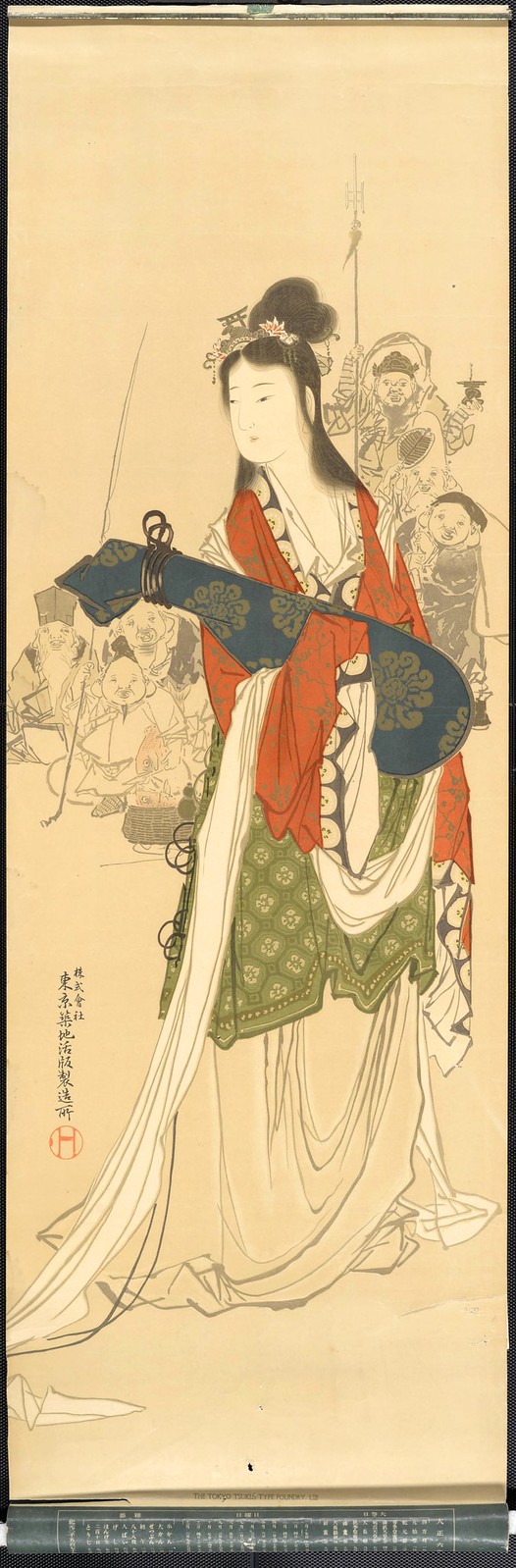


ukioy-e print in colour of woman in traditional Japanese costume walking, with small crowd behind watching her
Title: Kabushiki Kaisha Tōkyō Tsukiji Kappan Seizōsho = The Tokyo Tsukiji Type Foundry, Ltd. [Goddess] 株式會社東京築地活版製造所
Description: A goddess holding a musical instrument. Tokyo Tsukiji Type Foundry, Ltd. (東京築地活版製造所). Marked with "H" [Hirano, Tomiji 平野富二?].
Subject (Company): Foundries
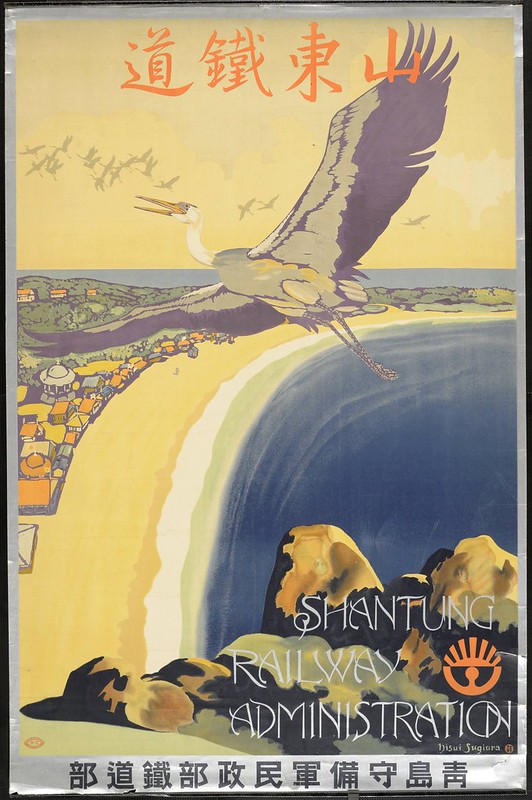


Japanese colour print of coast beach with crane flying above - advertising poster
Title: Santō Tetsudō [Cranes] 山東鐵道
Description: Cranes flying over Shantung. Santo Tetsudo. Shantung Railway Administration in the Chintao Garrison Army. Marked with [Shantung Railway's logo?]. 青島守備軍民政部鉄道部.
Subject (Company): Railroad Companies
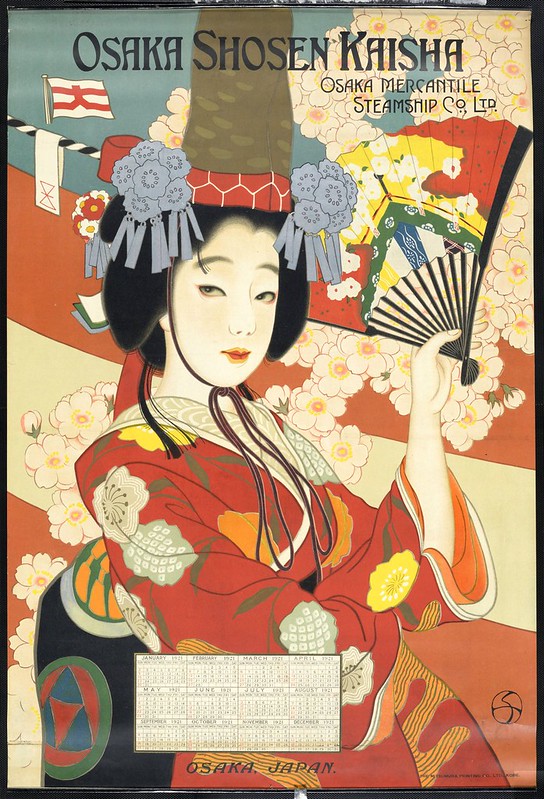


lady in red kimono holding fan - Japanese steamship advertising poster
Title: Osaka Shosen Kaisha = Osaka Mercantile Steamship Co., Ltd. [Woman in red kimono]
Description: Osaka Mercantile Steamship Co. Ltd. A woman in red kimono holding a fan. Marked with the company's symbol, a flag with a character "大."
Subject (Company): Ōsaka Shōsen Kabushiki Kaisha 大阪商船株式会社
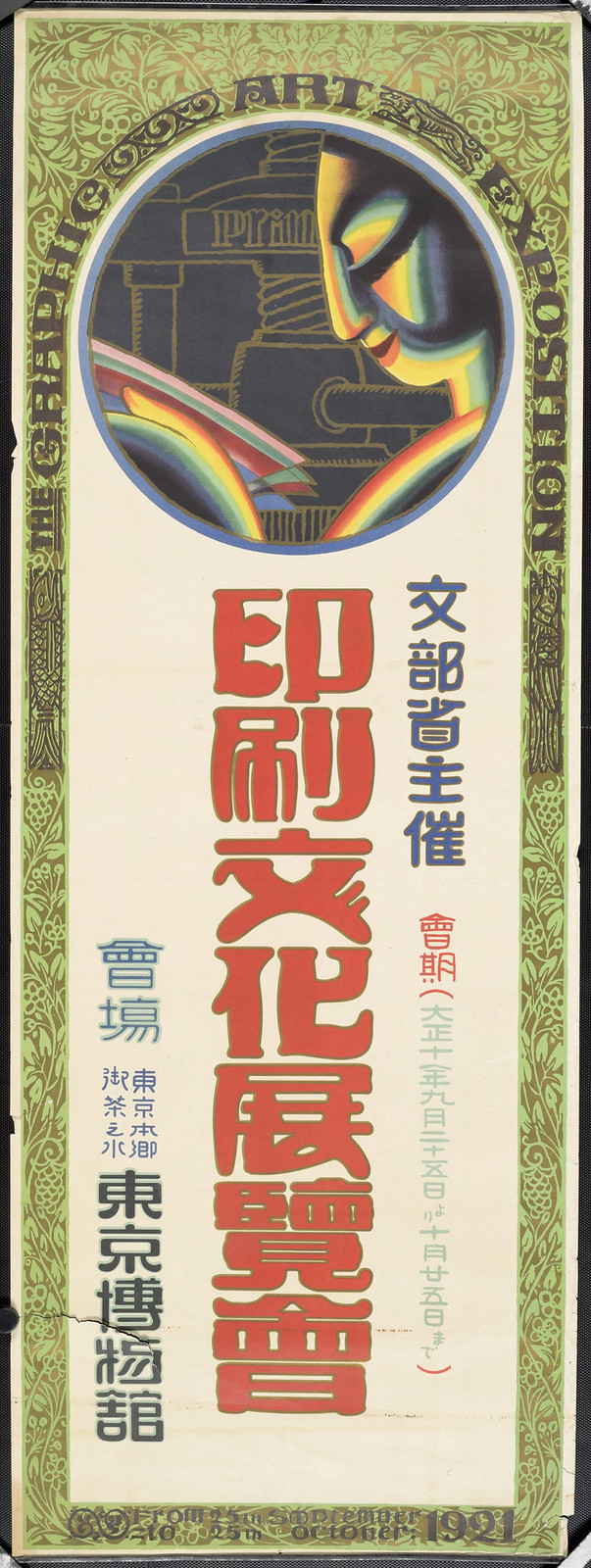


Japanese poster for graphic art exhibition 1920s - abstract face and typography
Title: Monbushō shusai Insatsu Bunka Tenrankai = The Graphic Art Exposition: kaiki Taishō jūnen kugatsu nijūgonichi yori jūgatsu nijūgonichi made = from 25th September to 25th October, 1921: kaijō Tōkyō Hongō Ocha no Mizu Tōkyō Hakubutsukan [Insatsu Bunka Tenrankai] 文部省主催印刷文化展覽會: 會期大正十年九月二十五日より十月廿五日まで: 會場東京本郷御茶之水東京博物舘
Description: Graphic Art Exposition - Insatsu Bunka Tenrankai, held at Tokyo Hakabutsukan, September 25 - October 25, 1921.
Subject (Company): Exhibitions / Tokyo
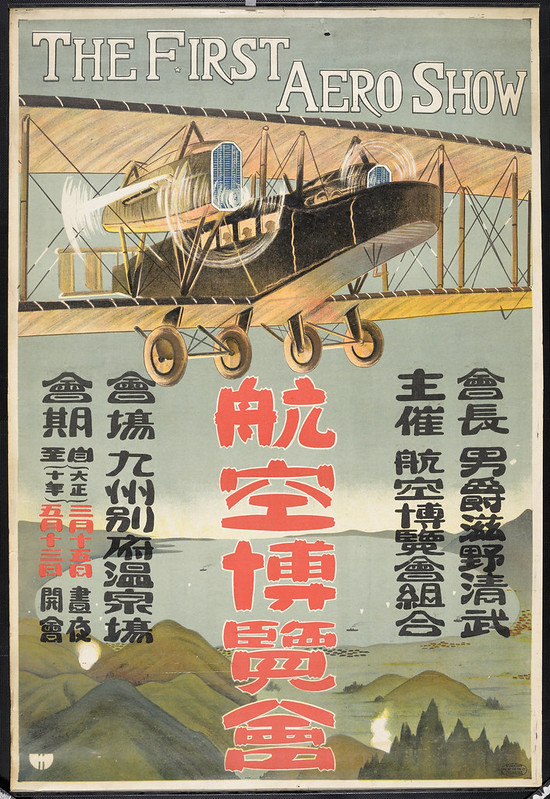


biplane illustration in Japanese advert, early 20th century
Title: Kūkō Hakurankai = The First Aero Show: kaichō Danshaku Shigeno Kiyotake, shusai Kūkō Hakurankai Kumiai: kaijō Kyūshū Beppu Onsenjō, kaiki Taishō jūnen sangatsu jūgonichi yori gogatsu jūsannichi made [Airplane] 航空博覽會: 會長男爵滋野清武, 主催航空博覽會組合: 會場九州別府温泉場, 會期自大正十年三月十五日至五月十三日
Description: First Aero Show, held in Kyushu, March 15 - May 13, 1921, and chaired by Baron Shigeno Kiyotake (滋野清武).
Subject (Company): Shigeno, Kiyotake, 1882-1924 滋野清武, 1882-1924
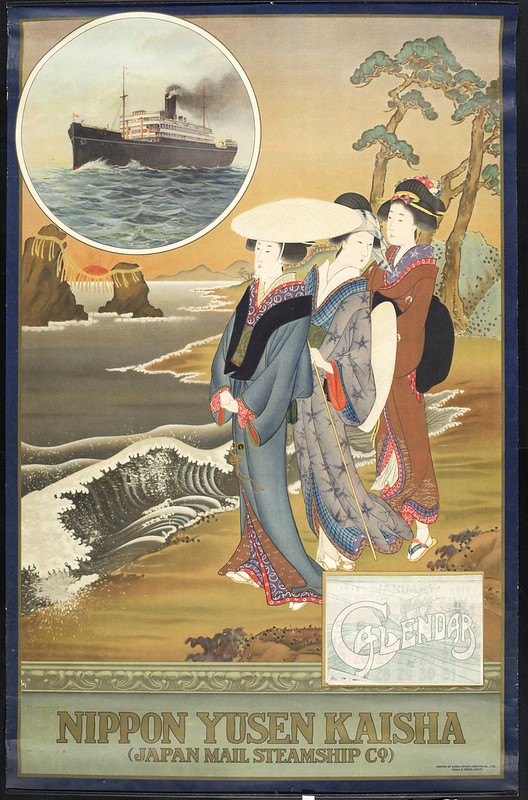


3 Japanese woman in kimonos at edge of beach near waves with ship in distance
Title: Nippon Yusen Kaisha = Japan Mail Steamship Co. [Three ukiyo-e women]
Description: Three Ukiyoe women in kimono standing at the shore
Subject (Company): Nihon Yūsen Kabushiki Kaisha 日本郵船株式会社
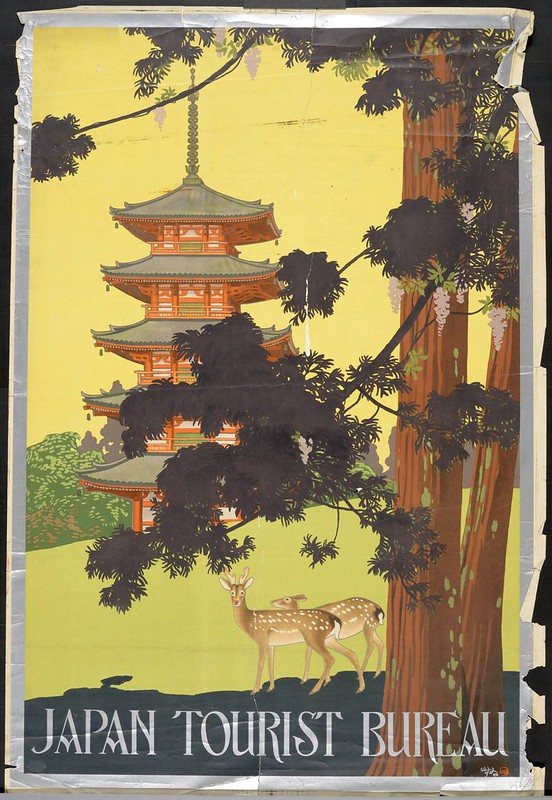


colour printed poster of tall thin pagoda with tree and deer in foreground - tourist poster for Japan
Title: Japan Tourist Bureau [Five-story pagoda]
Description: A deer, a pagoda, and pine trees.
Subject (Company): Nihon Kōtsu Kōsha Japan Tourist Bureau 日本交通公社 (Railroad Companies)
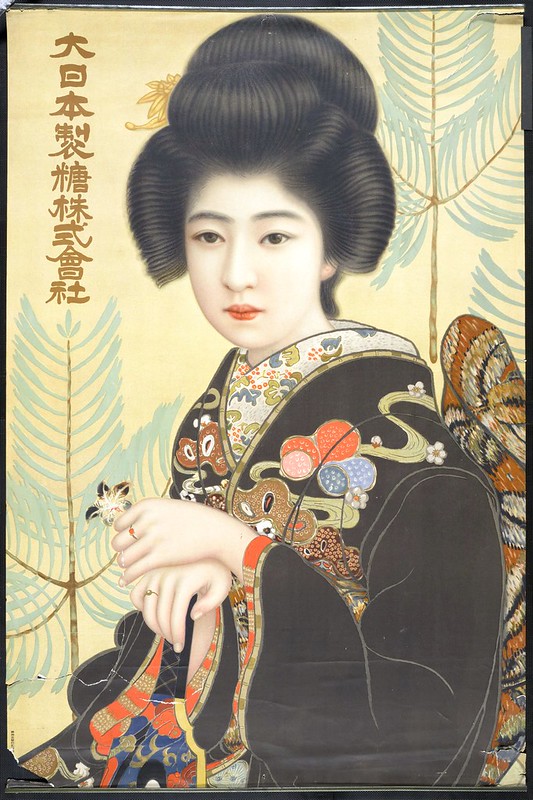


Japanese woman in kimono looking intently at us, the audience; opalescent face
Title: Dai Nippon Seitō Kabushiki Kaisha [Woman in black kimono] 大日本製糖株式會社
Description: A woman in black kimono. Sugar refining company.
Subject (Company): Dai Nippon Seitō Kabushiki Kaisha; 大日本製糖株式会社
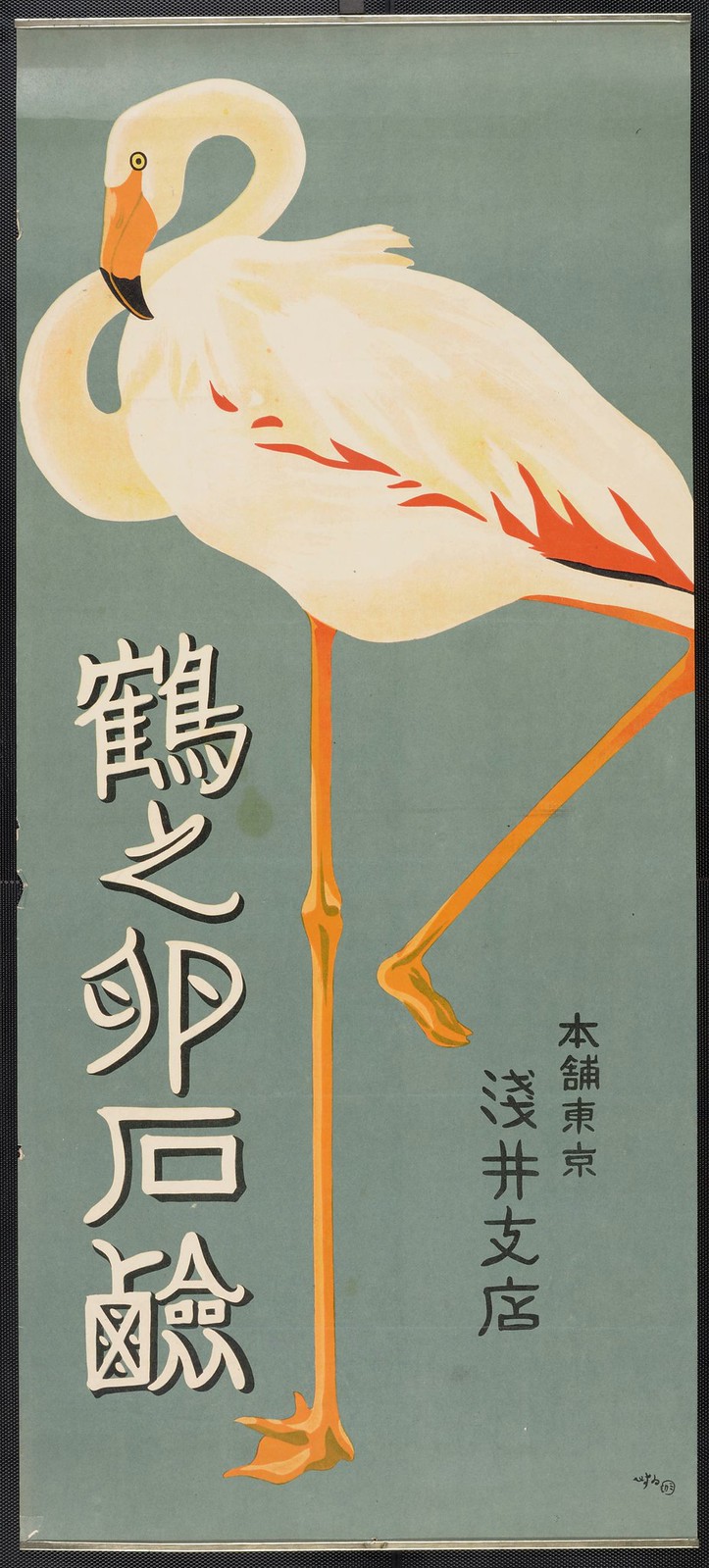


tall thin printed poster in colour dominated by crane standing on one leg
Title: Tsuru no Tamago Sekken [White crane] 鶴之卵石鹼
Description: A white crane. Tsuru no Tamago Sekken (soap). Asai Shiten (浅井支店)
Subject (Company): Cosmetics--Manufacture
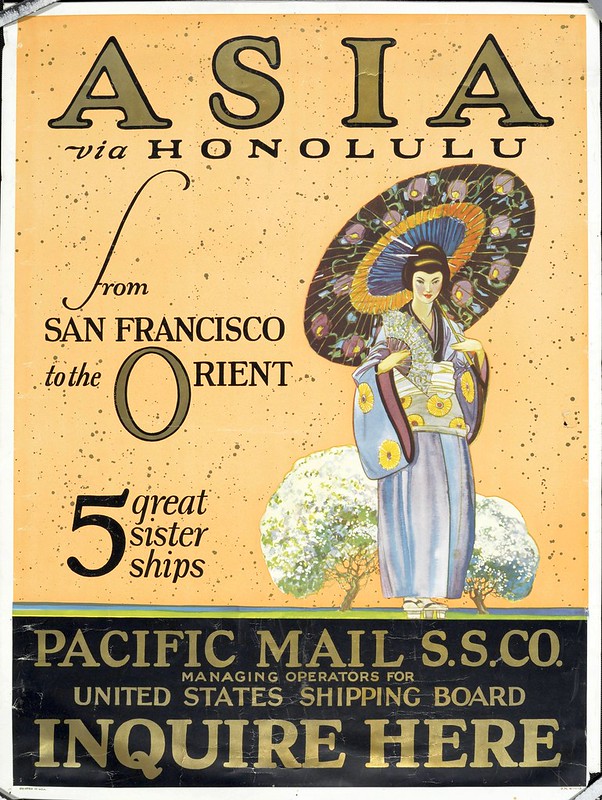


advertising poster about travel with traditional Japanese woman in kimono and umbrella off to one side
Title: Asia via Honolulu from San Francisco to the Orient: 5 great sister ships [Woman with an umbrella]
Description: An American steamship company
Subject (Company): Pacific Mail Steamship Company
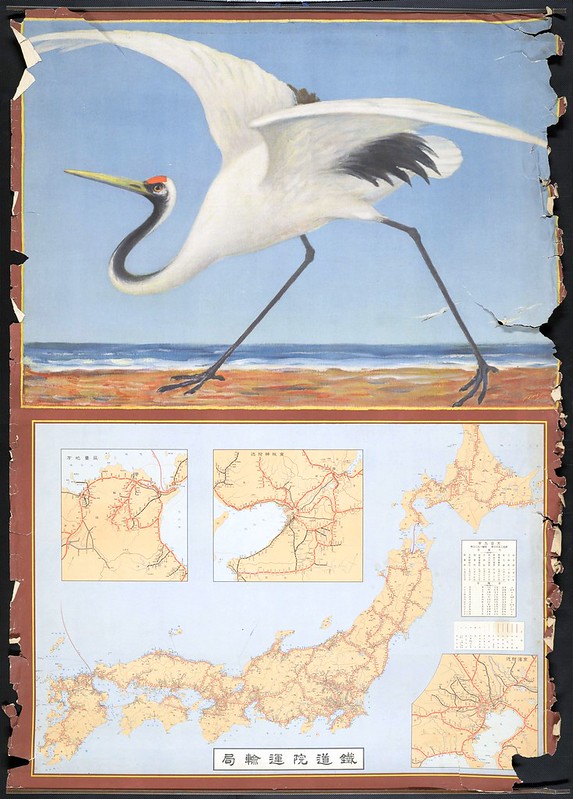


poster: top half is crane with outstretched wings + bottom half has maps of Japan and Japanese locales
Title: Tetsudōin Un'yukyoku [Crane] 鐵道院運輸局
Description: A crane and railway maps of Japan. The Transportation Division of the Railway Bureau
Subject (Company): Japan. Tetsudōshō. Unʼyukyoku Japan. 鐡道省. ǂb 運輸局
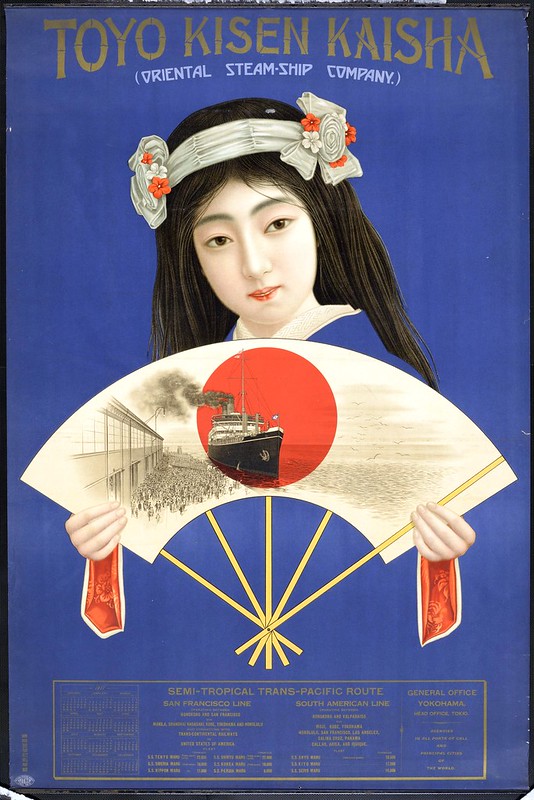


poster in colour with young Japanese lady in head band holding open a fan with a ship silhouetted in the sun of a Japanese flag - advertising poster
Title: Toyo Kisen Kaisha = Oriental Steam-Ship Company [Woman with a fan]
Description: A woman in blue kimono holding a fan
Subject (Company): Tōyō Kisen Kabushiki Kaisha 東洋滊船株式會社


The University of Southern California's Digital Library display a series of early 20th century Japanese posters, contributed by USC's East Asian Library.

The poster topics in the collection include: travel, Ministry of Communications, commercial products and companies, and expositions.

Thanks to Will C!
This post first appeared on the BibliOdyssey website.

Thursday, July 24, 2014

Le Bestiaire Fabuleux

A mid-20th century collaboration between artists, poets and printers gave rise to a unique book of surrealistic creatures accompanied by complementary typographic art poems.

The original gouache designs of fabulous beasts were produced by Jean Lurçat, which inspired poems by Patrice de la Tour du Pin. The sketches were rendered as lithographs by Vairel Edmond and the poems were turned into calligrams* by Jules-Dominique Morniroli. The book was printed/published in a limited edition by Maurice Darantiere at P. Gaudin in 1948.

At least a couple of the participants in this project became friends while working for the French underground during World War 2.

"A calligram is a poem, phrase, or word in which the typeface, calligraphy or handwriting is arranged in a way that creates a visual image."
Previously: Zoomorphic Calligraphy || Hebrew Micrography.


Jean Lurçat bestiary : semi-abstract gouache + lithograph
La Puce Cerf Volant


Jean Lurçat bestiary gouache + lithograph
La Tortu


Jean Lurçat bestiary: semi-abstract gouache + lithograph
L'Araignée

ADDIT: Poem transcription/translation by Rolland B:

Araignée mangeuse de reflets danseurs
Araignée cinéraire d’étoiles que nous saurons éteindre
afin que notre ciel s’étende comme un suaire de toute vie

A l’infini tisseuse de constellations mortes
sur les fosses passées et peut-être à venir
de l’étroit fleuve à vivre, lumineuse
pour je ne sais quelle cause

Probablement folle, elle tend ses filets
aux mailles si fragiles que le rêve d’un rêve
ne devrait pas s ‘y laisser prendre.


Spider, eater of dancing glimmers,
burial urn for the stars we will manage to extinguish
intending to make our skies into a shroud for anything once living,

infinitely weaving dead constellations
over past and perhaps future graves
in the narrow river of life,

glowing for some unknown reason,
probably insane, thou keeps weaving thy nets
so frail their links, the dream of a dream
could not be caught in them.


Jean Lurçat bestiary : semi-abstract gouache + lithograph
La Belle des Sables


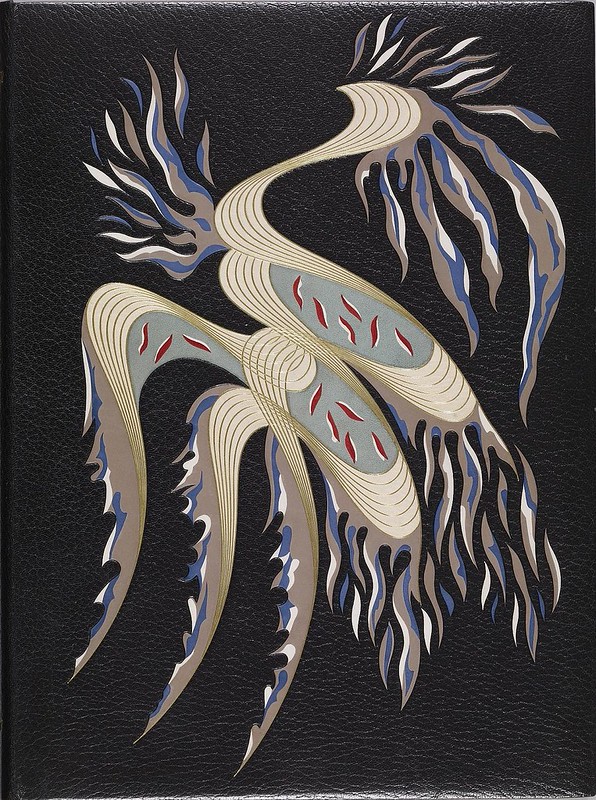
Bestiaire Fabuleux - cover binding
"This book of poems with accompanying gouaches (opaque watercolors) and calligrams (figures made up of letters) about fantastic beasts and imaginary animals was bound by Thérèse Moncey. It features an abstract, birdlike form designed by the binder and won the French Grand Prix for Bookbinding in 1950." [source] The binding was made from calfskin, goatskin, and gold.


Jean Lurçat bestiary : semi-abstract gouache + lithograph
La Puce Cerf Volant


Jean Lurçat bestiary : semi-abstract gouache + lithograph
La Lamproie des Neiges


Jean Lurçat bestiary : semi-abstract gouache + lithograph
Le Craporphée

ADDIT: Translation kindly supplied by Alcebiades DM:

He is the one lurking around
From the pre-Human night
Where we go
the Heart unquietness,
sometimes the Mind,
often the Dream,
And lead to the suffocating
thick vases
The invitation to pure beauty,
and the promise

That all life can discover
his musical note...
Without him, relinking
the blind fauna of deep shadows
Indistinguishable to our eyes
made to the Sun,
With the Matters of Joy?
Without Orpheus
And his crystal seed,
The blood will choke us all…


Jean Lurçat bestiary : semi-abstract gouache + lithograph
Le Papillon Vert


Jean Lurçat bestiary : semi-abstract gouache + lithograph
Le Serpent

ADDIT: Translation/Transcription kindly supplied by Rolland B:
{I may get around to polishing the English, which is not Rolland's primary language}

Le serpent qui jadis donna son rythme au monde,
serpent épousant toutes les vagues du temps
dessinant les questions en s’enlaçant lui-même
(illisible) les paradis

Quand il prit leur couleur aux quatre fleuves,
son sifflement aux trilles du sang dans les oreilles,
c’est donc de lui que nous renaquîmes
et même sur les dunes silencieuses de la pensée, passer sans nom;
J’entends cette promesse de vivre par mon absence.


The Serpent long ago gave its rhythm to the world,
serpent following the waves of Time
shaping the Questions by coiling round itself,
( one word illegible) the Paradises,

As it borrowed its colors from the Four Rivers,
and its hissing from the humming of the blood in the ears
Thus, from it we are born again.
Even on the silent dunes of Thought, it slides without a name.
Even as I am absent, I can hear this promise of life,


"Jean Lurçat (1892-1966) was a French Expressionist/Surrealist artist born in Vosges. He was exposed to art as a young boy when his parents introduced him to the founder of the Ecole Nancy, Victor Prouve. He traveled to Paris when he was 20, enrolling at the Ecole des Beaux-Arts and then the Academie Colarossi. Throughout his career, Lurçat would form a style of his own, derived from his travels through the Mediterranean, North Africa and the Middle East. His unique style had a primitive, native art feel and was composed of symbols and hieroglyphic-like imagery. Within this style, he created ceramics, paintings, tapestry and a number of other art pieces.
It was in fact Lurçat's tapestry creations that brought him the most attention, and he is even often credited with bringing this age old art form back into fashion. He has been called the leading tapestry designer of the 20th century, and worked for the Aubusson factory creating his textile designs. During his lifetime, Lurçat also traveled to Spain and the Sahara where he was influenced to paint a number of Surrealist landscapes. He was only briefly associated with the Surrealist movement, as he experimented often with Expressionism and tribal art." [source]

"Patrice de La Tour du Pin (1911–1975) was a major French, Catholic poet of the mid-twentieth century. As a poet, he achieved fame for individual collections of poems as well as Une Somme de poésie, a three-volume multi-genred work he wrote and continually revised throughout his life. Late in his career, de La Tour du Pin distilled and collected his most powerful lyrical poems, written in the form of psalms, into Psaumes de tous mes temps. These psalms trace de La Tour du Pin’s combined interest in poetry and religion and articulate his struggle to find poetic authority and spiritual meaning in the midst of world war and modern tumult." [source]


'Le Bestiaire Fabuleux' consists of 14 lithographs of Lurçat's abstracted figures, the majority (but not all!) of which have been posted above. To see any omissions, you will have to visit the source site. The images were uploaded in 2011 in celebration of the 100th anniversary of Patrice de la Tour du Pin's birth. It's a shame the images are only of a modest size, though the fabulous surreal animals mirrored by poetic calligrams make this book too unique a work to pass up for so minor a detraction. I saw no commentary about the poems' content and I decided to skip the opportunity to embarrass (like that would have been the first time) myself with poor-to-partial translation guesses. If anyone can work out the gist or full meaning of the calligrams, please leave a comment or send me an email (gmail peacay).


Sunday, July 13, 2014

Erucarum Ortus

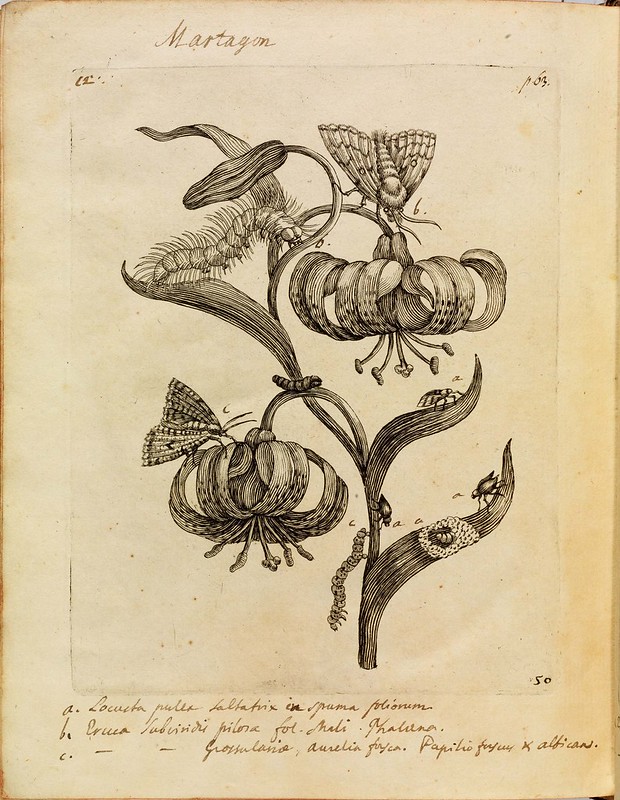
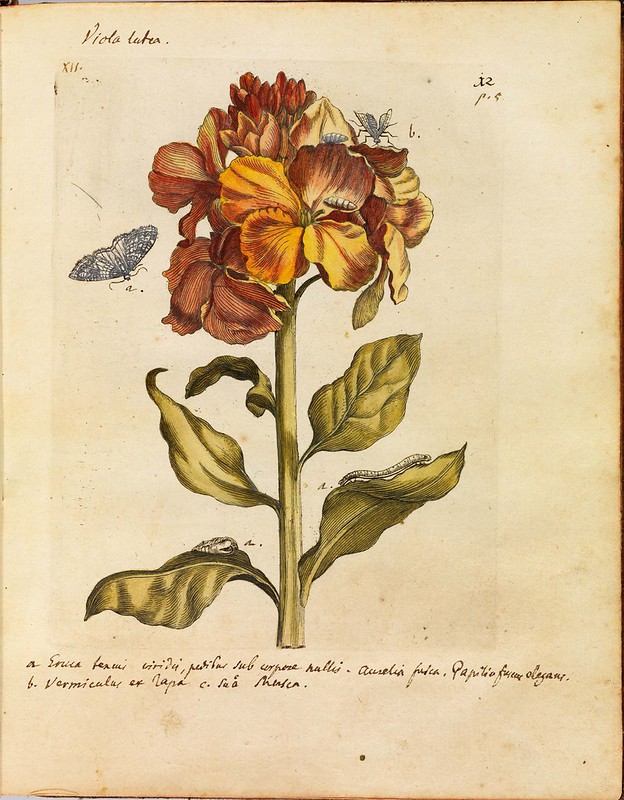
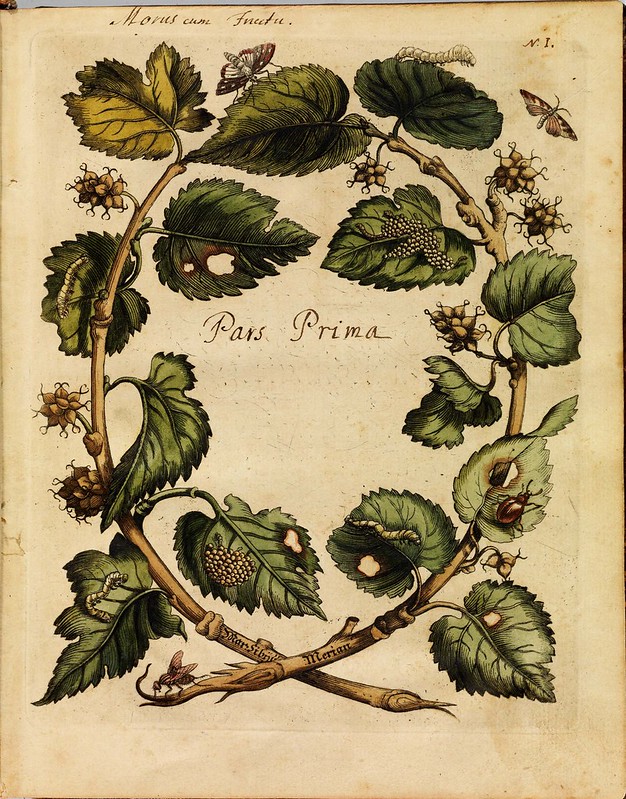
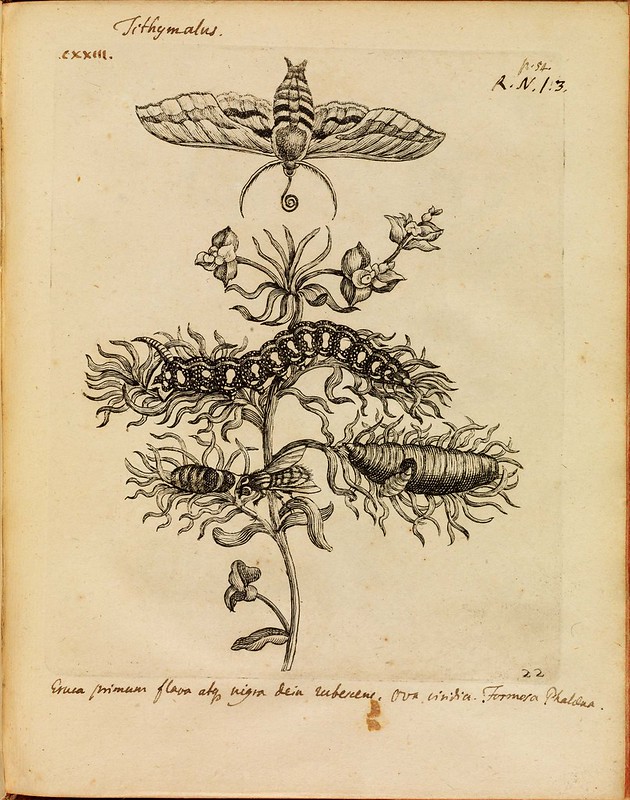
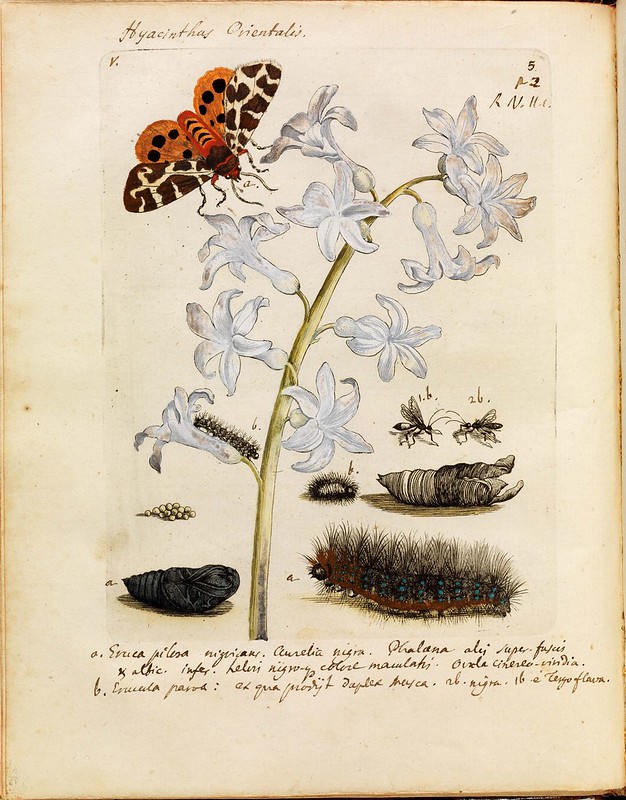
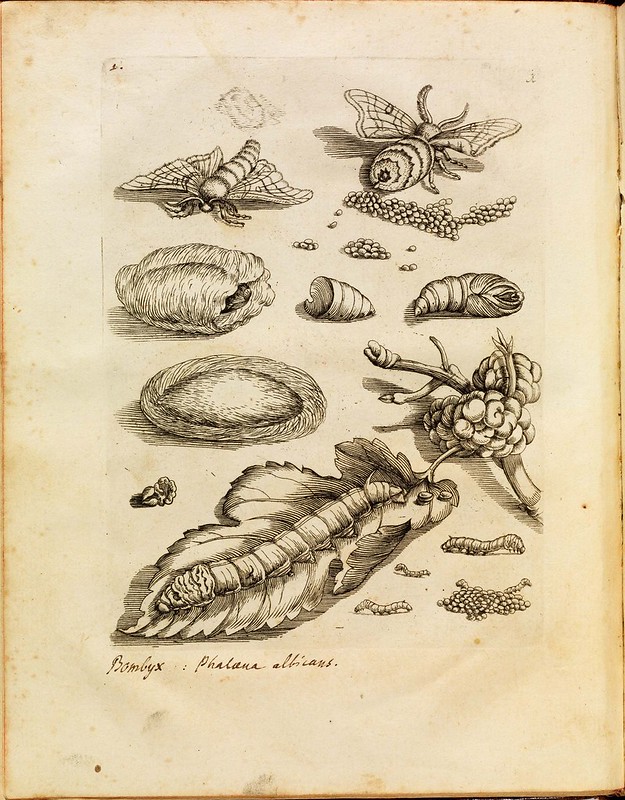
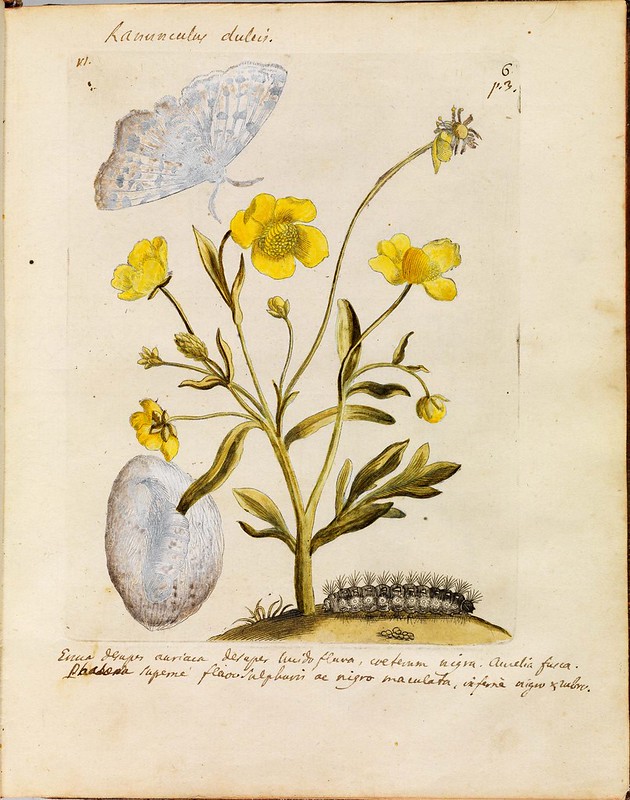
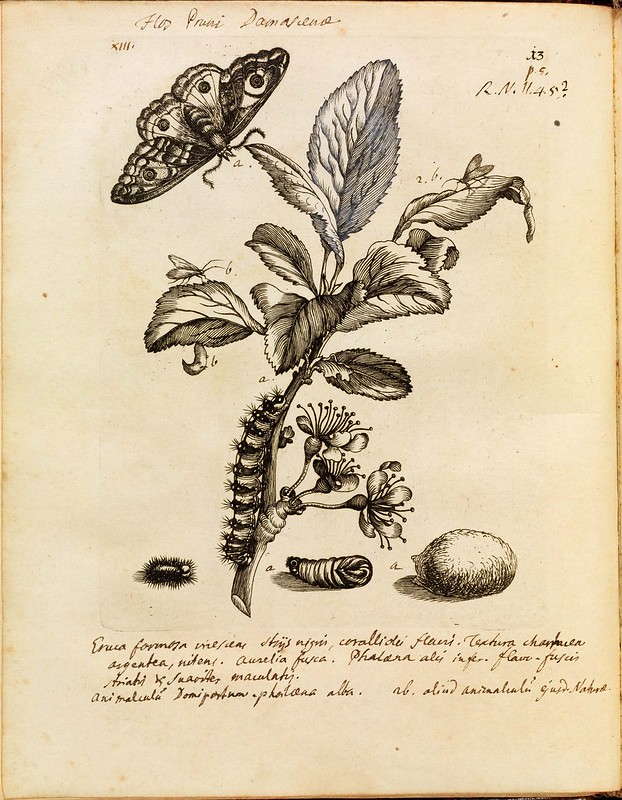
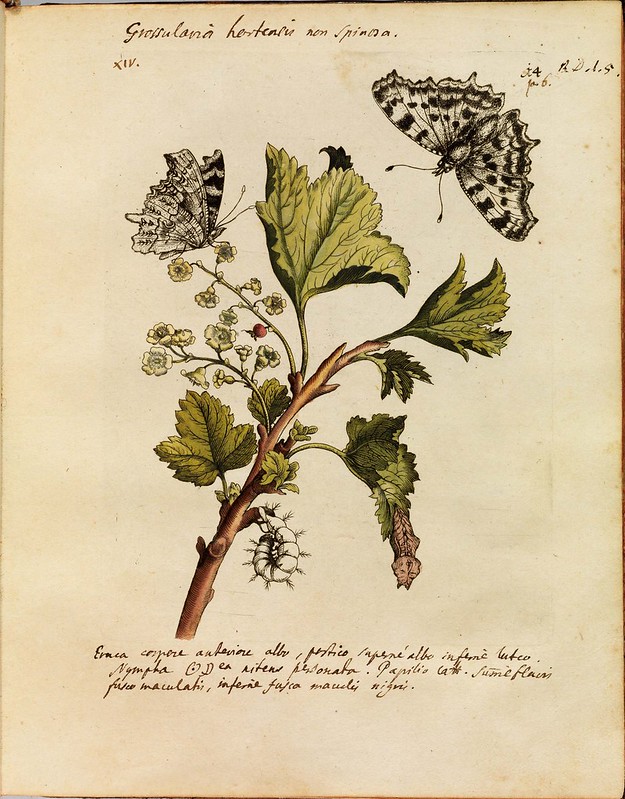
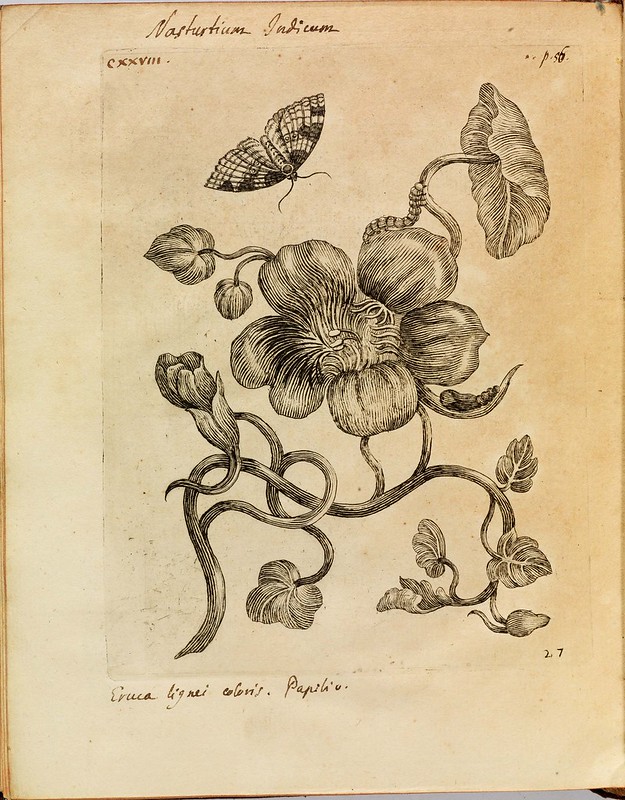
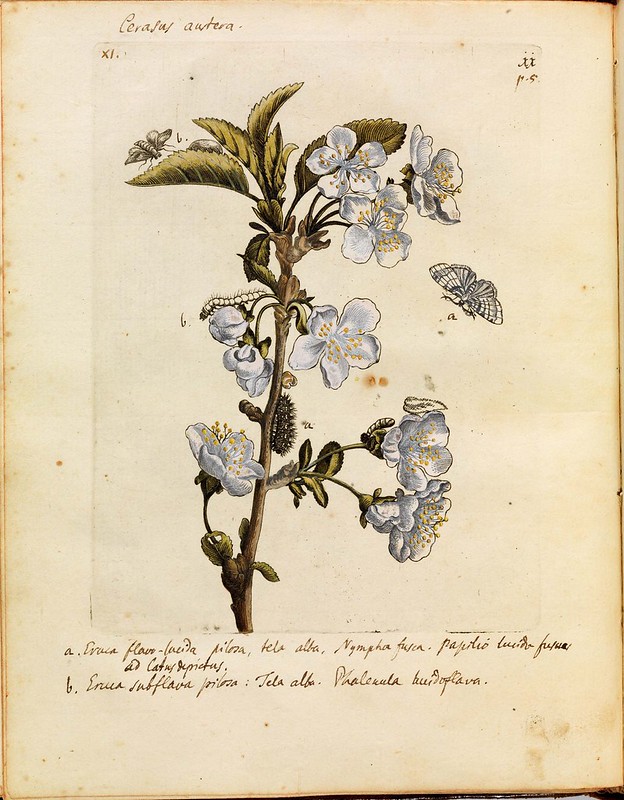
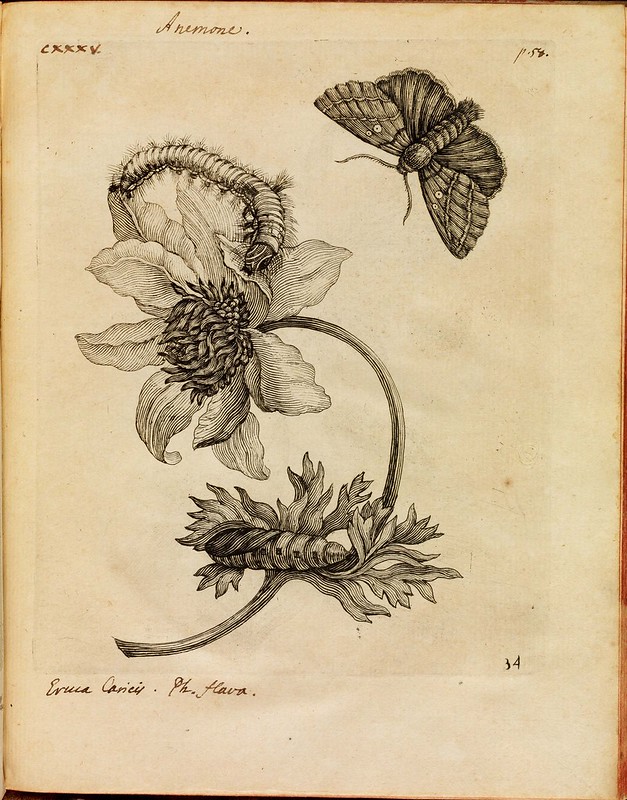
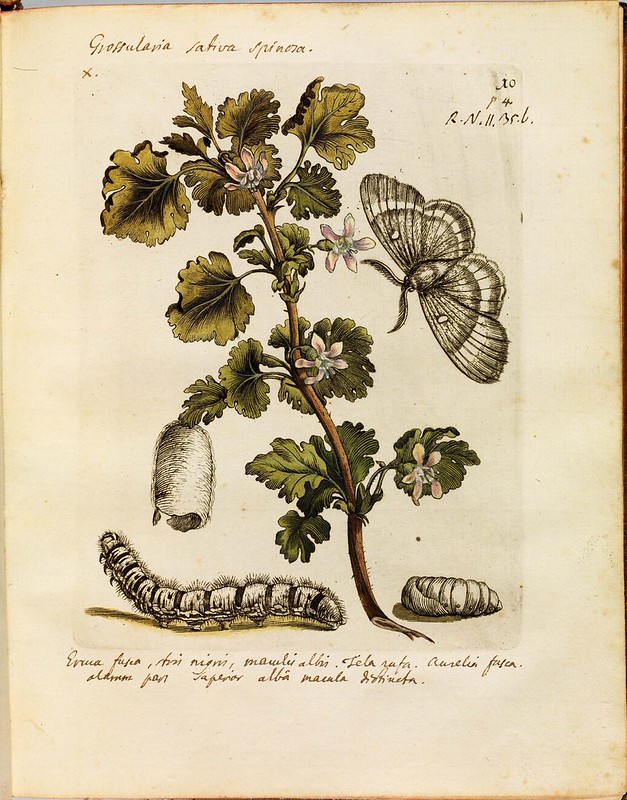
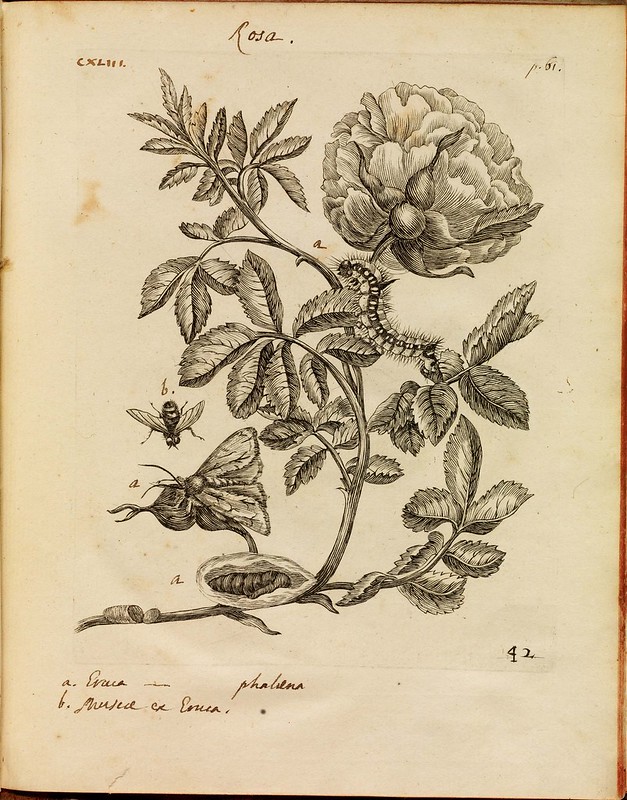
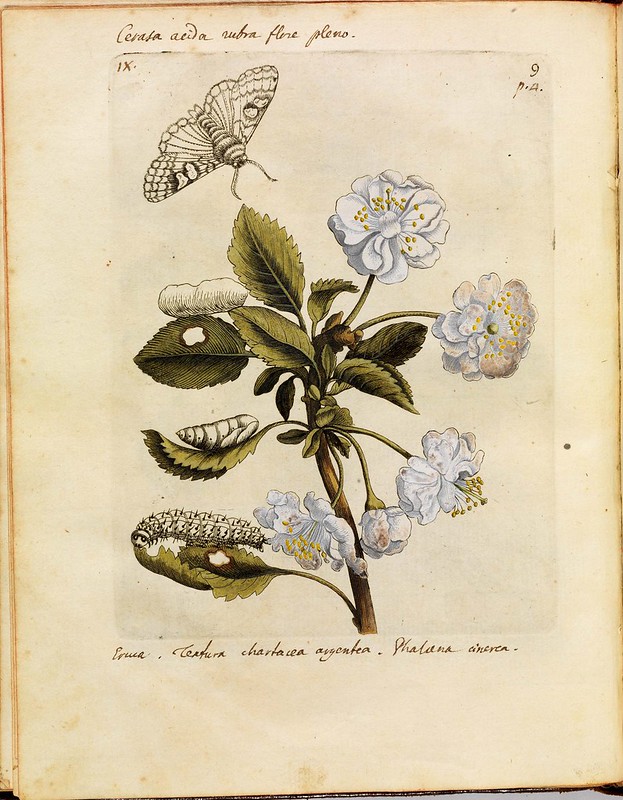
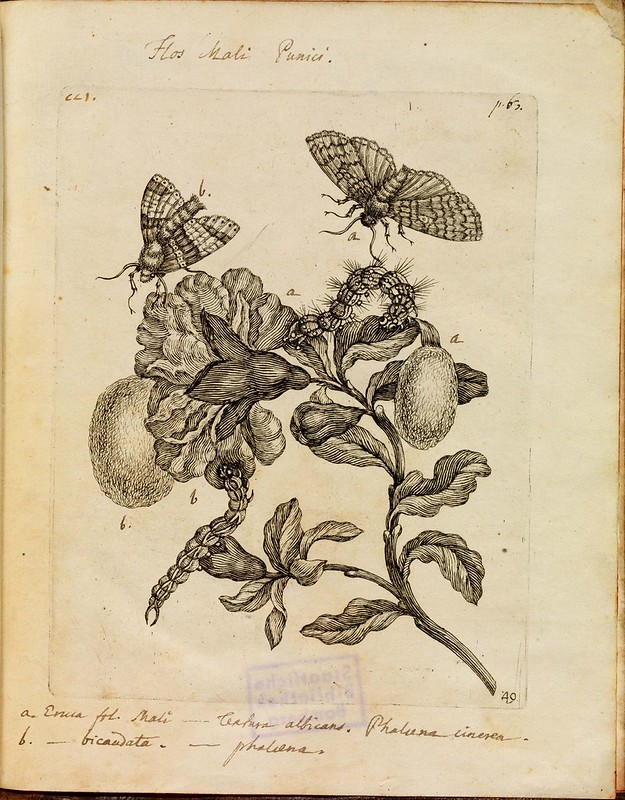
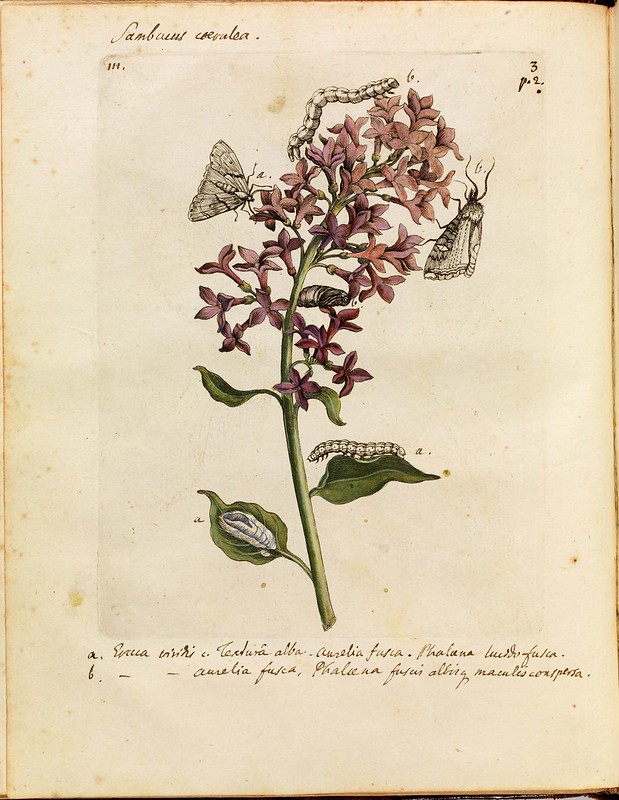
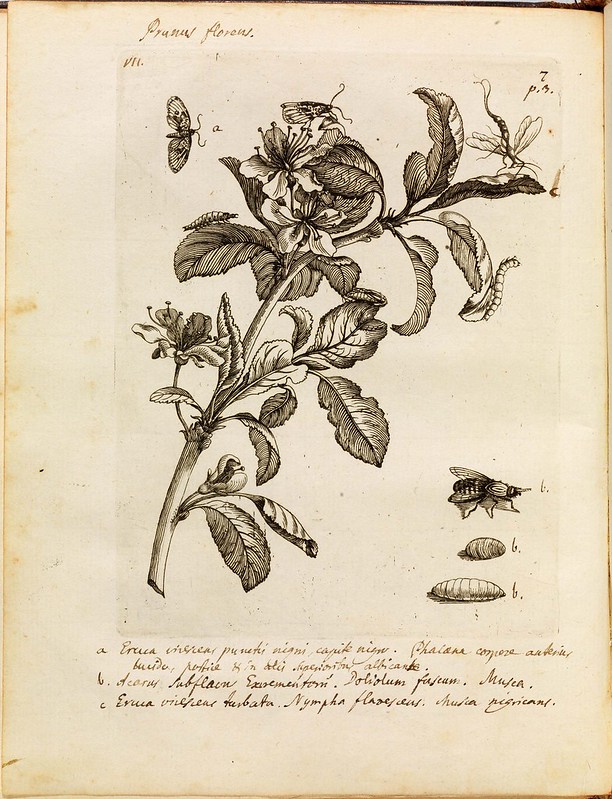
The illustrations below were designed by the German artist and naturalist, Maria Sibylla Merian. The plates were originally prepared for a mid-1670s book on the metamorphosis of caterpillars into butterflies. However, the scientific community of the time largely ignored Merian's work because it wasn't published in Latin, the formal language of science.

Some forty years later, Merian finally reworked and expanded this earlier book on European insects. Sadly, she died shortly before the completed book - in Latin, finally - was readied for publication in 1717 as 'Erucarum Ortus..'. The full title of the book is said to translate as: 'The Miraculous Transformation and Unusual Flower-Food of Caterpillars'.

Merian's portrayal of plants and insects in a semi-naturalistic way was something of a step forward in the world of scientific illustration. Many of her contemporaries 'arranged' the illustrated scenes to show man's domination over nature, or took liberties with embellishment to impress and dazzle the audience.

"For her period, her work is scientifically accurate and she is considered by modern scholars to be one of the founders of entomology, the study of insects." [source]
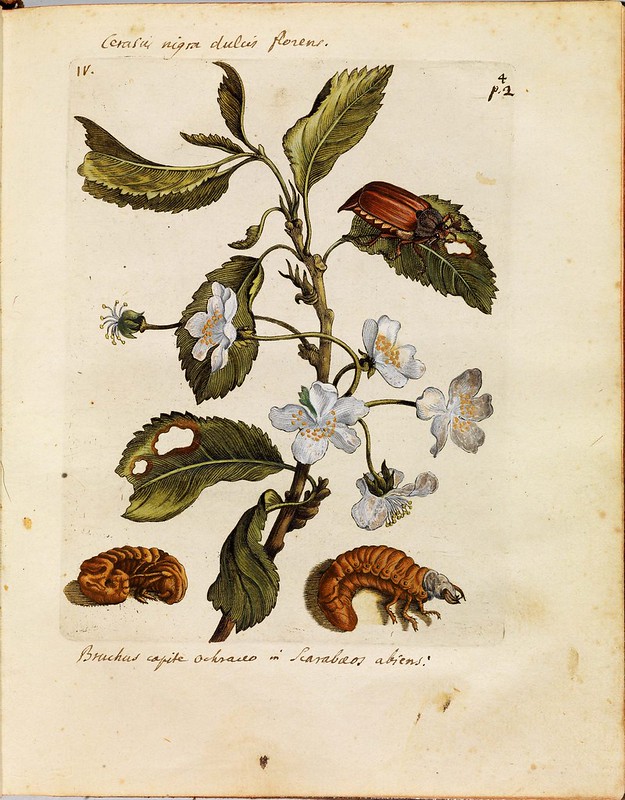
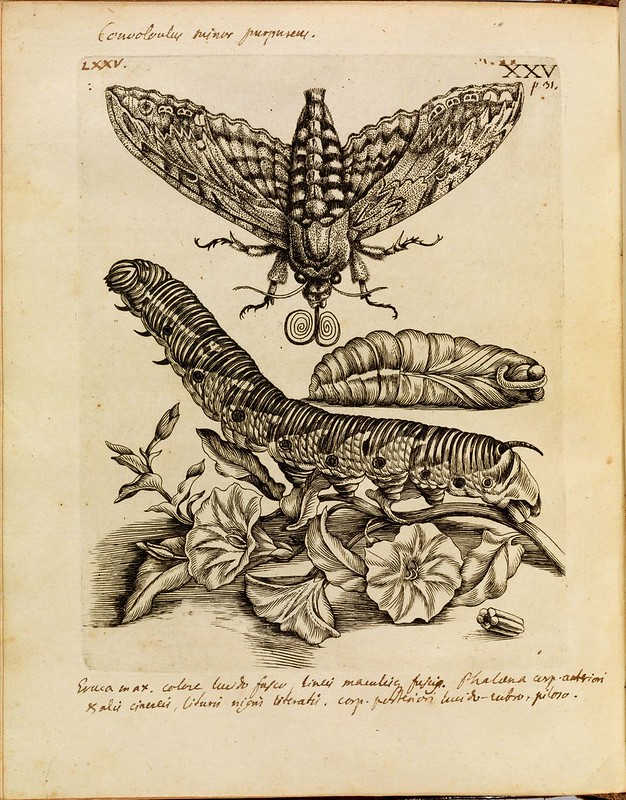
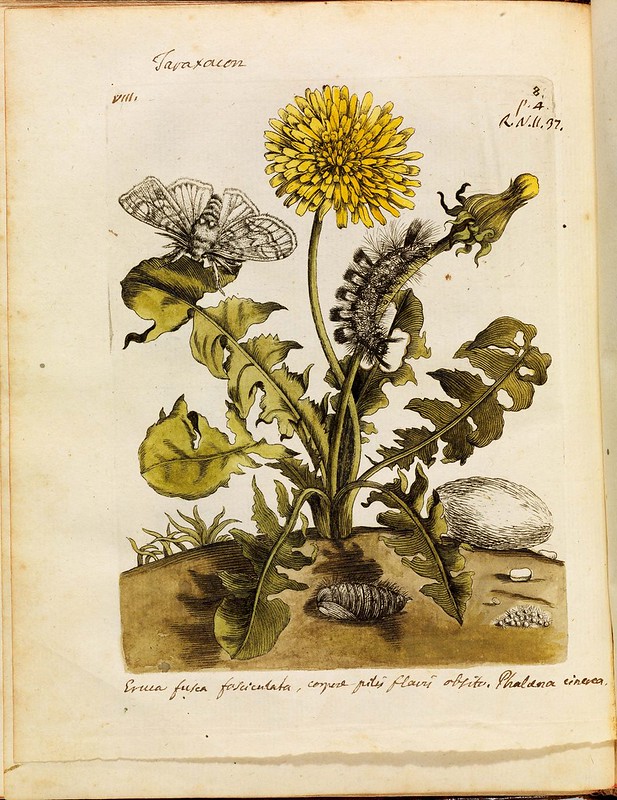
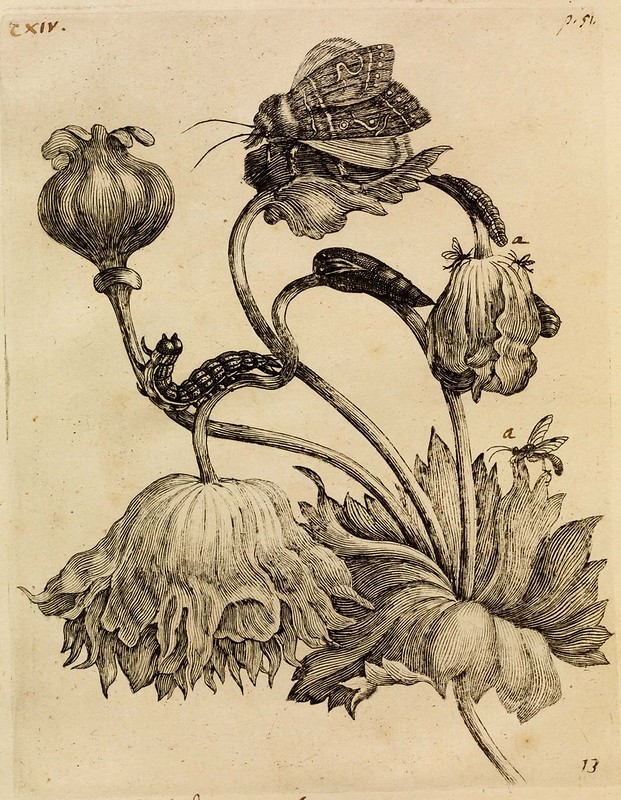
'Erucarum Ortus' features some 150 plates of butterflies, caterpillars, moths and other insects together with their associated plants. The book is divided into three sections and about half of the first section of illustrations - in this particular copy - has been enhanced with hand-colouring. The balance of engravings below were sampled from throughout the book. The opium poppy plate was cropped back to the engraving plate margin; all others were chopped off at the page edge. I haven't checked whether all the hand written species names on the book pages are correct or not.


historical science B+W + colour engravings-illustrations of butterflies, bees, moths + plants + flowers in-situ (1700s)


historical science B+W + colour engravings-illustrations of butterflies, bees, moths + plants + flowers in-situ (1700s)


historical science B+W + colour engravings-illustrations of butterflies, bees, moths + plants + flowers in-situ (1700s)


historical science B+W + colour engravings-illustrations of butterflies, bees, moths + plants + flowers in-situ (1700s)


historical science B+W + colour engravings-illustrations of butterflies, bees, moths + plants + flowers in-situ (1700s)


cropped engraving of opium poppy with associated grubs & moths


"Although the 'Erucarum Ortus' appeared one year after her death, Merian was very much involved in its publication. From at least 1705 she had intended to issue her work on European insects in Latin and Dutch, completing it with a third part. Ill health at the end of her life delayed publication of the third part until just after her death, but the complete Latin edition followed only one year later." [source]


Erucarum ortus - Maria Sibylla Merian


historical science B+W + colour engravings-illustrations of butterflies, bees, moths + plants + flowers in-situ (1700s)


historical science B+W + colour engravings-illustrations of butterflies, bees, moths + plants + flowers in-situ (1700s)


historical science B+W + colour engravings-illustrations of butterflies, bees, moths + plants + flowers in-situ (1700s)


historical science B+W + colour engravings-illustrations of butterflies, bees, moths + plants + flowers in-situ (1700s)


'Among the most important works in her oeuvre is her work on the feeding and growth of European caterpillars ... because these volumes contain both illustrations and texts, they provide a wealth of insights into Merian's interests with respect to art and nature, the intentions she sought in her work and the public for whom that work was intended. A unique primary source of information about a baroque painter, [..] ['Erucarum Ortus, Alimentum et Paradoxa Metamorphosis'] is also an invaluable historical source as a document of the popularisation of natural history in the early Enlightenment period.' (Heidrun Ludwig, 'The Rapuenbuch. A popular natural history', in Maria Sibylla Merian 1647-1717 Artist and Naturalist 1998, p.53) [source].


historical science B+W + colour engravings-illustrations of butterflies, bees, moths + plants + flowers in-situ (1700s)


historical science B+W + colour engravings-illustrations of butterflies, bees, moths + plants + flowers in-situ (1700s)


historical science B+W + colour engravings-illustrations of butterflies, bees, moths + plants + flowers in-situ (1700s)


historical science B+W + colour engravings-illustrations of butterflies, bees, moths + plants + flowers in-situ (1700s)


historical science B+W + colour engravings-illustrations of butterflies, bees, moths + plants + flowers in-situ (1700s)


historical science B+W + colour engravings-illustrations of butterflies, bees, moths + plants + flowers in-situ (1700s)


historical science B+W + colour engravings-illustrations of butterflies, bees, moths + plants + flowers in-situ (1700s)


historical science B+W + colour engravings-illustrations of butterflies, bees, moths + plants + flowers in-situ (1700s)


historical science B+W + colour engravings-illustrations of butterflies, bees, moths + plants + flowers in-situ (1700s)


historical science B+W + colour engravings-illustrations of butterflies, bees, moths + plants + flowers in-situ (1700s)


historical science B+W + colour engravings-illustrations of butterflies, bees, moths + plants + flowers in-situ (1700s)

"Maria Sibylla Merian (1647-1717) was one of the greatest artist-naturalists of her time. From childhood she had been fascinated by the life cycles of butterflies, and she made a close study of their transformations. She became a flower-painter and teacher in Nuremberg, Frankfurt and Amsterdam." [source]
"In 1711 Maria suffered a stroke and although greatly disabled, continued her work for a further six years. she died in Amsterdam on 13th January, 1717. The register of deaths lists her as a pauper, but in spite of this she had her own grave. In the same year her daughter published for the first time all three parts of her mothers life's work under the title 'Erucarum Ortus Alimentum et Paradoxa Metamorphosis' [..]
There are a number of versions of how the entire works of this extraordinary woman ended up in Russia. the most reliable record is that the works were purchased by Tsar Peter the Great, personally, during a visit to western Europe, only days before Merian's death in 1717. Upon the Tsar's death in 1725, the works were presented to the Academy of Sciences [in Germany] where they reside today." [source]

 
Creative Commons License