Showing posts sorted by relevance for query catesby. Sort by date Show all posts

Sunday, November 16, 2008

Piscium

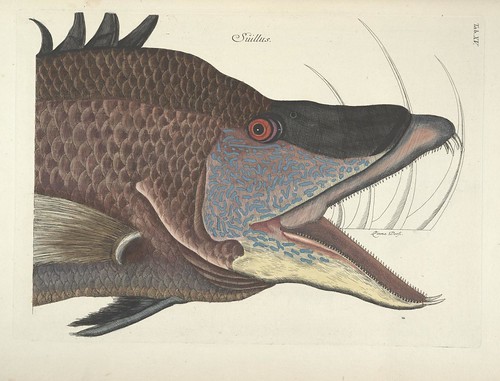
Suillus


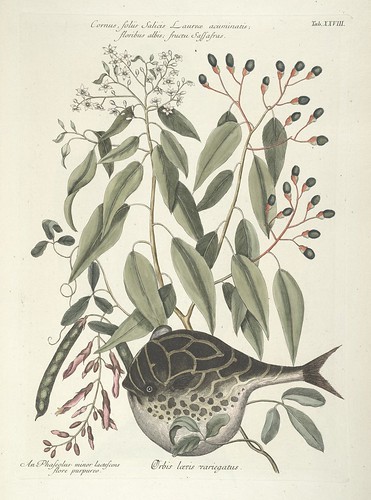
Cornus, foliis Salicis Laurece acuminatis; floribus albis; fructu sassafras AND Orbis laevis variegatus


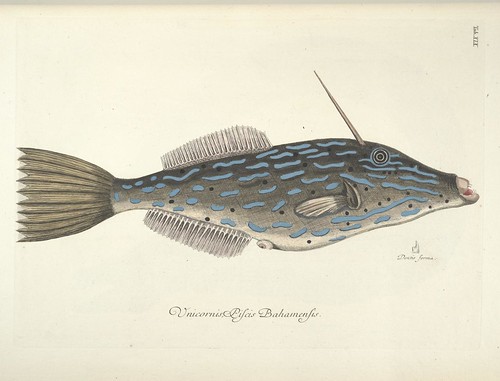
Unicornuis, Piscis Bahamensis


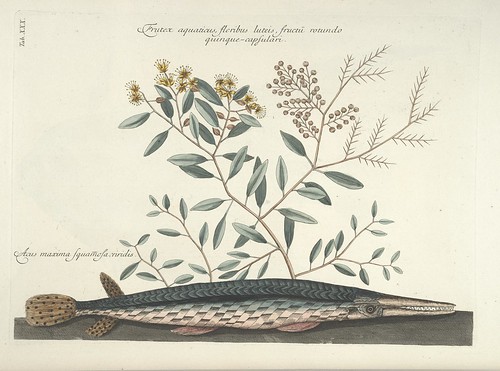
Frutex aquaticus, floribus luteis, fructu rotundo quinque-capsulari AND Acus maxima Squamosa viridis


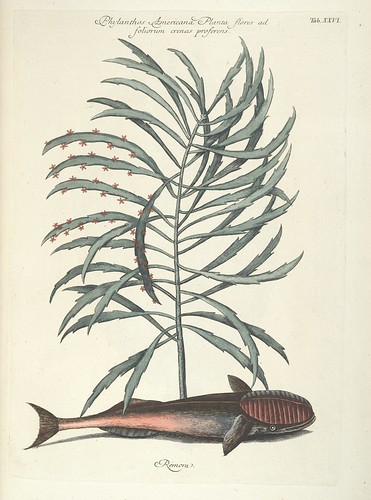
Phylanthos Americana Planta flores ad foliorum crenas proferens AND Remora


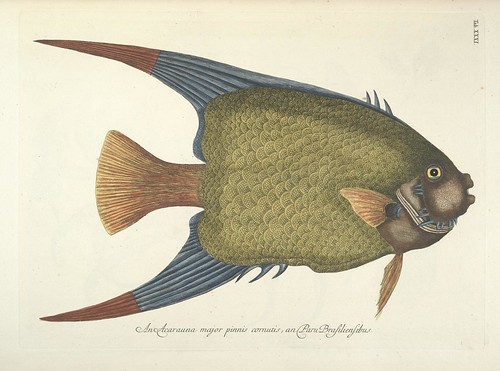
An Acarauna major pinnis cornutis; an Paru Brasiliensibus


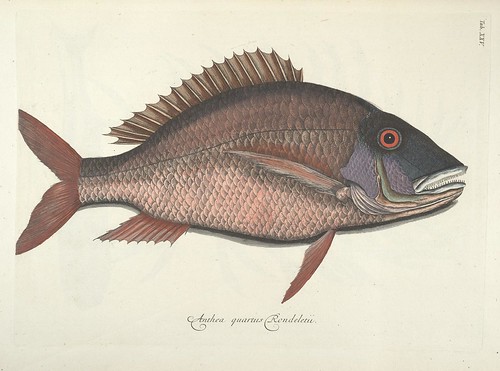
Anthea quartus Rondeletii


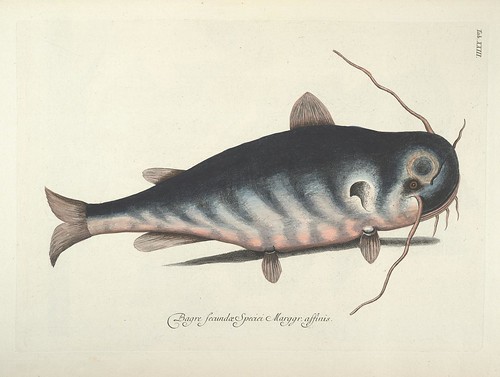
Bagre Secundae Speciei Marggr. affinis


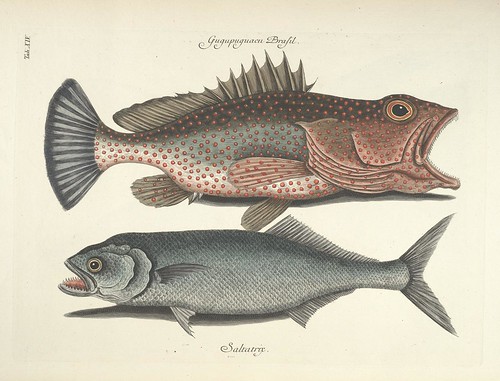
Gugupuguacu Brasil AND Saltatrix


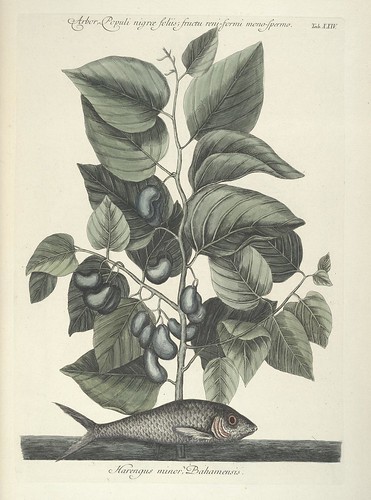
Harengus minor Bahamensis


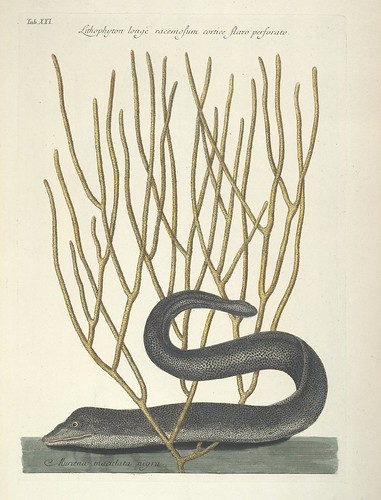
Lithophyton longe racemosum cortice flavo perforato AND Muraena maculata nigris


Perca marina venenosa punctata


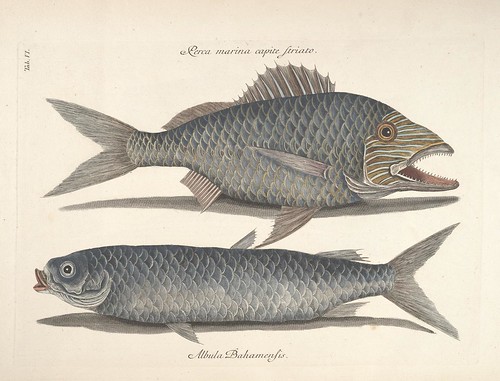
Perca marina capite Striato AND Albula Bahamensis


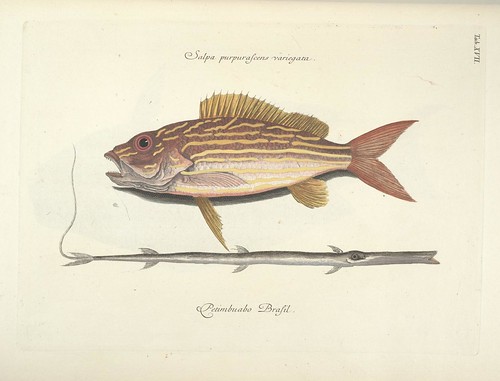
Salpa purpurascens variegata AND Petimbuabo Brasil


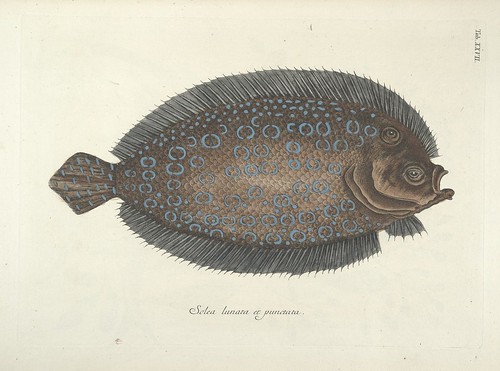
Solea lunata et punctata


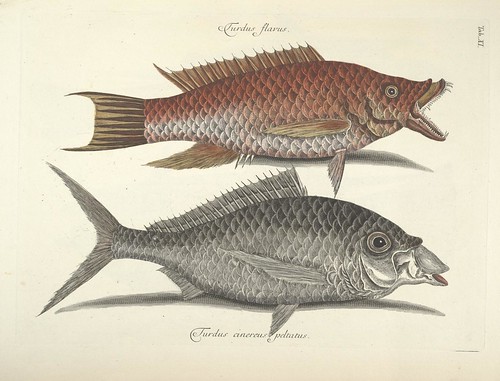
Turdus flavus AND Turdus cinereus peltatus


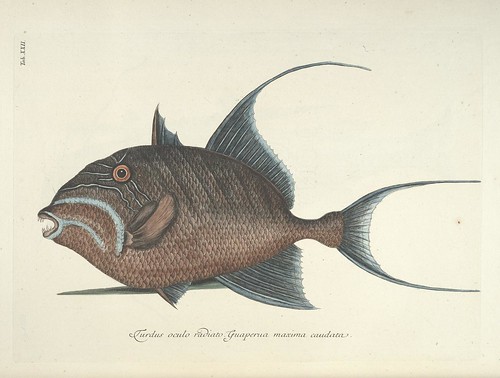
Turdus oculo radiato Guaperua maxima caudata


Mark Catesby - Natural History of Carolina, Florida and the Bahama Islands (fish)


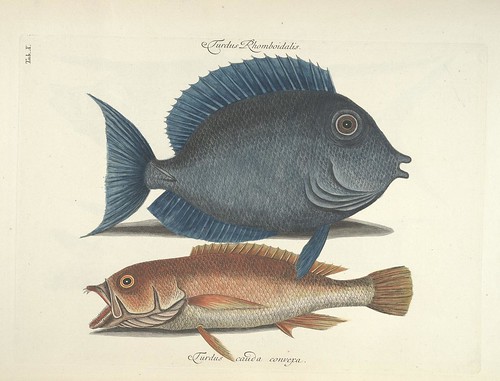
Turdus Rhomboidalis AND Turdus cauda convexa


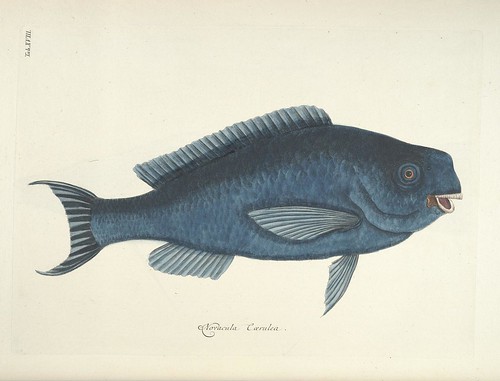
These striking and sometimes fanciful hand-coloured 18th century engravings were published in Germany in 1777 in a book called 'Piscium, Serpentum, Insectorum, Aliorumque Nonnullorum Animalum'.

The illustrations were produced by Nicholaus Eisenberger and Georg Lichtensteiger. As I was to discover, they had re-engraved in folio format images that originally appeared in Volume II of Mark Catesby's seminal work, 'The Natural History of Carolina, Florida and the Bahama Islands'.

Catesby's magnum opus was published in London in instalments between 1729 and 1743 and stands as the first comprehensive illustrated natural history work detailing the flora and fauna of America.

[click on any image for an enlarged view; very large versions are also available]

Sunday, July 27, 2008

Following Catesby

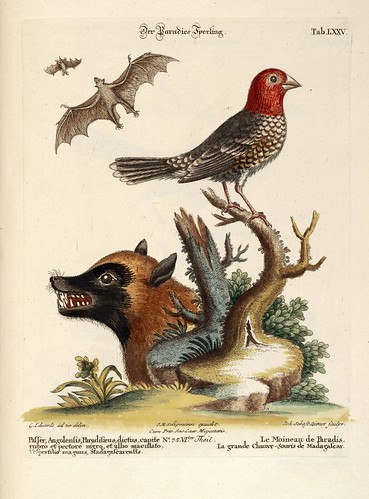
Le Moineau de Paradis et La grande Chauve-Souris de Madagascar


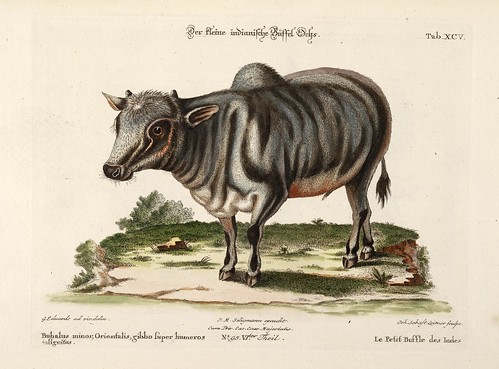
Le Petit Buffle des Indes


L'Ichneumon des Indes


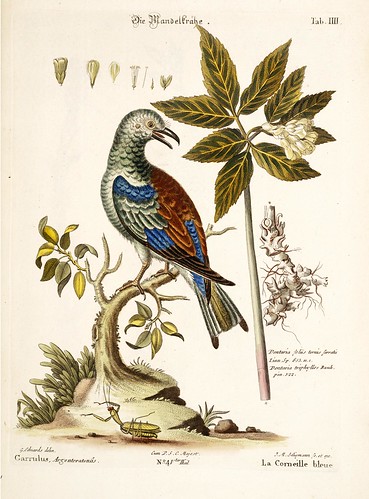
La Corneille bleue


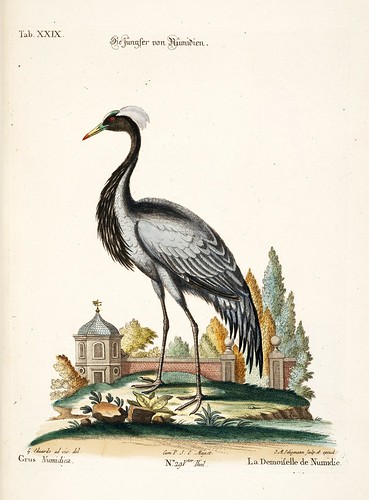
La Demoiselle de Numidie


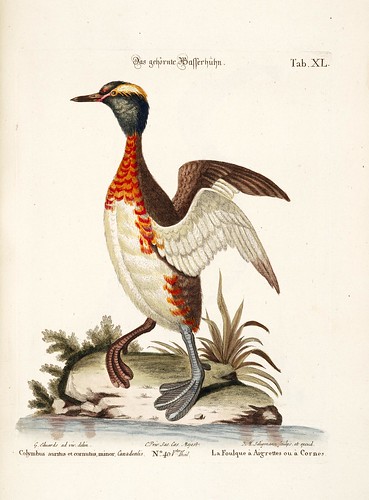
La Foulque a Aigrettes ou a Cornes


La grande Grue de la Baye de Hudson


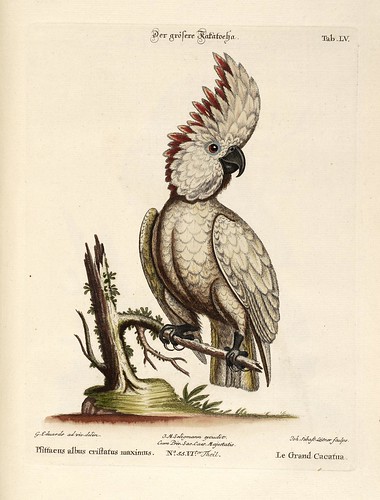
Le Grand Cacatua


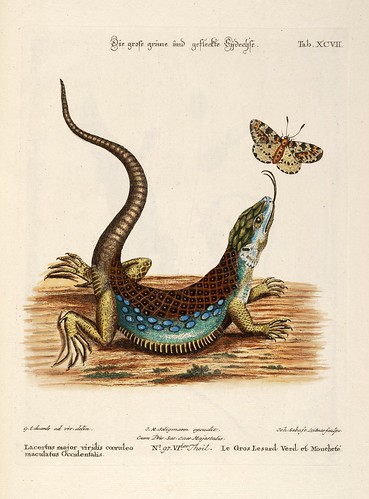
Le Gros Lesard verd et Mouchete


Le Gros-Bec bleu, d'Angola


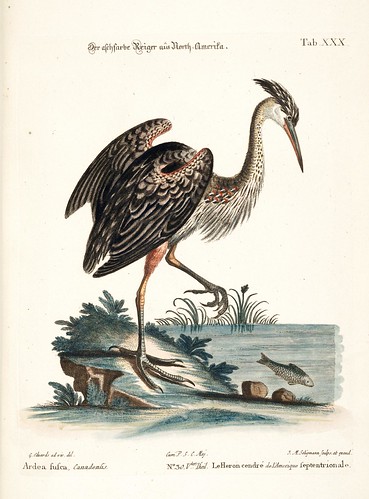
Le Heron cendre de l'Amerique Septentrionale


Le Lory Ecarlate


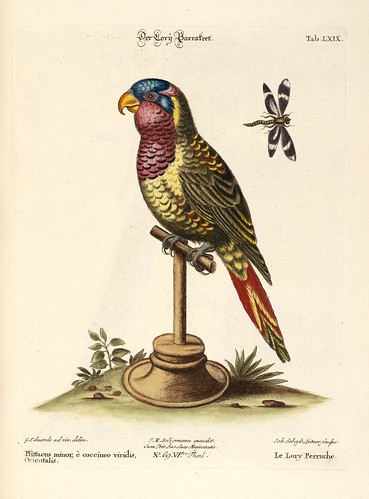
Le Lory Perruche


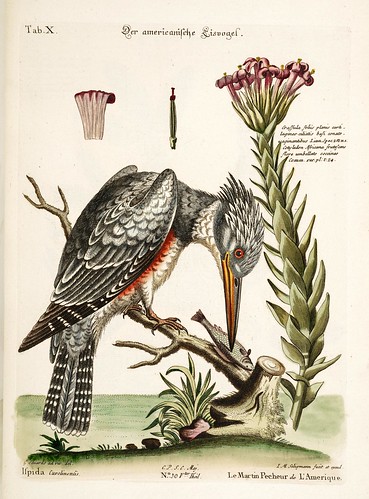
Le Martin Pecheur de L'Amerique


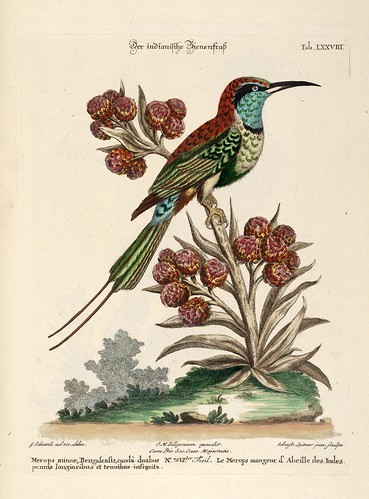
Le Merops mangeur d'Abeille des Indes


Le Petit Singe-Lion a Tete grise


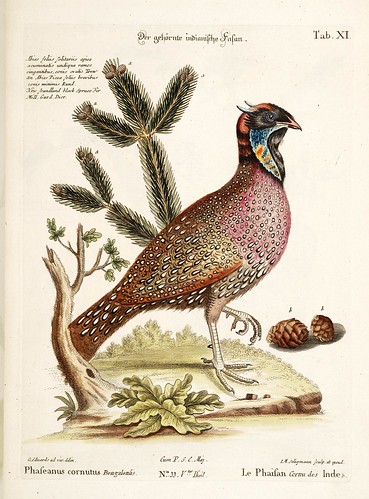
Le Phaisan Cornu des Indes


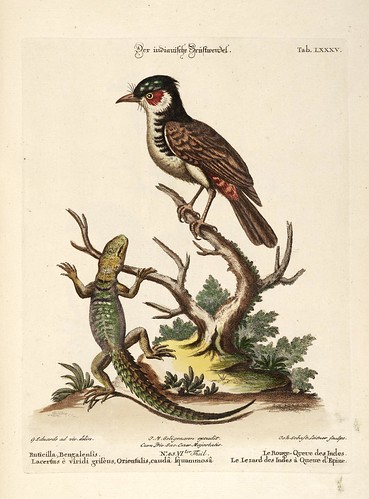
Le Rouge-Queue des Indes et Le Lezard des Indes a Queue d'Epine


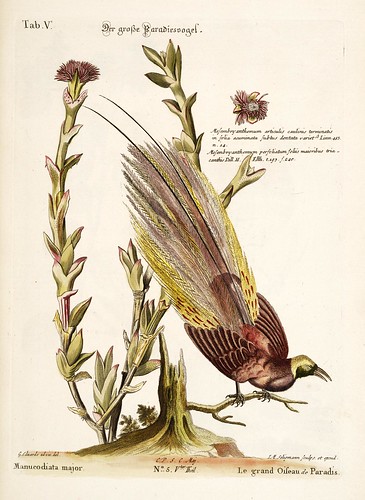
Le grand Oiseau de Paradis


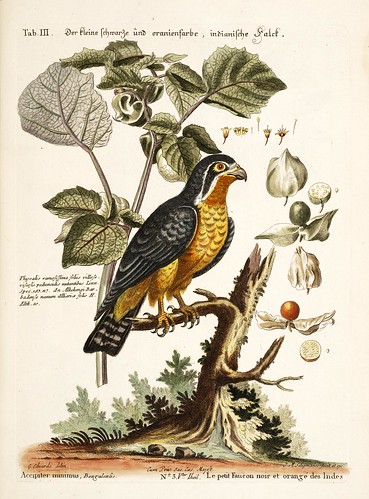
Le petit faucon noir et orange des Indes


'Verzameling van uitlandsche en zeldzaame vogelen :benevens eenige vreemde dieren en plantgewassen : in 't engelsch naauwkeurig beschreeven en naar 't leven met kleuren afgebeeld /door G. Edwards en M. Catesby. ; vervolgens, ten opzigt van de plaaten merkelyk verbeterd, in 't hoogduitsch uitgegeven door J.M. Seligmann ; thans in 't nederduitsch vertaald en met aanhaalingen van andere autheuren verrykt, door M. Houttuyn.' 1772-1881.

Drawn by G Edwards (after Mark Catesby), engraved by IM Seligman, JS Leitner et al. Available from the Botanicus website (there are three 'sets' of illustrations: general birds, parrots and animals; easily found from the drop-down menu in the margin).

The above selection and a few others have been saved in this set. These constitute probably a quarter or less of the total number of illustrations in the book. If you look closely, there are occasional eccentric additions to the design of the above pictures, beyond the usual 18th century stylising. Botanicus appear to have digitised a second copy of the same(?) work: see here.

Sunday, January 02, 2011

Natural South Carolina

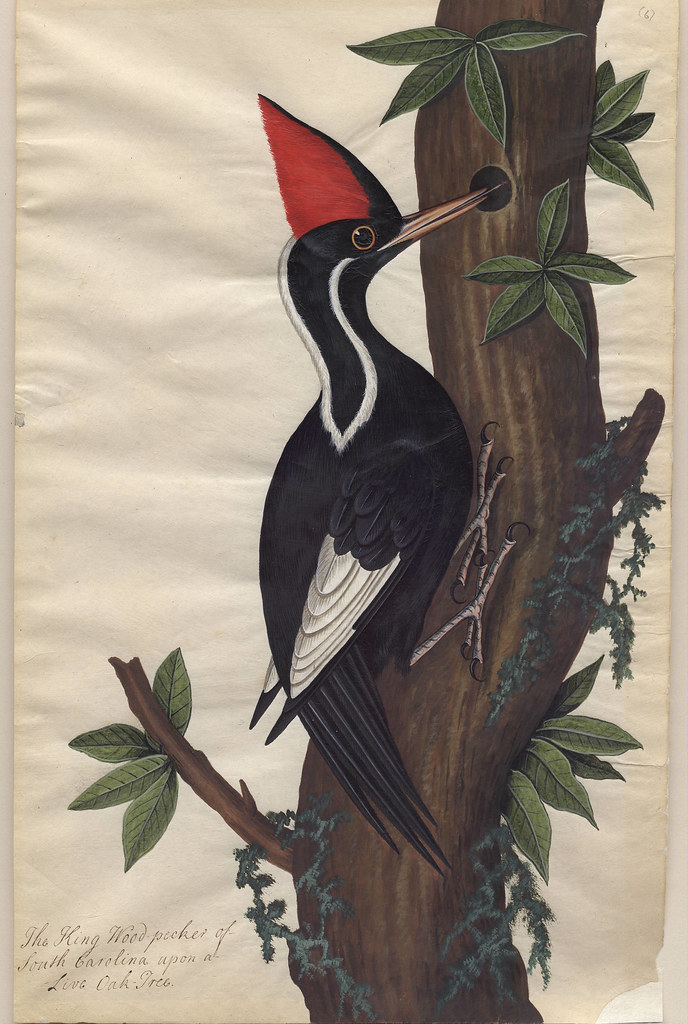
Live Oak, Ivory Billed Wood-pecker
Original title: Live Oak; Ivory Billed Wood-pecker
Common name: Laurel oak; Ivory-billed woodpecker
Scientific name: Quercus laurifolia | Campephilus principalis


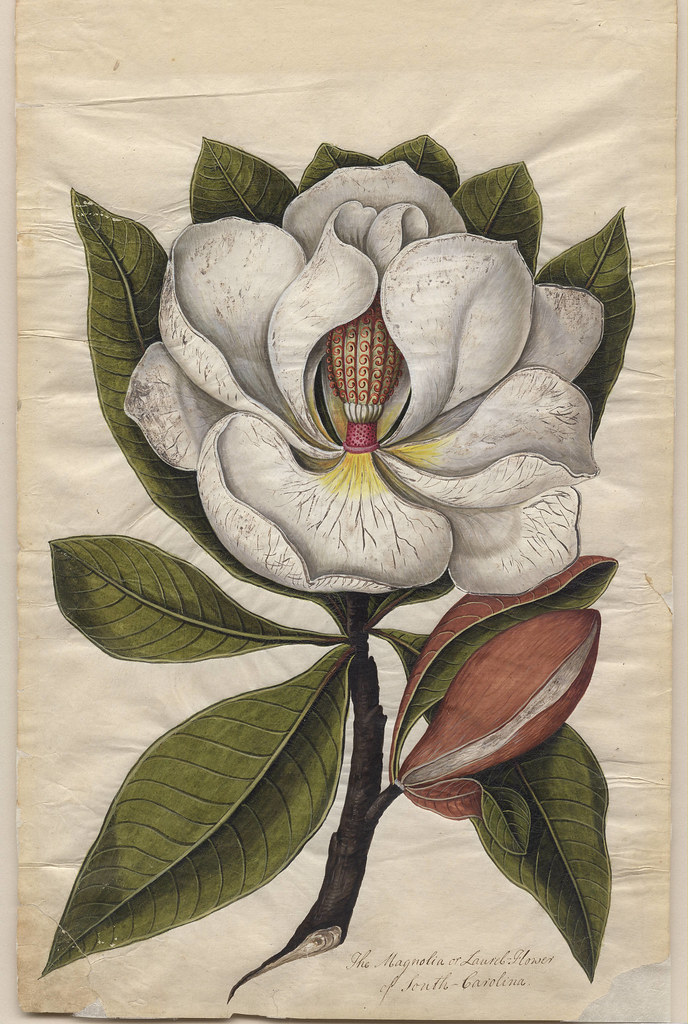
Magnolia or Laurel-Flower
Original title: Magnolia or Laurel-Flower
Common name: Southern magnolia
Scientific name: Magnolia grandiflora*


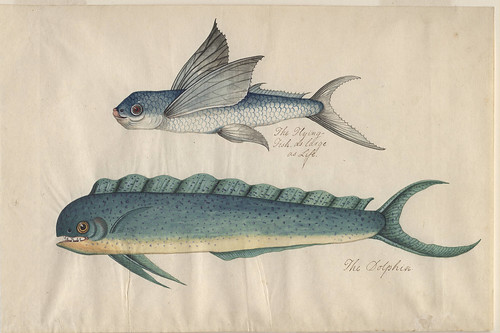
Flying-Fish as large as life, Dolphin
Original title: Flying-Fish as large as life; Dolphin
Common name: Sailfin flyingfish
Scientific name: Parexocoetus brachypterus


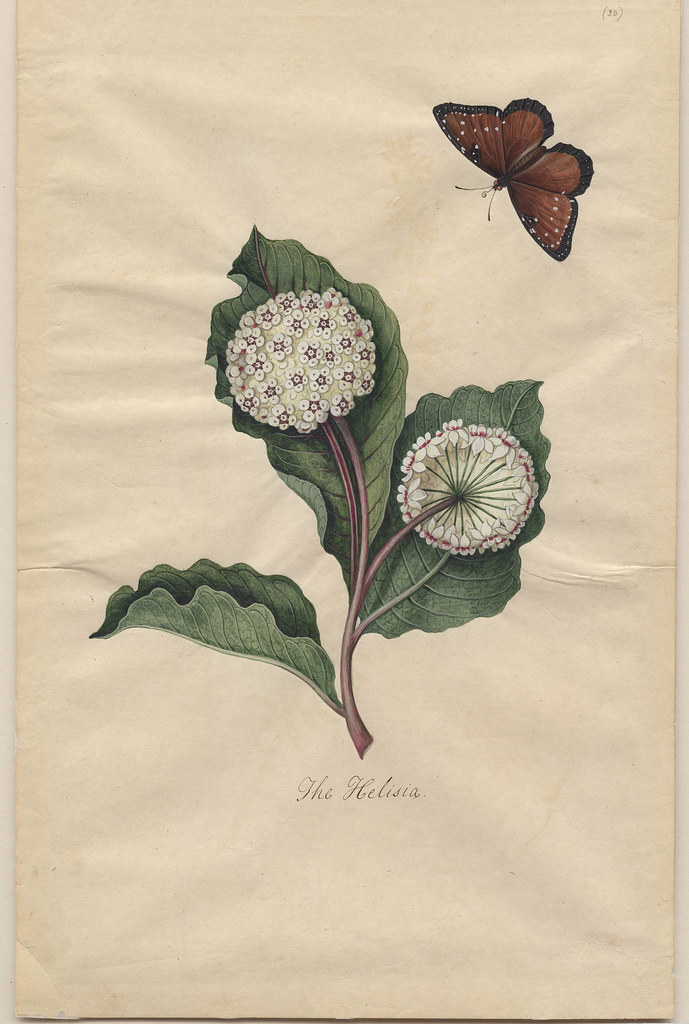
Helisa, (Queen butterfly)
Original title: Helisa; [Queen butterfly]
Common name: Milkweed; Queen butterfly
Scientific name: Asclepias [variegata?] | Danaus gillipus


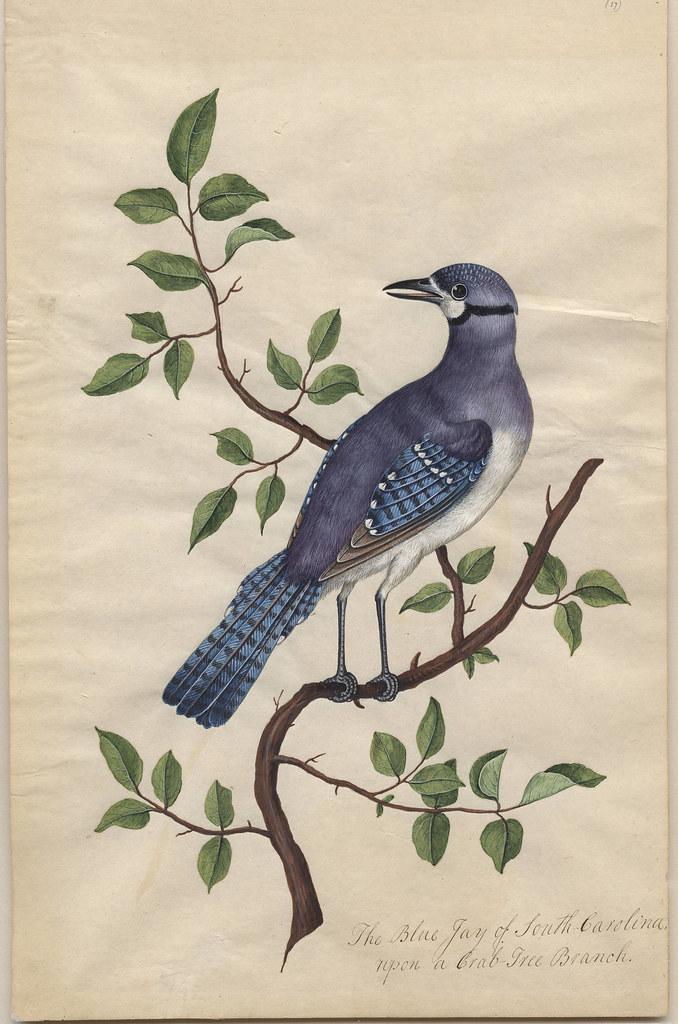
Blue Jay, Crab Tree
Original title: Blue Jay; Crab Tree
Common name: Blue jay; Flowering crabapple
Scientific name: Cyanocitta cristata | Malus augustifolia


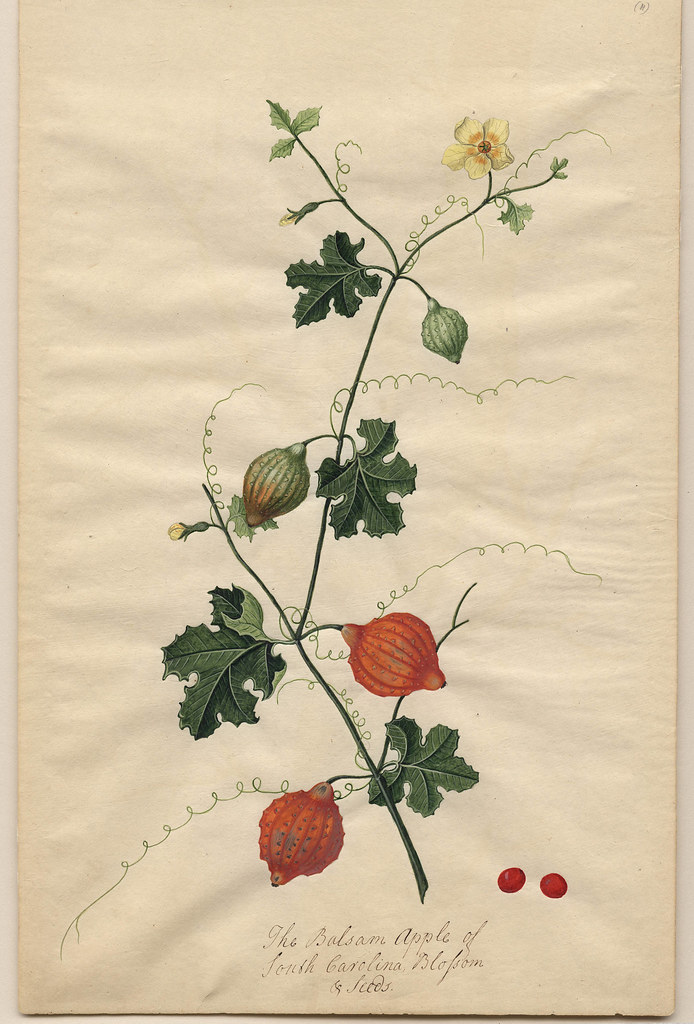
Balsam Apple
Original title + common name: Balsam Apple
Scientific name: Momordica balsamina or Momordica charantia


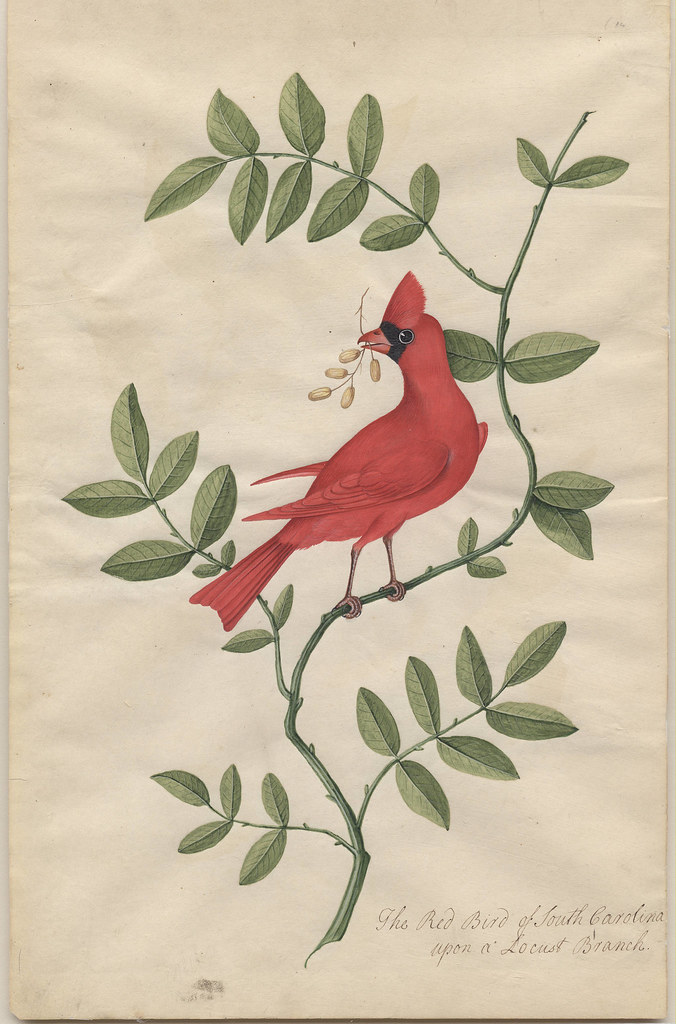
Locust, Red Bird
Original title: Locust; Red Bird
Common name: Black locust; Cardinal
Scientific name: Robinia pseudoacacia | Cardinalis cardinalis


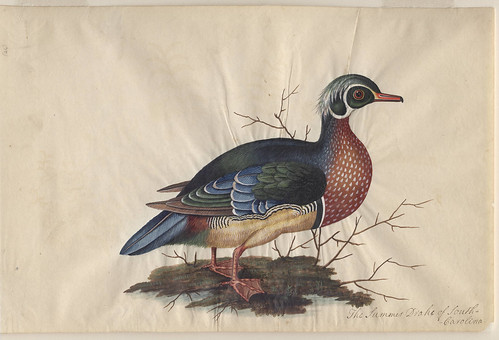
Summer Drake
Original title: Summer Drake
Common name: Wood duck
Scientific name: Aix sponsa


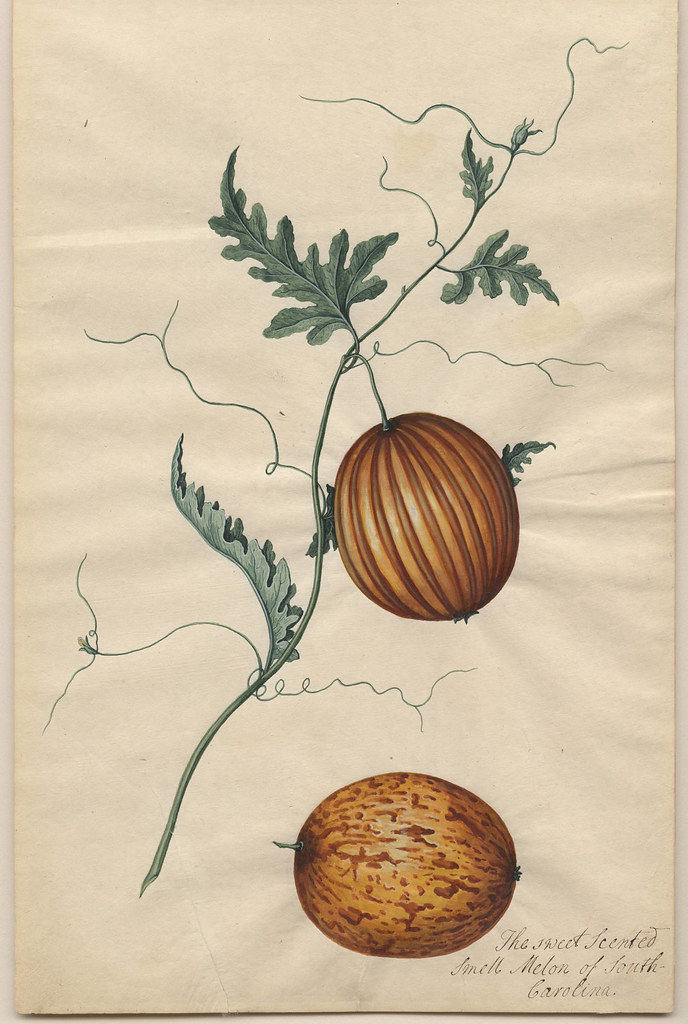
Sweet Scented Small Melon
Original title: Sweet Scented Small Melon
Common name: Watermelon [?] {Or not}*
Scientific name: Citrullis vulgaris [?]


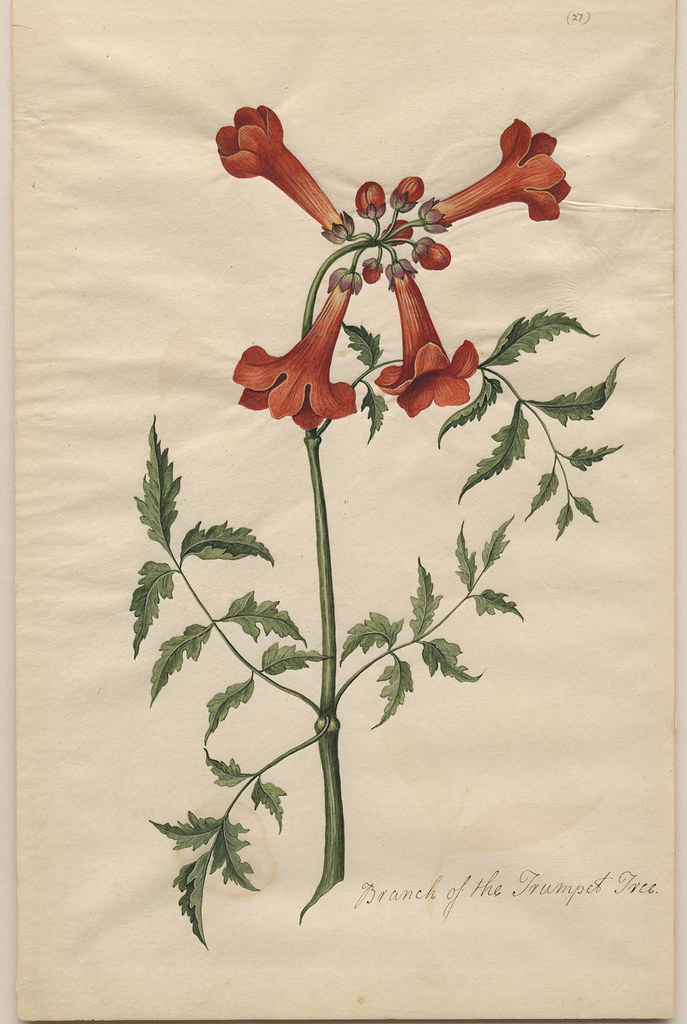
Trumpet Tree
Original title: Trumpet Tree
Common name: Cow itch vine
Scientific name: Campsis radicans


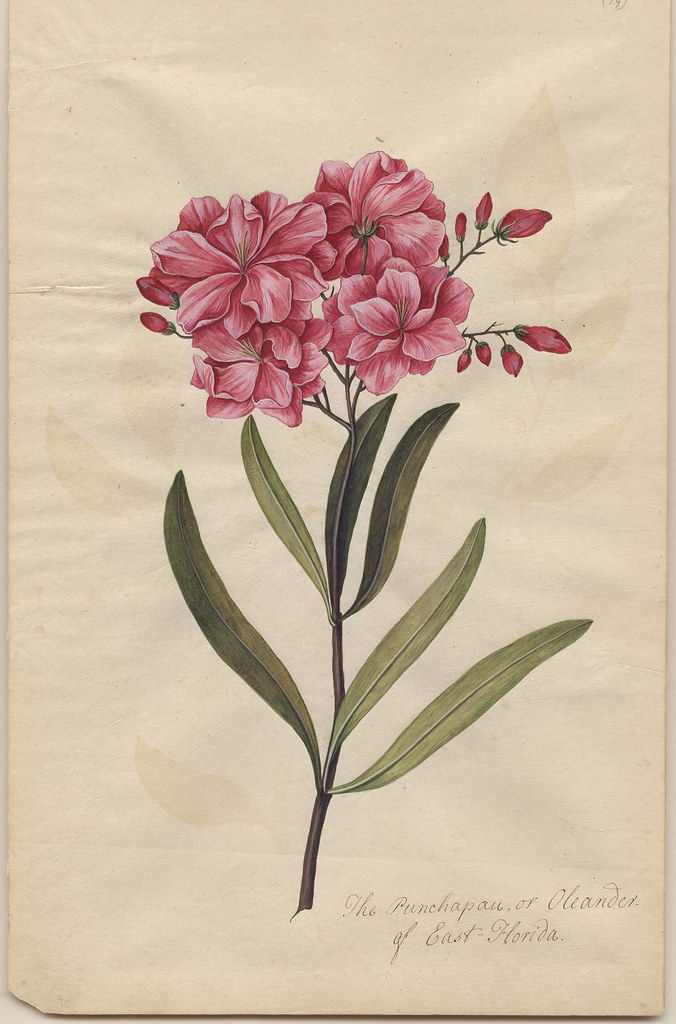
Punchapau of East Florida or Oleander
Original title: Punchapau of East Florida or Oleander
Common name: Oleander
Scientific name: Nerium oleander


[click on any image for an enlarged version]


The Ethelind Pope Brown Collection of South Carolina Natural History at the University of South Carolina consists of thirty two watercolour sketches of flora and fauna from the South East United States, produced between about 1765 and 1775.

The series has been attributed at one time or another to such luminary natural history artists as John Abbott[previously] and Mark Catesby[previously], and although the true painter remains officially unknown, expert opinion now favours the sketches having been produced by a local amateur artist called John Laurens. [info]

 
Creative Commons License