Monday, September 14, 2009

The September Testament

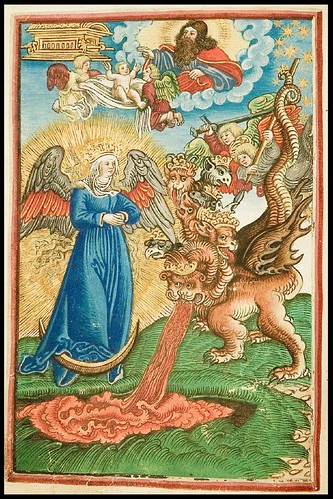
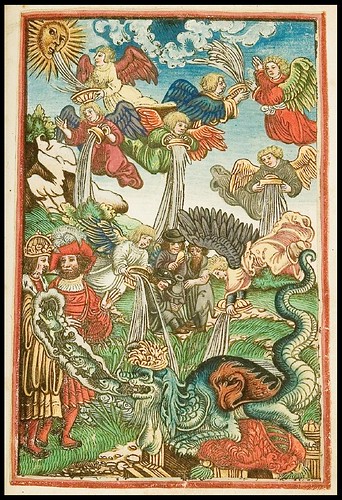
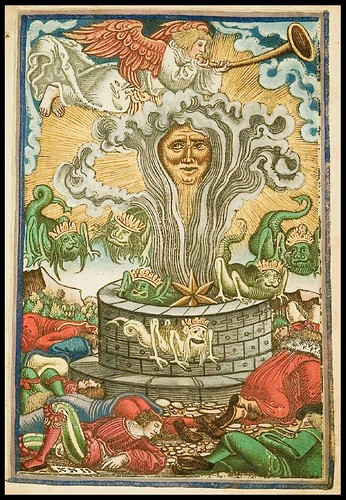
vomiting dragon - biblical scene - 16th cent. New Testament k


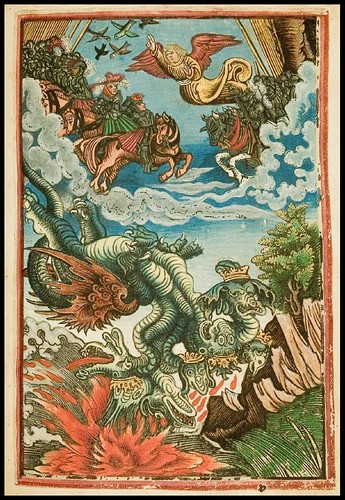
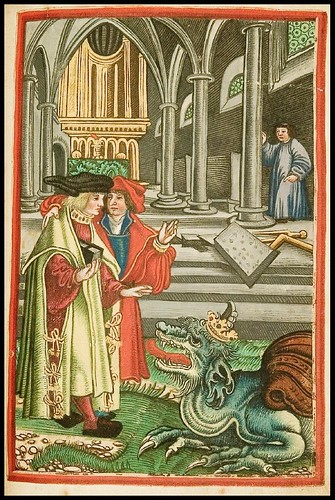
dragon from Martin Luther - 16th cent. New Testament zg


Lucas Cranach dragon woodcut


Martin Luther - 16th cent. New Testament ze


Martin Luther - 16th cent. New Testament zf


Martin Luther - 16th cent. New Testament j


Martin Luther - 16th cent. New Testament a


Martin Luther - 16th cent. New Testament l


Martin Luther - 16th cent. New Testament za


Martin Luther - 16th cent. New Testament u


Martin Luther - 16th cent. New Testament s


Martin Luther - 16th cent. New Testament z


Martin Luther - 16th cent. New Testament w


Martin Luther - 16th cent. New Testament x


Martin Luther - 16th cent. New Testament m


Martin Luther - 16th cent. New Testament zi

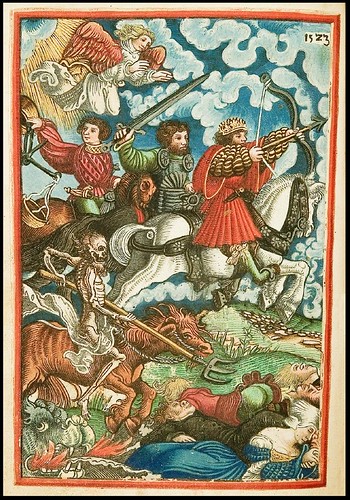
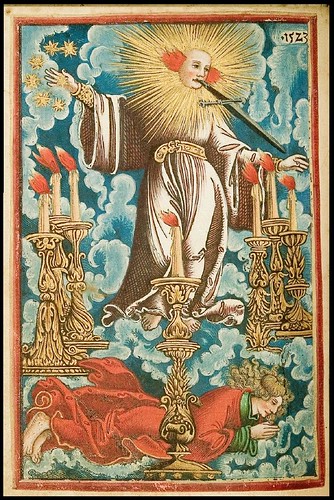
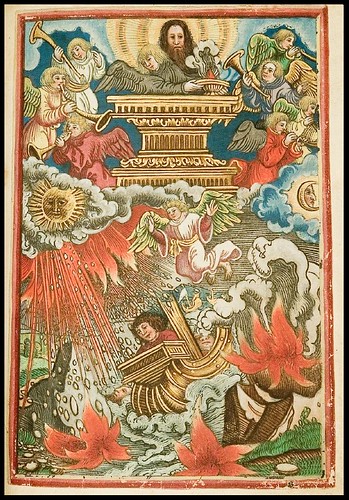
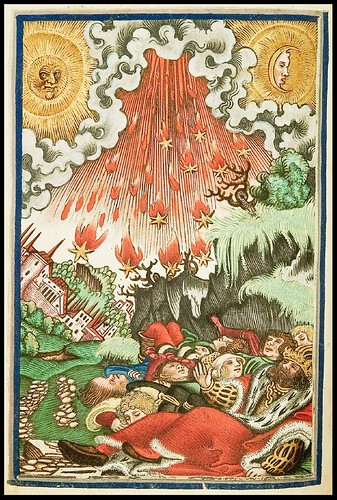
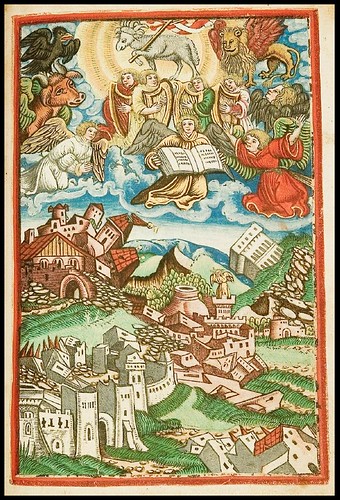
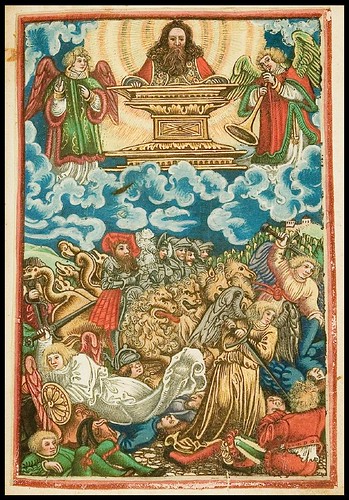
"Luther’s first translation of the entire New Testament ['Das Newe Testament Deutzsch'] from the Greek original was published by Melchior Lotter the Younger in September 1522, with woodcut illustrations by Lucas Cranach. The so-called September Testament was received so enthusiastically that a second edition with corrections by Luther was printed as early as December of the same year.

Not only is the September Testament regarded as a milestone in the history of German Bible translation, but also it had an unequalled hand in the promotion of the Reformation, as well as in the dissemination of the High German language. Numerous reprints bear witness to its success: 12 editions were published in Basel, Augsburg, Grimma and Leipzig during the year 1523 alone."

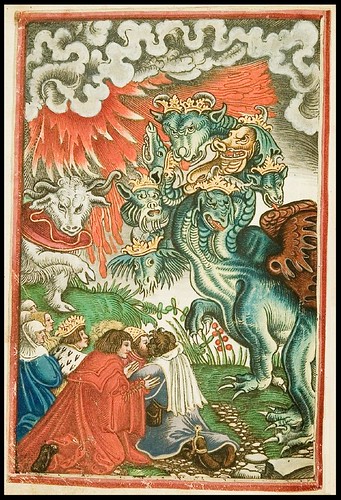
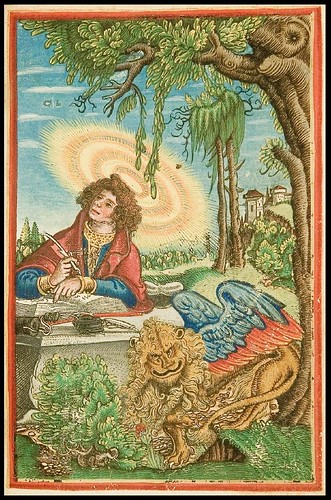
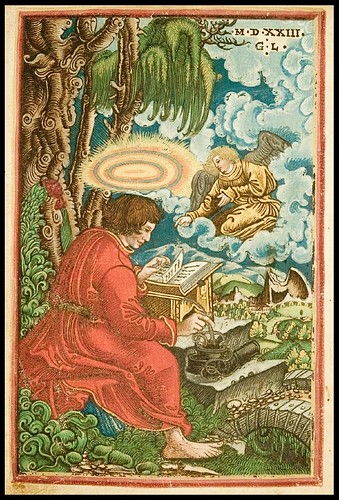
The quote above comes from the Dr. Jörn Günther • Antiquariat site. That summary is relevant here but I'm fairly confident that their edition is a much more valuable, gold-highlighted work by a superior artist. However, the woodcut designs are indentical in both versions and were produced by the artist, Georg Lemberger {his initials are seen in that final image above}.
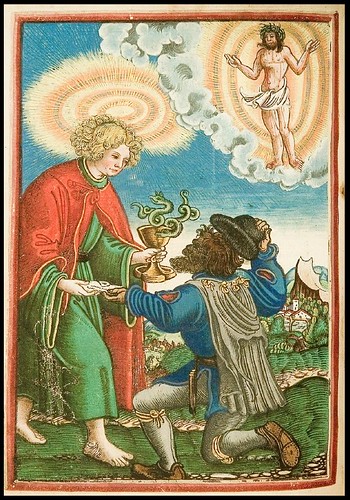
"For the Apocalypse, Lemberger took Cranach’s compositions as models, complementing them with new illustrations. With a total of 44 full-page images [printed from 34 blocks] plus 27 larger initials and the border decoration of the title page, this edition is lavishly illustrated. The Gospels are introduced with portraits of their authors, the Epistles with images of the apostles, and thus each book of the New Testament begins with a woodcut.

The artist renders the evangelists as hermits placing them in a wilderness setting, while he shows the apostles in the act of handing over their letters to messengers who depart into wooded, mountainous landscapes. The halos of the apostles are rendered as spectacular, luminous apparitions.The figures are depicted in close-up before landscapes featuring low horizons and woody or rocky mountains. A typical element is the large conifers stretching out their long branches."
  • The book is owned and hosted by Mälardalen University in Sweden [trans.]. BE WARNED: the only way to view this book is to load the whole thing, all 66Mb in Shockwave format, which will probably require a plugin/upgrade and maybe a restart as well. {Link: "Das newe testament deutzsch - Luther, Martin"}
  • All of the images above were spliced together from screencaps. Obviously the selection is skewed in favour of the more twisted/sensational/monstrous, as is my want. The balance of the illustrations has been saved in this set. Of particular note: the title page; full double-page appearance: with illustration & without illustration; a duet of St Paul depictions (I erroneously thought this was evidence suggesting that the illustrations were painted miniatures rather than hand-painted woodcuts; I was to lose a bet to Laura over this, who happily supplied the Antiquariat site link to reveal my foolishness.)
  • Thanks to Klaus from Archivalia for posting a multi-headed monster image: I 'pretend' I can read German (and Spanish and Dutch and ...) but the truth is, without the occasional visual alert, I'm much more likely to miss the quality material, such as the striking illustrations found in the September Testament.
  • Wikipedia: Luther Bible; Martin Luther.
  • New Advent: Martin Luther.
  • UPDATE - just a few days after posting this entry Taschen books announced a new publication of a Luther bible ['The Bible in Pictures'] based on an edition from the Lucas Cranach workshop (1534) - the illustrations are different than those seen above. [click 'Leaf through!' to see zoomable pages and commentary] {Amazon}

Thursday, September 10, 2009

Les Fleurs Animées

"Your Majesty, the flowers here present beg you to accept their homage, and to lend a favorable ear to their humble complaint.

For thousands of years we have supplied mankind with their themes of comparison; we alone have given them all their metaphors; indeed, without us poetry could not exist. Men lend to us their virtues and their vices; their good and their bad qualities; and it is time that we should have some experience of what these are.

We are tired of this flower-life. We wish for permission to assume the human form, and to judge, for ourselves, whether that which they say above, of our character, is agreeable to truth."1

"We pride ourselves on being the first to advance the following aphorism : Flowers are the expression of society."1


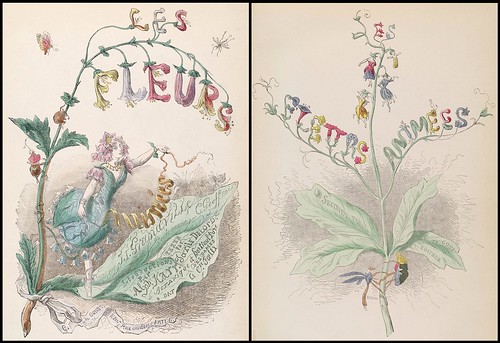
Les Fleurs Animées - titlepages Vol. 1 + 2

Title pages from JJ Grandville's 'Les Fleurs Animées', 1847 {Volumes 1 & 2}


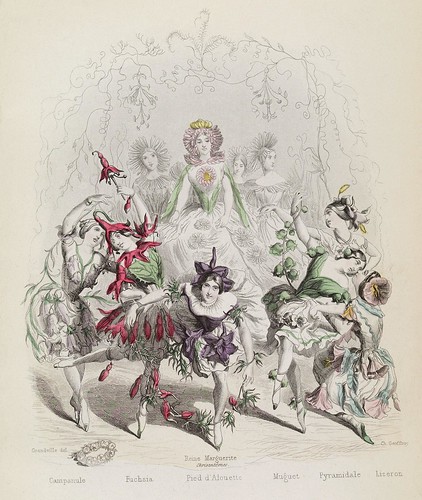
Bal - Les Fleurs Animées - JJ Grandville

'Bal' (The Ball)

'Reine Marguerite, Campanule, Fuchsia, Pied d'Alouette, Muguet, Pyramidale, Liseron'

{China Aster, Canterbury Bell (Campanula), Lady's Ear Drop, Larkspur (Delphinum), Lily of the Valley, Pyramidale Bell Flower, Morning Glory}


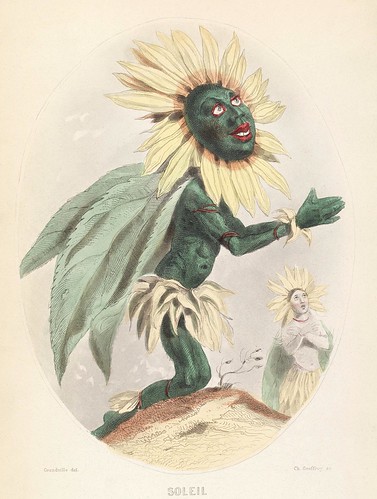
Soleil - Les Fleurs Animées - JJ Grandville

'Soleil' (Sunflower)


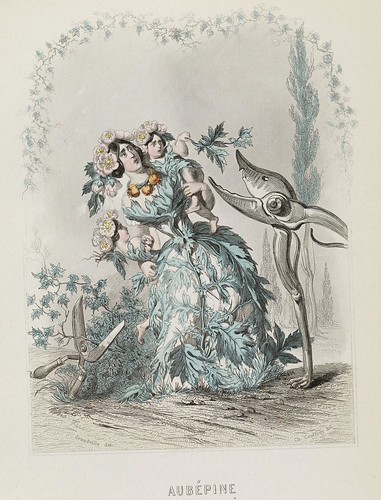
Aubépine - Les Fleurs Animées - JJ Grandville

'Aubépine' (Hawthorn)


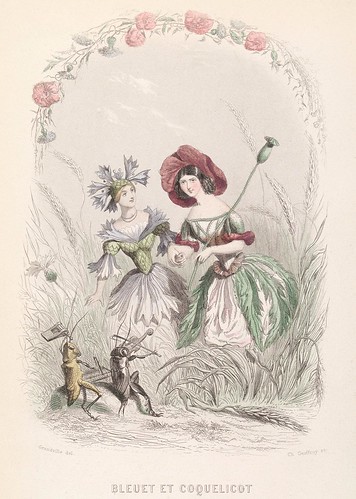
Bleuet et Coquelicot - Les Fleurs Animées - JJ Grandville

'Bleuet et Coquelicot' (Cornflower and Poppy)


Bleuet et Coquelicot (detail) - Les Fleurs Animées - JJ Grandville

'Bleuet et Coquelicot' [detail]


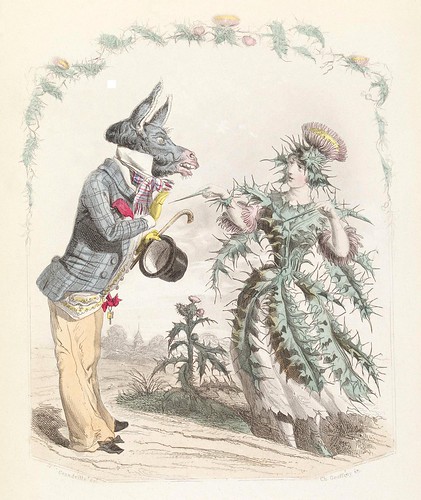
Chardon - Les Fleurs Animées - JJ Grandville

Chardon (Thistle)


Capucine - Les Fleurs Animées - JJ Grandville

Capucine (Nasturtium)


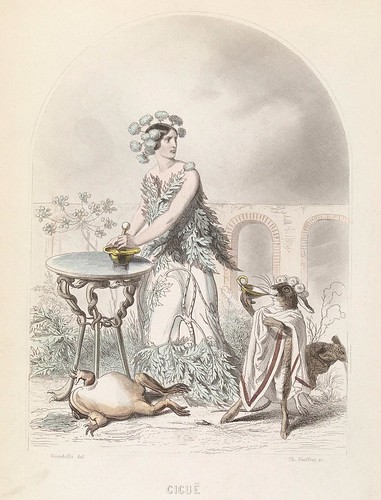
Ciguë - Les Fleurs Animées - JJ Grandville

Ciguë (Hemlock)


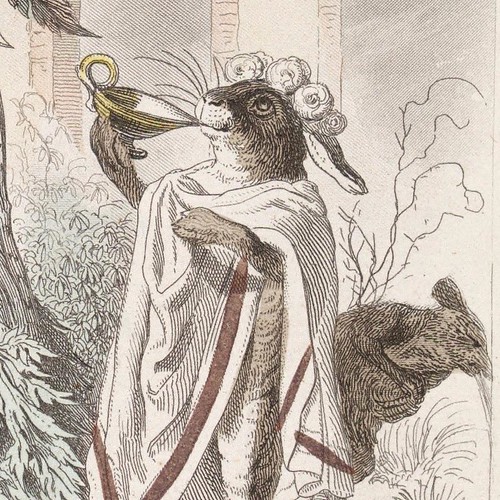
Ciguë (detail) - Les Fleurs Animées - JJ Grandville

Ciguë [detail]


Rose - Les Fleurs Animées - JJ Grandville

Rose


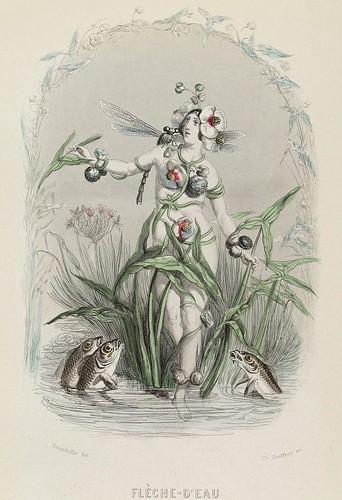
Flèche d'Eau - Les Fleurs Animées - JJ Grandville

'Flèche d'Eau' (Arrowhead)


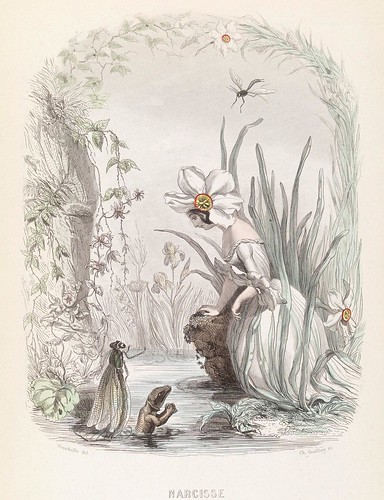
Narcisse - Les Fleurs Animées - JJ Grandville

'Narcisse' (Daffodil)


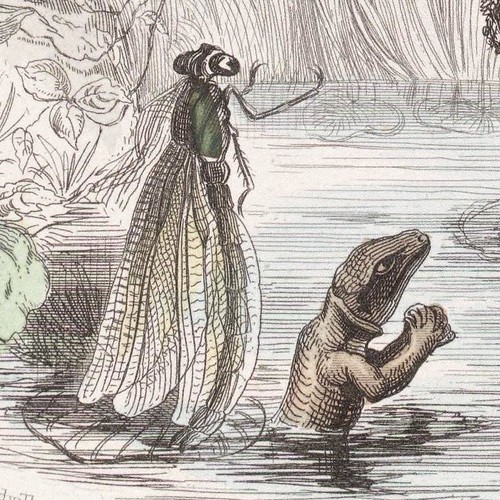
Narcisse (detail) - Les Fleurs Animées - JJ Grandville

'Narcisse' [detail]


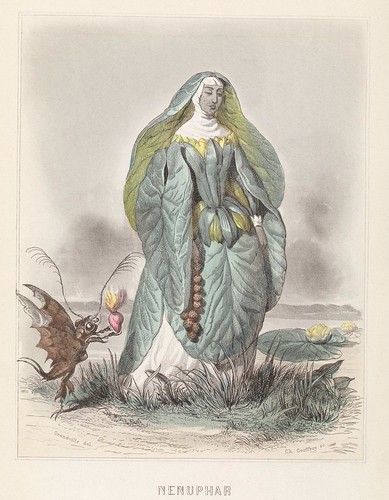
Nenuphar - Les Fleurs Animées - JJ Grandville

'Nenuphar' (Water Lily)


Nenuphar (detail) - Les Fleurs Animées - JJ Grandville

'Nenuphar' [detail]


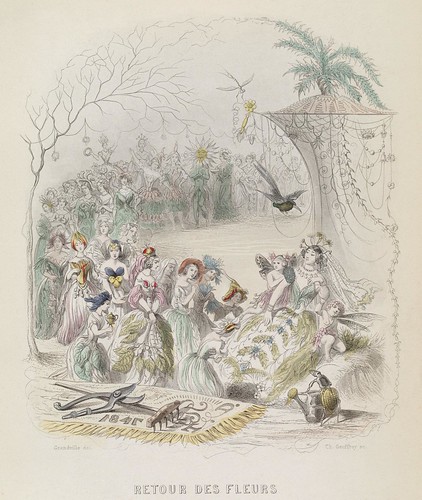
Retour des Fleurs - Les Fleurs Animées - JJ Grandville

'Retour des Fleurs' (The Flowers Return)


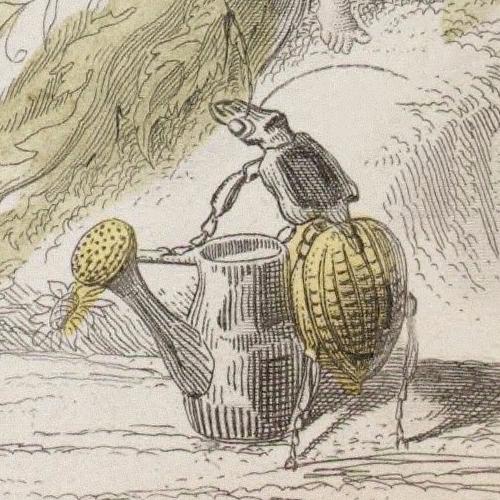
Retour des Fleurs (detail) - Les Fleurs Animées - JJ Grandville

'Retour des Fleurs' [detail]


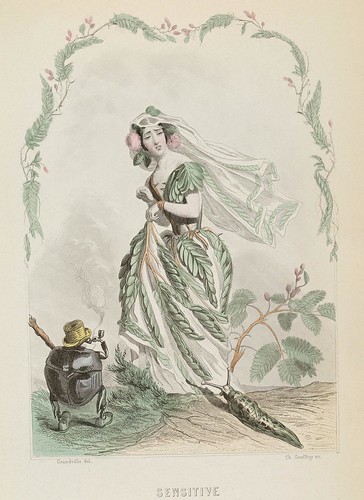
Sensitive - Les Fleurs Animées - JJ Grandville

'Sensitive' (Mimosa)


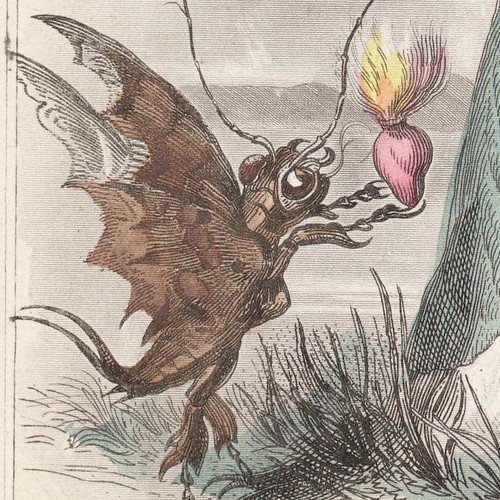
Sensitive (detail) - Les Fleurs Animées - JJ Grandville

'Sensitive' [detail]


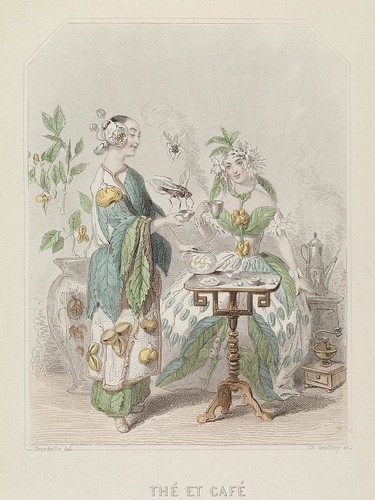
Thé et Café - Les Fleurs Animées - JJ Grandville

'Thé et Café' (Tea and Coffee)


Vigne - Les Fleurs Animées - JJ Grandville

'Vigne' (Grape Vine)


Vigne (detail) - Les Fleurs Animées - JJ Grandville

'Vigne' [detail]


(All these images have been background-cleaned2 and about half have had the colour saturation increased. The illustrations are all cropped from the full pages. Click through to large images; very large versions are also available3)


The delightful caprice of JJ Grandville's imaginative - and posthumously published - series of flower illustrations ensured that 'Les Fleurs Animées' was popularly received in 1847 and reissued and translated many times.

The thing is though, these anthropomorphic figures of apparent whimsical innocence are in fact serving as the visual arm of a satirical work that mocks the sentimentality and effusiveness with which flowers had been portrayed during the romantic era. The text by Taxile Delord is a parody of the style it targets and was intended to sound the death knell for Romanticism*. It also appears to kick out at an over-scientific attitude towards plants during the Enlightenment; at least in the introduction.


1'Les Fleurs Animées' was translated into English by Nehemiah Cleaveland [as 'The Flowers Personified'] immediately after its original publication. The quotes at the top are most likely OCR machine transcriptions and were slightly edited by me.
2The length of time spent assiduously cleaning these images is a private matter that may or may not be discussed in the future with an OCD therapist, should I ever choose to get one.
3In actual fact, the very large jpeg images - of the title pages and, as I recall, each illustration from volume 2 - for this post were obtained partly from Missouri Botanical Gardens old website ('Volumes'/'Structure' links at the top and then: 'View in Detail'): these very large images are missing for some illustrations at the Botanicus site.

Saturday, September 05, 2009

The Geometric Landscape

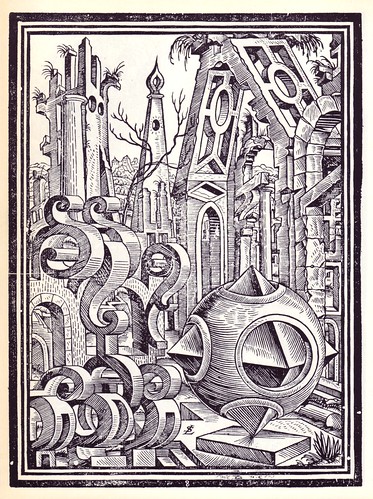
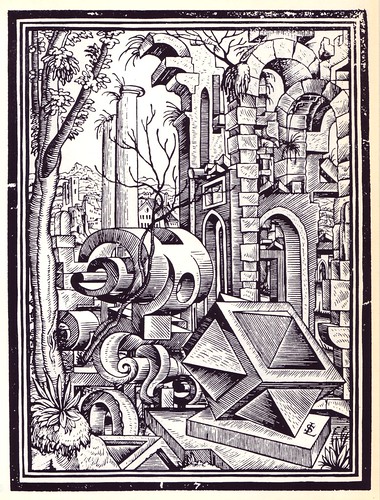
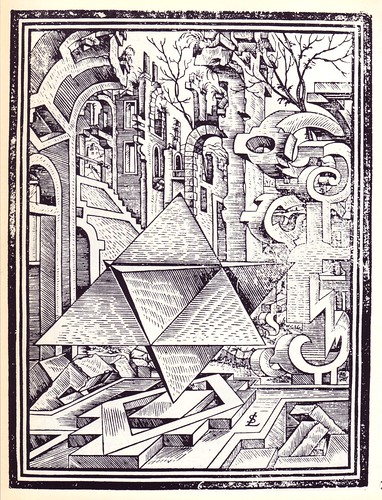
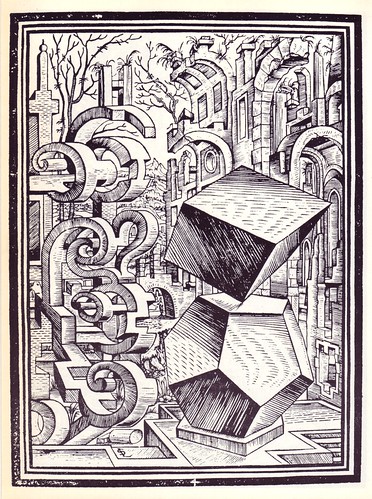
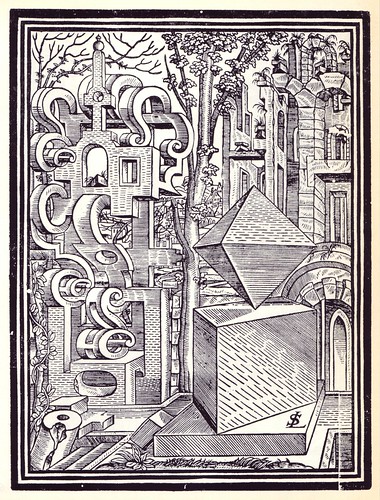
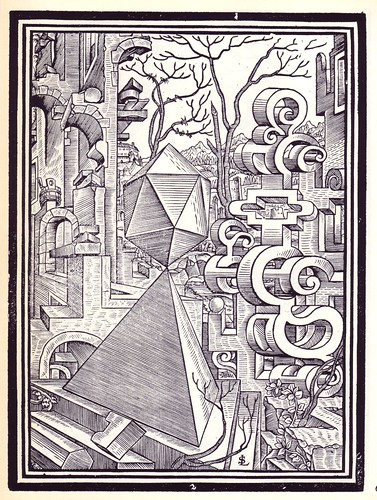
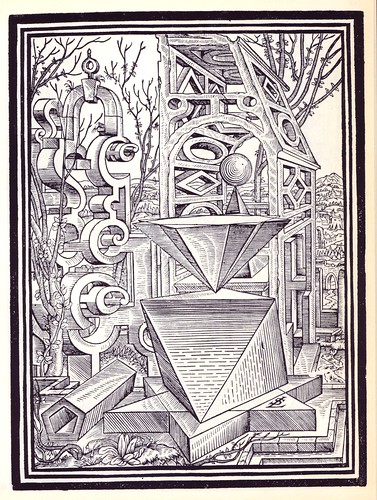
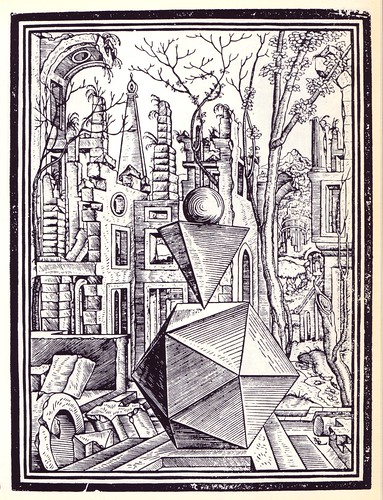
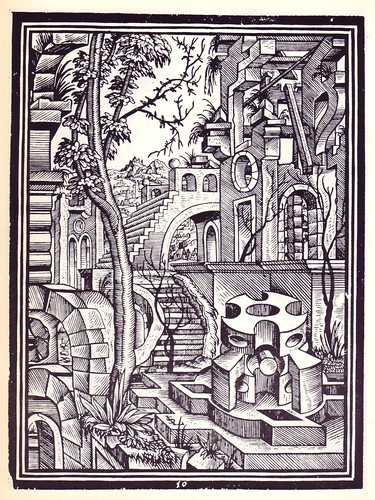
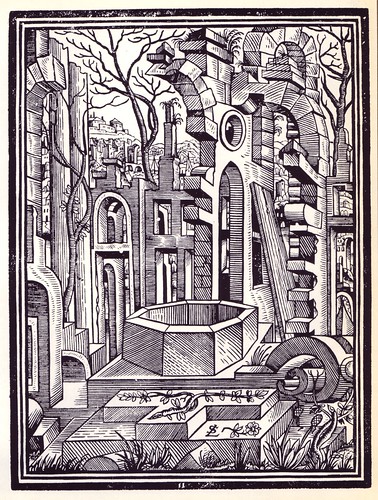
Geometria et Perspectiva - Lorenz Stöer, 1567 g


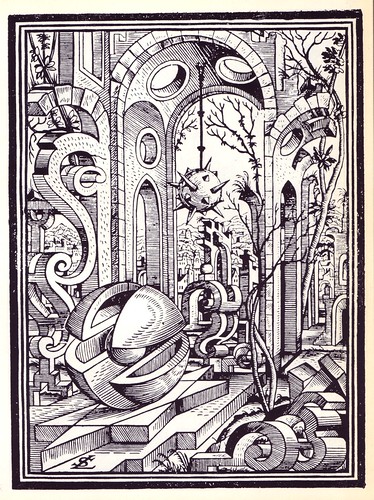
Geometria et Perspectiva - Lorenz Stöer, 1567 h


Geometria et Perspectiva - Lorenz Stöer, 1567 f


Geometria et Perspectiva - Lorenz Stöer, 1567 e


Geometria et Perspectiva - Lorenz Stöer, 1567 c


Geometria et Perspectiva - Lorenz Stöer, 1567


Geometria et Perspectiva - Lorenz Stöer, 1567 a


Geometria et Perspectiva - Lorenz Stöer, 1567 b


Geometria et Perspectiva - Lorenz Stöer, 1567 d


Geometria et Perspectiva - Lorenz Stöer, 1567 i


Geometria et Perspectiva - Lorenz Stöer, 1567 j


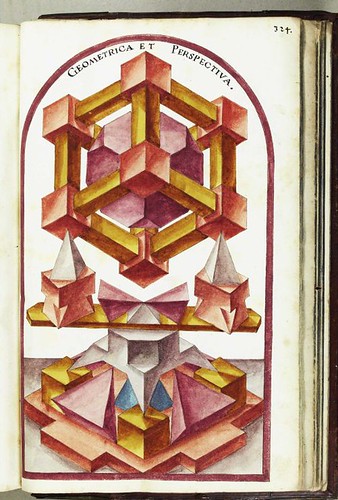
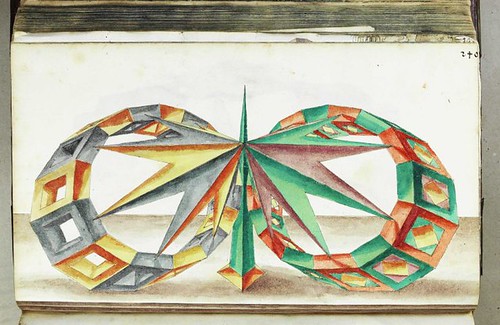
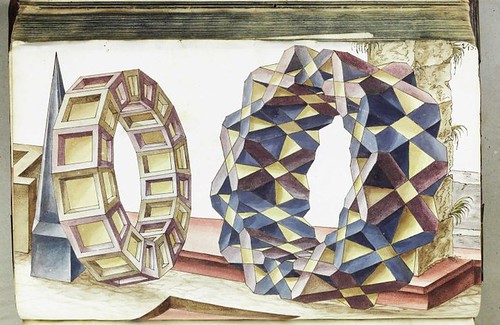
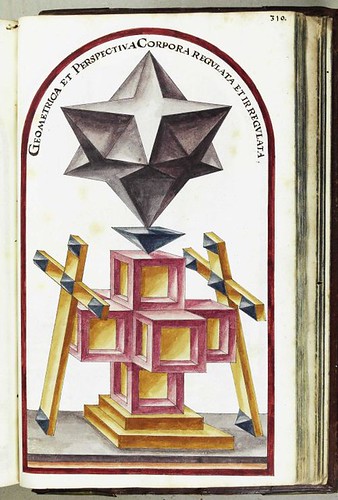
The artist responsible for the remarkable collection of geometric designs seen above and below is Lorenz Stöer (c.1537-c.1621), about whom little is known with certainty. He was born in Nuremberg and moved to Augsburg in 1557. He is variously described as a painter and a draughtsman and he may have been the son of a woodcut artist.

Until relatively recently, Stöer's principal legacy was thought to have been the eleven woodcut illustrations seen above that show combinations of regular and semi-regular solids in landscapes with fanciful ornamental shapes. This suite of eccentric designs was published under the title, 'Geometria et Perspectiva', in 1567.

The book - which included no text - was subtitled:

'Herein are a few ruined buildings, useful to cabinetmakers working
in inlaid wood, and for the special pleasure of many other amateurs,
arranged and presented by Lorenz Stoer, painter and citizen of Augsburg'.

'Geometria et Perspectiva' was sufficiently popular to warrant publication of a second edition, but it's difficult to gauge the extent of influence the book had over marquetry* workers. Perhaps its main effect was as conceptual inspiration, although the Met. Museum has a collector's cabinet with fairly evident connection to Stöer's designs and another cabinet of comparative style is known to exist in Munster [also].

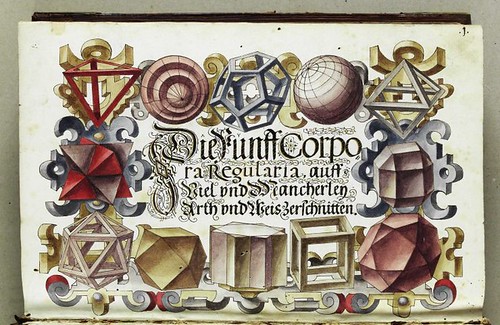
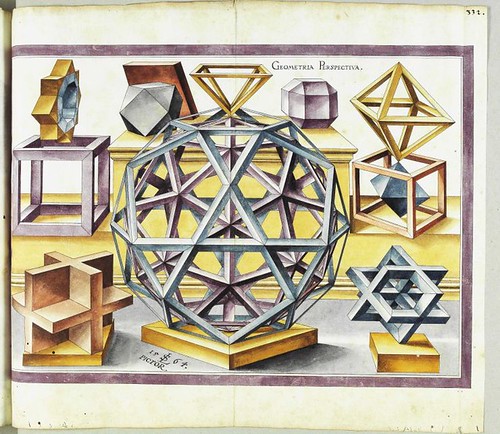
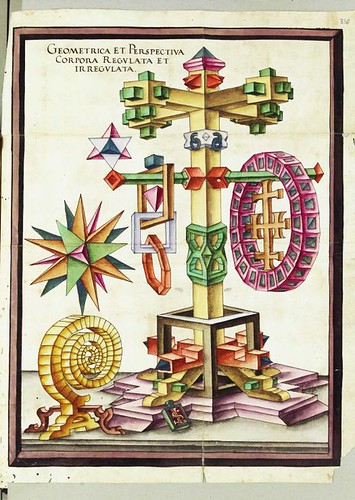
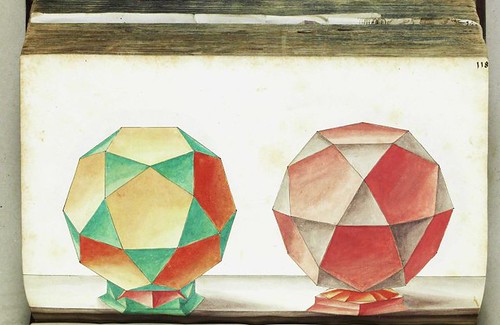
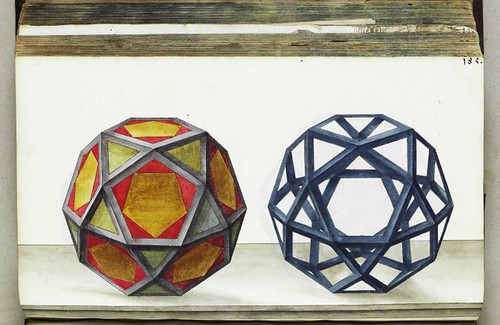
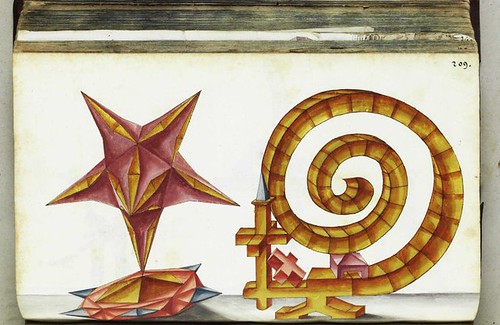
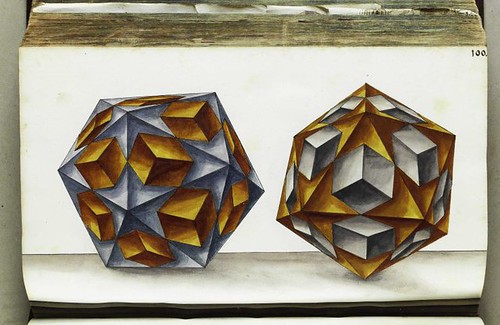
Apparently there had been little in the way of academic study of Stöer apart from a couple of mid-20th century papers that linked him to two Nuremberg goldsmiths - Hans Lencker and Wenzel Jamnitzer - forming a trio of mannerist artists interested in geometric design and perspective. But a large portfolio of coloured drawings was discovered (when?) at the Munich University Library that has, in the last fifteen years, been attributed to Stöer (samples seen below).
"The woodcut sequence 'Geometria et Perspectiva', that was published in Augsburg in 1567, has long been considered the principal work of Lorentz Stoer. Several hundred hitherto virtually unnoticed drawings, owned by the University Library in Munich, triggered the current study. For the first time, a proper academic evaluation was dedicated to Stoer’s works. The description of the prints and drawings that were already known to scholarly literature was completed by the presentation of the large number of unknown works that had been discovered in the course of the analysis.

By means of critical discussion of questions of attribution and influence, and by confirming decisive points in Stoer’s biography, a re-evaluation of his enlarged œuvre was accomplished: it was the representation of stereometric solids that was Stoer’s major interest. The overview of the polyhedron literature and the analysis of the contemporary treatises on geometry and perspective enabled a differentiated look at Stoer’s drawing method, contrasting it with that of the Nuremberg goldsmiths Hans Lencker and Wenzel Jamnitzer. The final discussion of the purpose of the drawings facilitated a new appreciation of his work. The study makes an important contribution to the positioning of Lorentz Stoer as a German Mannerism artist in the context of craftsmanship, ornamental arts and geometry."
[This is the english abstract for the 1996 paper by Dorothea Pfaff, 'Lorenz Stöer: Geometrica et Perspectiva' - full article pdf]

Kim H Veltman: "Stoer's manuscript was actually a compilation of over three decades' work ranging from 1562 through 1599. The novelty of his remarkable effects lay mainly in his combination of earlier techniques. We have noted, for example, that Dürer's workshop explored the use of shading to enhance the spatial effects of these solids. Jamnitzer and Lencker developed this technique using narrow banks of colour to accentuate the borders of these shapes. Stoer added a feature of his own. He used the surfaces of his solids as spaces in which to inscribe further polygonal shapes. Frequently he combined both techniques. In the case of a dodecahedron, for instance [5th image from the bottom below], he outlined the boundaries of its twelve surfaces with bands of colour. In each of these he then inscribed a pentagon."
Veltman goes on to intimate how the colour manuscript - although never published - offered a logical means by which designs could be readily adapted for marquetry, with different wood types matched to the colours; so perhaps Stöer's influence was in fact more significant than suggested above.


Stoer in colour - HFV, 1567 titlepage


Stoer in colour - HFV, 1567 l


Stoer in colour - HFV, 1567 m


Stoer in colour - HFV, 1567


Stoer in colour - HFV, 1567 k


Stoer in colour - HFV, 1567 a


Stoer in colour - HFV, 1567 c


Stoer in colour - HFV, 1567 d


Stoer in colour - HFV, 1567 g


Stoer in colour - HFV, 1567 h


Stoer in colour - HFV, 1567 j


Creative Commons License