Friday, July 11, 2008

The Odd Baroque

"..the picture or figure is in itself the body,
whereas its signification is the soul of the image.."
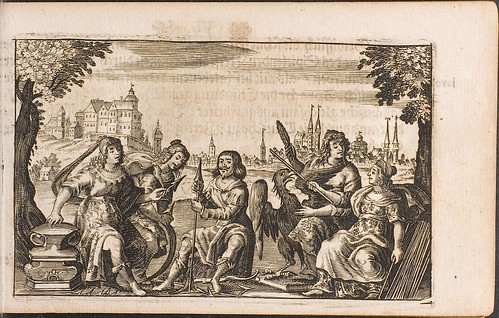

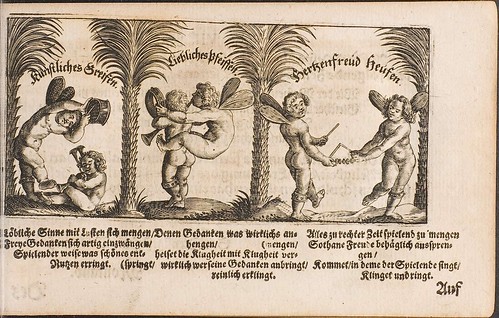
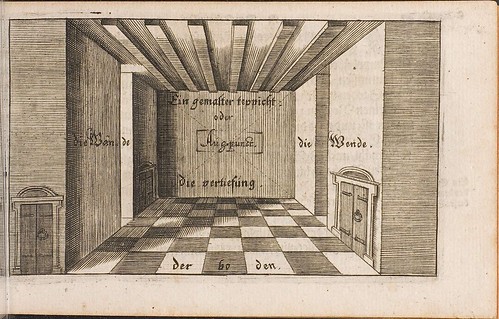
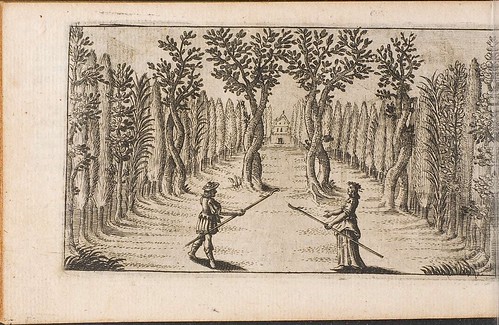
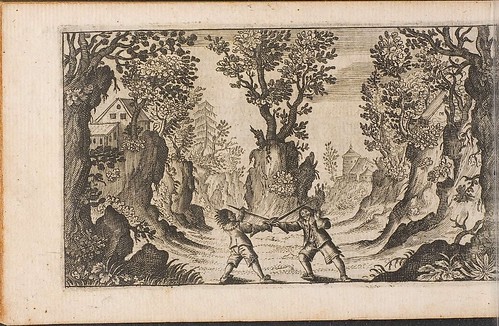
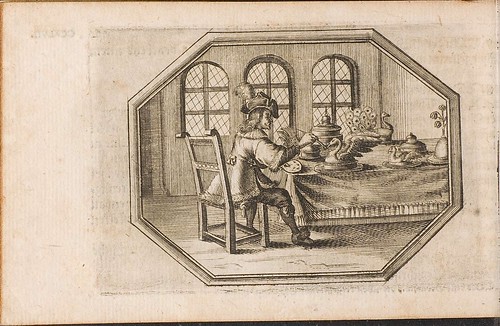
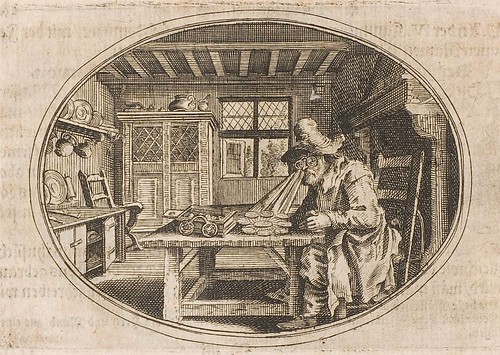
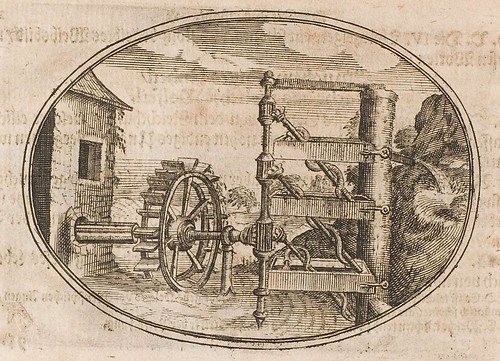
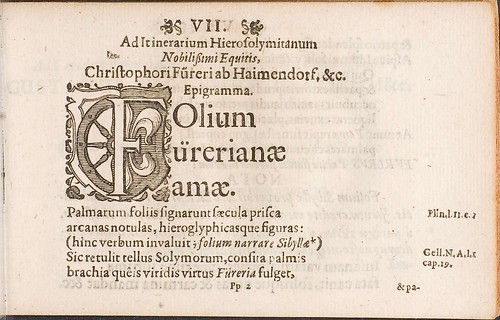
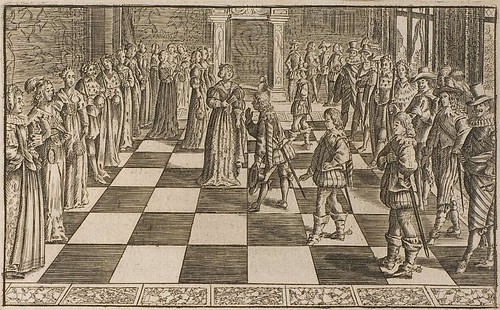
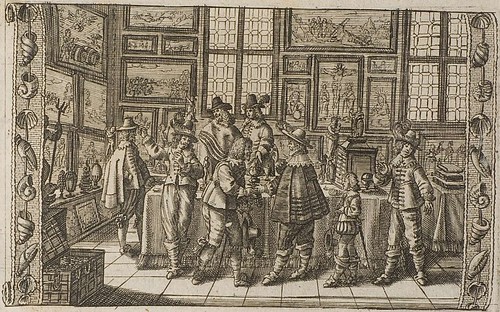
Frauenzimmer Gesprechspiele 1646


Frauenzimmer Gesprechspiele 1646 (double page)


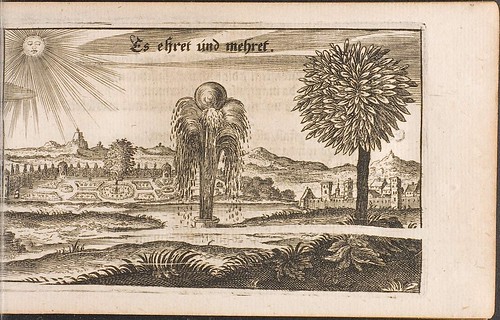
Frauenzimmer Gesprechspiele 1646 a


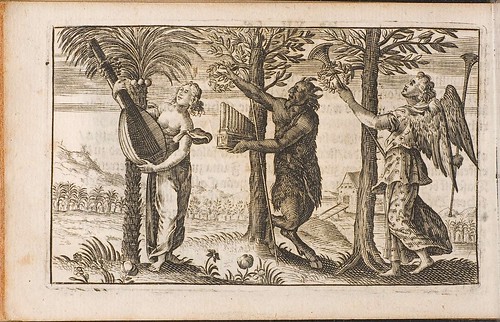
Frauenzimmer Gesprechspiele 1646 b


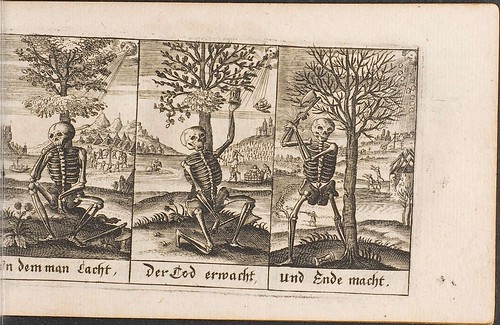
Frauenzimmer Gesprechspiele 1646 c


Frauenzimmer Gesprechspiele 1646 d


Frauenzimmer Gesprechspiele 1646 e


Frauenzimmer Gesprechspiele 1646 f


Frauenzimmer Gesprechspiele 1646 g


Frauenzimmer Gesprechspiele 1646 j


Frauenzimmer Gesprechspiele 1646 k


Frauenzimmer Gesprechspiele 1646 l


Frauenzimmer Gesprechspiele 1646 m


Frauenzimmer Gesprechspiele 1646 n


Frauenzimmer Gesprechspiele 1646 p


Even by the standards of the extravagant and allegorical excesses of the Baroque, which are much favoured as subject matter for this site, the 1646 'Frauenzimmer Gesprechspiele', by Georg Philipp Harsdörffer, is a very very weird book. Or, series of books, in fact.

Harsdörffer (1607-1658) was educated in law and philosophy and served as an assessor in the lower and middle courts of his home town of Nuremberg. In his youth he travelled extensively around Europe and his skill with foreign languages allowed him a sideline occupation in translation. He was also a prolific author, having published material that could fill fifty volumes - chiefly poetry - in his career.

He is regarded as one of the major writers (or perhaps, literary influences) of 17th century Germany and was a founding member of the Nuremberg literary society called the Shepherds of Pegnitz. The group had a complex set of values that was communicated primarily through Harsdörffer's publications. With a foundation in pastoralism, the group rejected the imitation of the ancients (an anti-Renaissance edge I suppose) and the authority of Aristotle; and instead, were advocates for a Germanising of literature and an overall theatrical aesthetic that favoured the synthesis of the various branches of the Arts.

If that's not sufficiently convoluted, these tenets were held to be expressed most honourably, or in the most edifying manner, through opera: Harsdörffer wrote at least one libretto and, together with the Shepherd Society's influence, the rise of German language opera was given something of a literary boost during the 17th century. Opera allowed the unity of poetic text, music, design and painting to achieve harmony out of the dissonance in the world.

The final Baroque trope that would find (visual) voice in the writings of Harsdörffer was the art of the literary conceit in which images steeped in symbolic meaning - in the manner of emblems and imprese* - were deployed to communicate to the observer a greater level of knowledge than could be expressed through language alone.

It's perhaps one of the most puzzling aspects of Baroque culture, this notion of a semiotic theory of metaphor, in which objects, forms and illustrations were processed and valued according to their hidden meanings. Whether natural or artificial, each entity might have a correspondence with another object or might symbolise abstract qualities like vices or virtues and in a literary sense, pictures made up of varying elements and layers of meaning could be further augmented with mottoes or epigrams or allegorical text by way of accompaniment.

Two other things worth noting - one relevant here and one not - are that with the Baroque abstract manner of perception, it's not surprising that people played around while crafting visual motifs in order to embed very obtuse labyrinths of allusion to dazzle, perplex and amuse the literati. That perception also has a resonance with the collection culture: having a wunderkammer filled with amazing objects was not just about creating a display museum. The objects were themselves symbols through which the collector was able to derive a more profound knowledge of the world.

'Frauenzimmer Gesprechspiele' (Playful Colloquies for the Ladies or Women's Room Conversational Games) is an eight volume work published through the 1640s. As best I can make out from the snips of commentary around, it attempts to record the philosophies of the Shepherds of Pegnitz, outline the social activities of the era and provide an analysis of emblems and instructions for creating them at home. In other words, it was something of a manual for Baroque aesthetics. The information was presented in the form of a dialogue between characters.

People could consult this series to learn how to have emblem parlour games in order to baffle their friends by sketching their own emblems and writing related verse. It's hard to explain why exactly, but I get the feeling that there was some level of irony in all this, that it was not an overly serious work and was meant, like the emblem games themselves, to be primarily a source of entertainment. I'm having trouble reaching for any contemporary analogies. Maybe it's like you do a university degree in fine arts for the purpose of drawing silly stick figures ... or something. And of course, it feels entirely appropriate that I'm having great difficulty wrapping my head around it.

Are these really emblems? I don't know.

By the time I'd collected the above images, finished searching for background information and written the preceding spiel, I discovered that the illustrations above come from Volume 6 of 'Frauenzimmer Gesprechspiele' and that a (later edition of a) second volume (Volume 2) is also online, from which the selection below was drawn. Both are available from Herzog August Bibliothek.

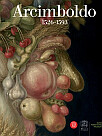
That first engraving below is a reworking of the famous 16th century painting by Giuseppe Arcimboldo, 'The Librarian'.

I'm off to have a shower to wash all this weirdness out of my system. Everything written in this post, more than usually, should be regarded as lacking in authority, despite my best efforts.

Update: See the later post, Heart for Art's Sake, for a more orthodox emblem book by Harsdörffer.
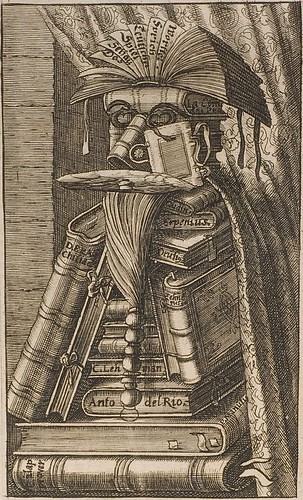
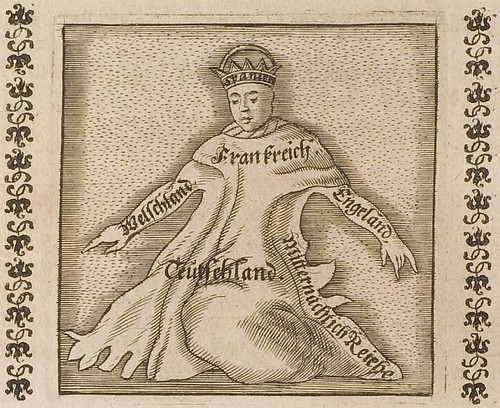
1640s version of Arcimboldo's The Librarian


Frauenzimmer Gesprechspiele Volume 2 1657


Frauenzimmer Gesprechspiele Volume 2 1657 a


Frauenzimmer Gesprechspiele Volume 2 1657 b

Thursday, July 10, 2008

Marozzo Swordplay

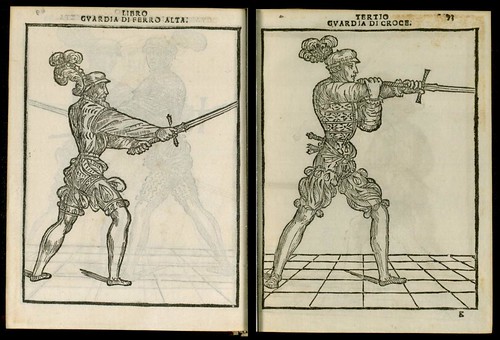
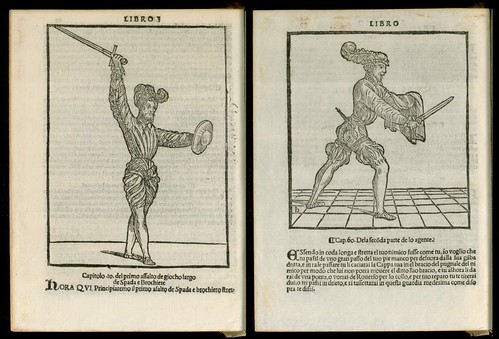
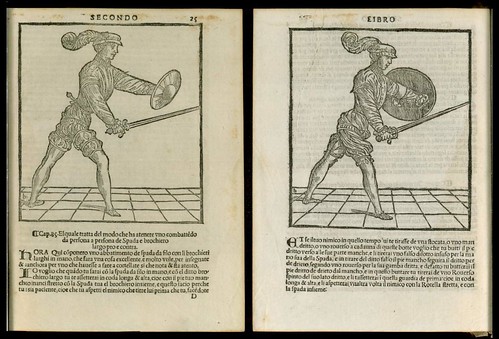
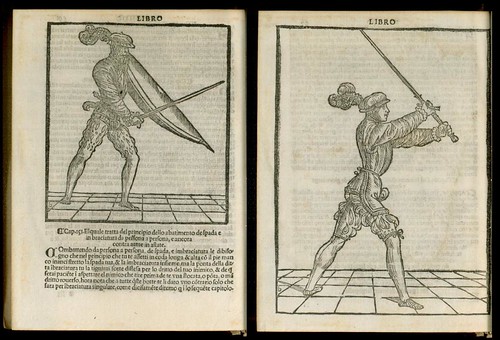
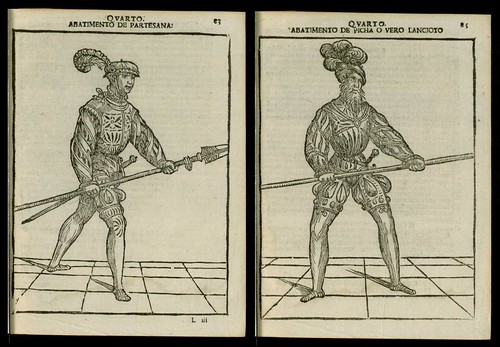
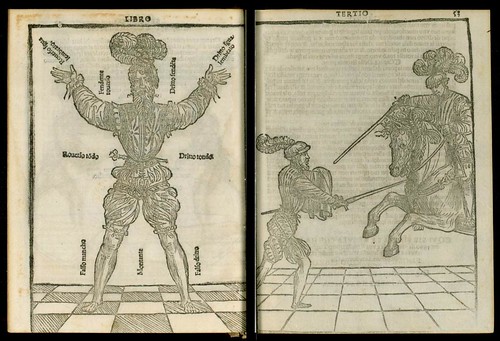
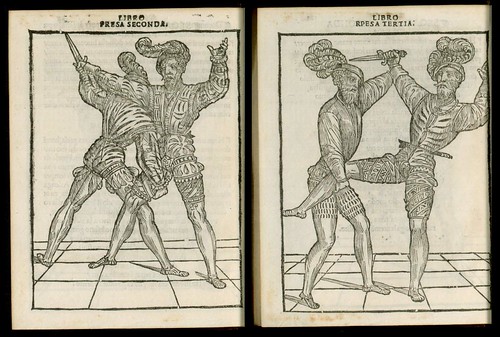
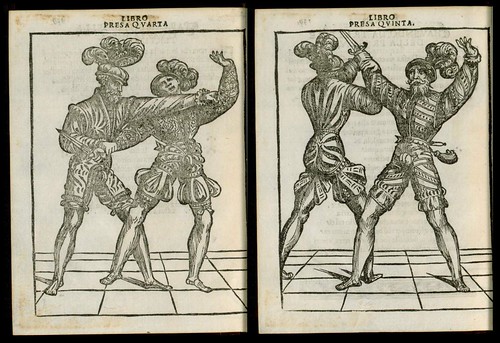
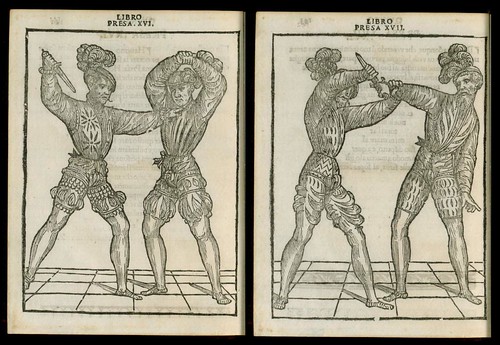
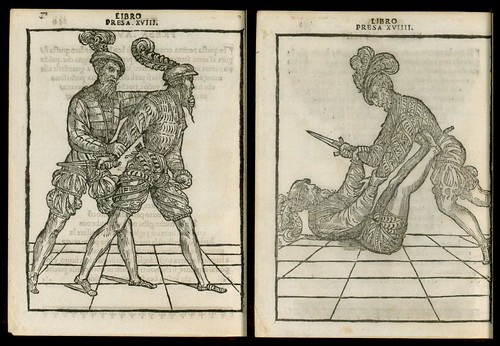
L'arte de l'Armi by Achille Marozzo, 1536 f


L'arte de l'Armi by Achille Marozzo, 1536


L'arte de l'Armi by Achille Marozzo, 1536 a


L'arte de l'Armi by Achille Marozzo, 1536 b


L'arte de l'Armi by Achille Marozzo, 1536 c


L'arte de l'Armi by Achille Marozzo, 1536 d


L'arte de l'Armi by Achille Marozzo, 1536 g


L'arte de l'Armi by Achille Marozzo, 1536 h


L'arte de l'Armi by Achille Marozzo, 1536 j


L'arte de l'Armi by Achille Marozzo, 1536 k


L'arte de l'Armi by Achille Marozzo, 1536 l


L'arte de l'Armi by Achille Marozzo, 1536 m


L'arte de l'Armi by Achille Marozzo, 1536 n


L'arte de l'Armi by Achille Marozzo, 1536 o


L'arte de l'Armi by Achille Marozzo, 1536 p


L'arte de l'Armi by Achille Marozzo, 1536 q


Fencing master, Achille Marozzo (1483-1553), was the most prominent and influential champion of the Dardi school of swordsmanship, which emerged in Bologna during the Renaissance.

Lippo di Bartolomeo Dardi's system of single-handed sword techniques bridged the gap between the cruder medieval cutting and slashing style and the nimble and more technically inclined thrusting methods associated with the rapier. The latter system would come to dominate fencing in the 17th and 18th centuries.
It has been suggested in the comments below (and in another of the fencing posts on BibliOdyssey) that the differences between the sword -vs- rapier in terms of ease of manoeuvrability and range of offensive techniques that could be undertaken with each has traditionally been overstated. In other words, it's asserted that the rapier is not more agile, it was just a different, newer weapon.

Dardi (or Bardi) had established an academy early in the 15th century in Bologna and although no surviving treatise of his is thought to exist, his combat strategies were passed down through students and Marozzo published the definitive record of the school's principles in his 1536 book, 'Opera Nova dell'Arte delle Armi' (~new work on the art of arms).

Marozzo's 'Opera Nova' was the most important fencing manual of the 16th century and the first serious work to establish uniform rules for the use of weapons. It outlines theoretical considerations (derived from Aristotle, no less) and provides practical direction for both defensive and offensive use of swords, daggers and polearms in varying combinations, as well as the role of shields, bucklers and capes. There is a whole chapter devoted to honour, such were the noble aspirations of the project.

Further editions of 'Opera Nova' were published up until 1615 and the treatise continues to be used as a primary source in fencing academy instruction today. It is not the only reference publication in respect of the Bologna School, as contemporary works by Manciolino, Viggiani and Dall’Agocchie are also regarded as important ancillary commentaries.

Tuesday, July 08, 2008

Edward Bawden

"My own wish, would be for all the jigsaw pieces of my
life’s work to be together, not scattered willy-nilly to any
institution that happened to want this bit or that.."


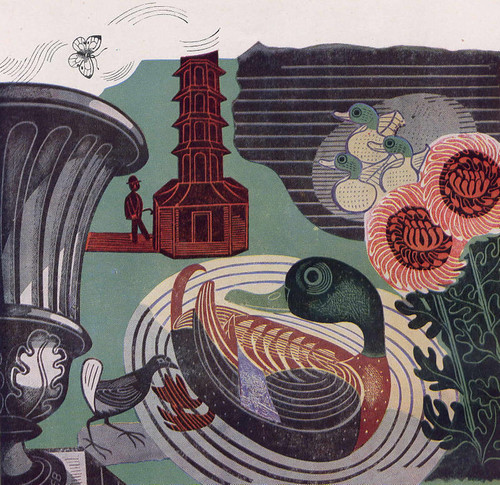
Kew Gardens by Edward Bawden 1936 (via If Charlie Parker)

'Kew Gardens', 1936 (catalogue cover) [via]


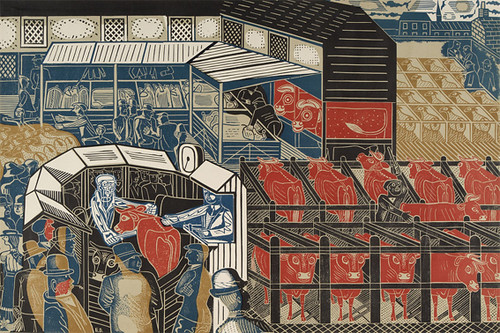
Cattle market Braintree (linocut) rennart.co.uk

'Cattle Market, Braintree' (linocut) [via]


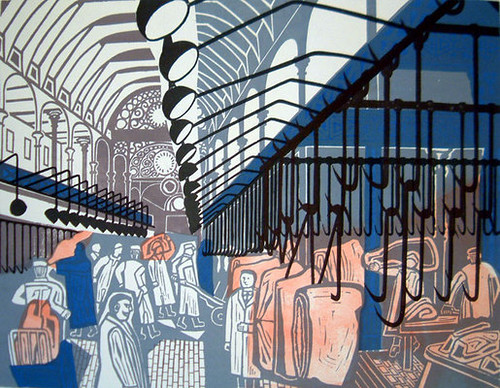
Smithfield Market, 1967 Lithograph after linocut from the series 'Six London Markets' osbornesamuel

'Smithfield Market', 1967
Lithograph after linocut from the series 'Six London Markets' [via]


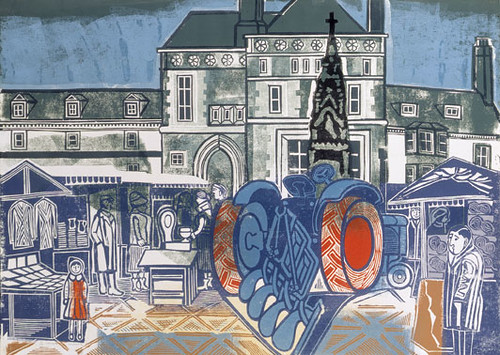
Blue Tractor 1962  (faslondon.com)

'Blue Tractor', 1962 [via]


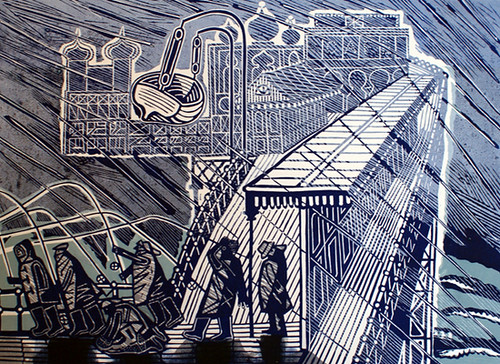
Snowstorm at Brighton, 1957 (linocut) osbornesamuel

'Snowstorm at Brighton', 1957 (linocut) [via]


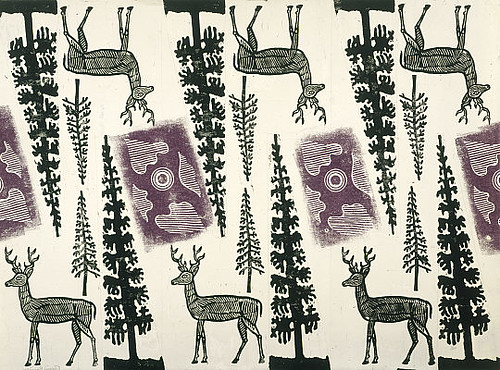
Design for Wrapping Paper (Deer and Trees) 1960 (via nationalgalleries.org)

Design for Wrapping Paper (Deer and Trees) 1960 [via]


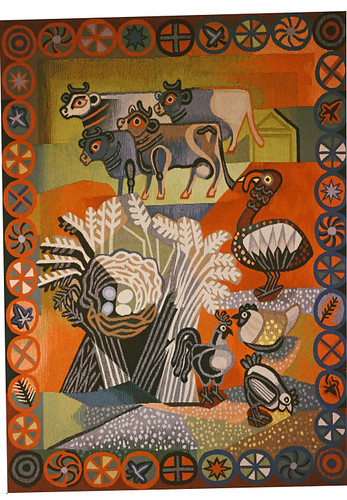
Farmyard (tapestry) 1950 (V+A)

Farmyard (tapestry) 1950 [via]


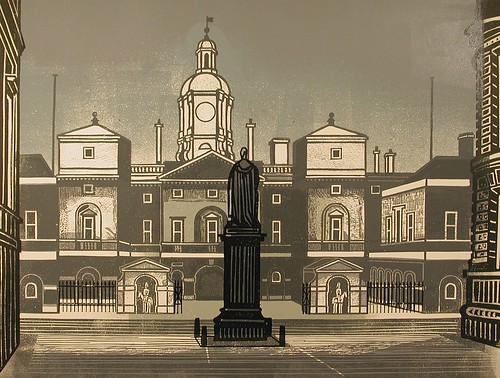
Nine London Monuments series 1966 (via cecilhigginsartgallery)

Nine London Monuments series 1966 [via]


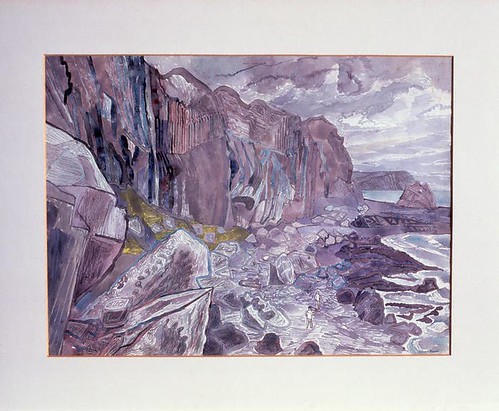
Cliffs and Waterfall, Carsaig by Edward Bawden 1950 pencil, watercolour (via fineart.ac.uk)

'Cliffs and Waterfall, Carsaig', 1950.
(pencil, watercolour) [via]


'Derelict Chapel, Minions Nr Uskeard', 1958 - watercolour and pen and ink - (faslondon.com)

'Derelict Chapel, Minions Nr Uskeard', 1958.
(watercolour, pen and ink) [via]


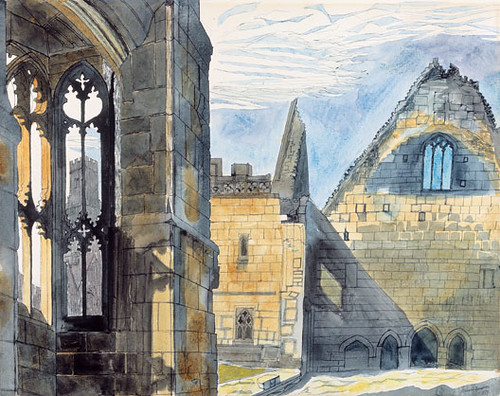
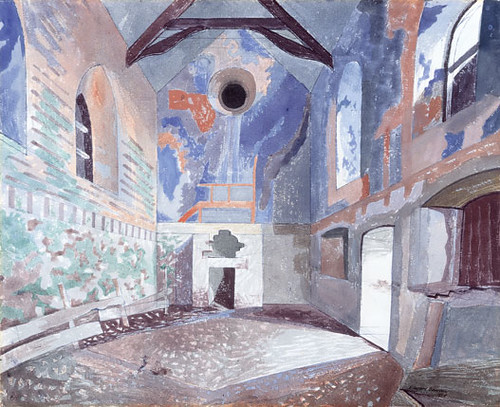
'Wingfield Manor, Derbyshire - The Great Hall', 1979 Watercolour (faslondon.com)

'Wingfield Manor, Derbyshire - The Great Hall', 1979
(watercolour) [via]


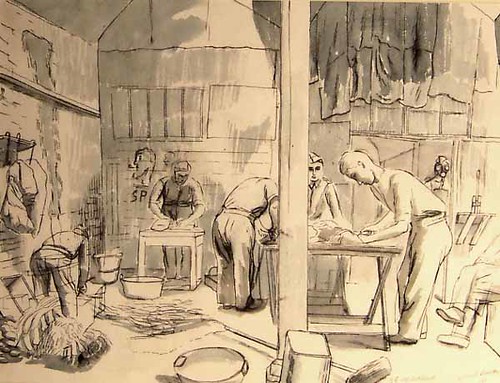
H.Q. Coy, Cookhouse on paper, unique Bawden, Edward 1940

'H.Q. Coy, Cookhouse', 1940 [via]


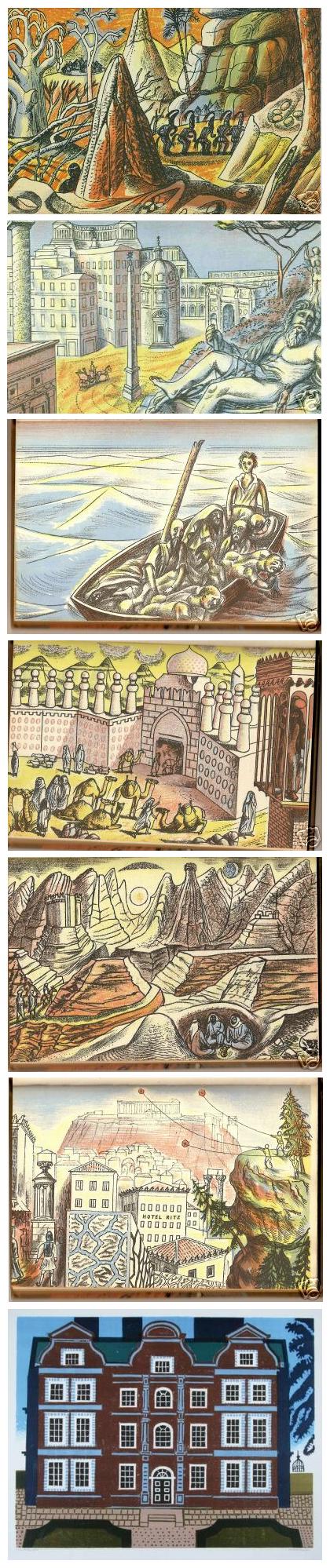
Edward Bawden compilation - Jerusalem Gate Camels + Pilgrims Ass, Don Juan Ship, Kew Palace (2 uknown)

Compilation from a variety of sources including 2 unknown titles and:
'Jerusalem Gate Camels'; 'Jerusalem Pilgrims Ass', 'Don Juan Ship', 'Kew Palace'.


'Life in An English Village' 1949 (flickberry on ebay.co.uk)

'Life in An English Village' a book from 1949
containing sixteen Bawden lithographs as well as line
drawings (from a current UK Ebay auction, seller = flickberry)


[All images © the Estate of Edward Bawden]


Edward Bawden (1903-1989) was born in Essex and attended the Cambridge School of Art and then the Royal College of Art, from where he matriculated in the mid-1920s with a diploma in book illustration.

His friendship with fellow student and noted illustrator, Eric Ravilious, resulted in a number of collaborative murals and they became the centre of a group of artists known as the Greater Bardfield School. Employment with Curwen Press and an advertising agency saw Bawden's innovative and subtly humorous illustration designs appear in the 1930s in major advertising projects for London Transport and Twinings Tea, among many other clients.

During the Second World War, Bawden was an official war artist and was deployed with the British Expeditionary Force in Dunkirk, France; then in the Middle East (Iraq, Saudi Arabia and Syria) and later in North Africa (Egypt, Ethiopia, Libya and Sudan). He credited this period with maturing his drawing skills and the majority of his artistic output at the time was in watercolour sketches.

In a sixty year career, Bawden produced numerous book and poster illustrations, ceramic, wallpaper, patterned paper and metal garden furniture designs, woodblock, linocut and lithographic prints as well as a sizeable body of watercolour and gouache paintings. He travelled extensively and taught printing and design at a range of institutions.
"During the late 1950's and the 1960's Bawden produced the linocut and lithographs for which he is perhaps best known. He produced large prints on Kew Gardens and Brighton; on Liverpool Street Station and a series on the London Markets. Clear and bold and often graphic in design - reflective no doubt of his training in the Design School of the Royal College - they are representative of lino-cutting at its best. They also push the creative possibilities of the medium as in, for instance, the angular cuts in Snowstorm at Brighton which make abstract the portrayal of a storm whilst at the same time graphically capturing its impact."

Mr Bawden's hope (expressed in the quote at the beginning of this entry) that his artistic output should find a single home has not been achieved in either the real world, nor indeed, online. One of the obvious hurdles in attempting to piece together a survey of an in-copyright artist's body of work is that the vast majority of example images available on the web are too small, with varying degrees of digitisation quality present.

I hesitated making this post because there is always the fear that, in only sampling from websites displaying images that are adequately sized, the entry would not do sufficient justice to the creative diversity of such an extraordinary graphic arts talent. Accordingly, I've attempted a compromise here. Many of the images above are not particularly large and some of them are actually displayed at full size. But, as far as I can tell, this set touches on most of the important themes and styles in Bawden's work.


[**Off topic: for anyone who has only picked up the rss feed this year or who wasn't otherwise aware, a book based on this website (bearing the catchy title of 'BibliOdyssey' - promulgated after twenty two focus groups and two knife fights) was published late last year and can be purchased thusly: Europeans are best off going to the publisher's website and for the rest of the universe there is always Amazon.]

Monday, July 07, 2008

Old Belgrade

historic belgrade (beograd) map ~1715

Podroban nacrt Beograda i tvrdave (1710-1720) (artist unknown)


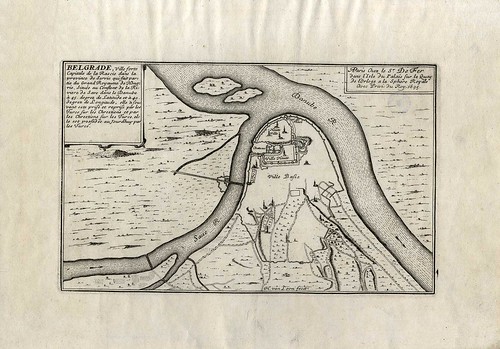
Beograd map 1695 by H van Loon

Beograd map 1695 by H van Loon


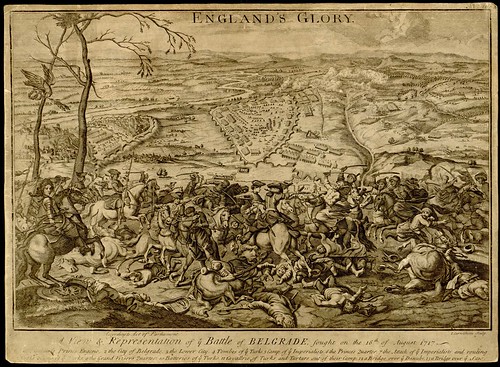
A View and Representation of the Battle of Belgrade, 1717 by I Carnitham (England's Glory)

('England's Glory') A View and Representation of the
Battle of Belgrade, 1717 by I Carnitham. ('England's Glory')


Beograd - izgled sa savske strane - K Gebel (umetnik) E Veikselgartner (lithography) J Haler (stampar) (undated)

Beograd - izgled sa savske strane - K Gebel (umetnik)
E Veikselgartner (lithography) J Haler (stampar) (undated)


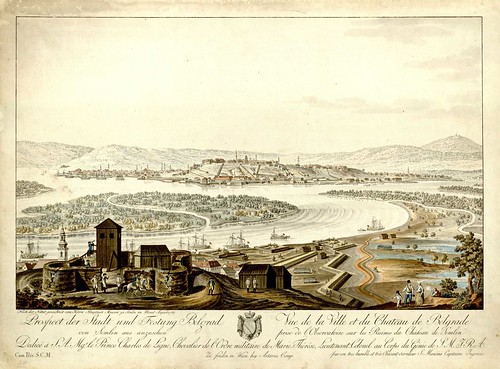
Beograd - pogled sa ugarske strane, 1700-1710 (artist uknown)

Beograd - pogled sa ugarske strane, 1700-1710 (artist uknown)


Beograd by Johann Poppel, 1850

Beograd by Johann Poppel, 1850


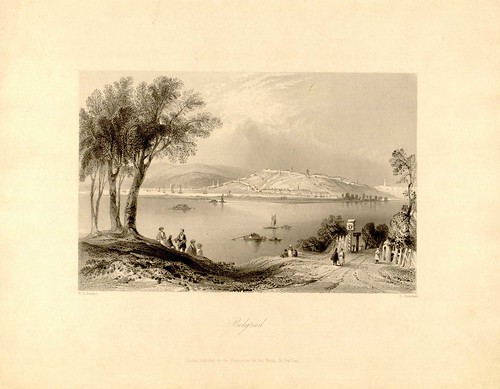
Beograd by Njilliam Henry Bartlett - umetnik. Edvard Brandart, graver (undated)

Beograd by Njilliam Henry Bartlett - umetnik. Edvard Brandart, graver (undated)


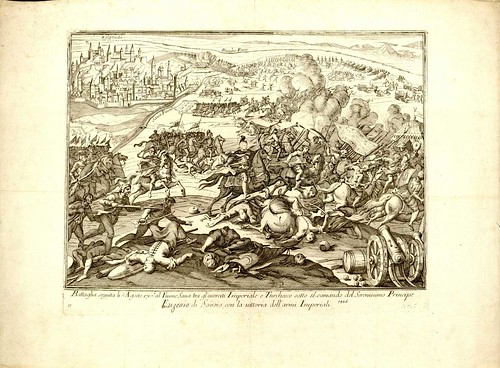
Bitka kod Beograda, 1716 (artist unknown)

Bitka kod Beograda, 1716 (artist unknown)


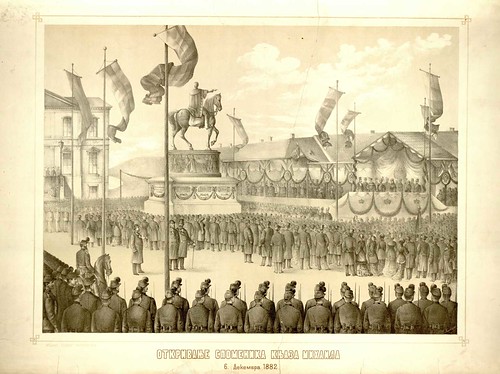
Otkrivanje spomenika knjaza Mihaila - lithograph by R Linhart, 1882

Otkrivanje spomenika knjaza Mihaila - lithograph by R Linhart, 1882


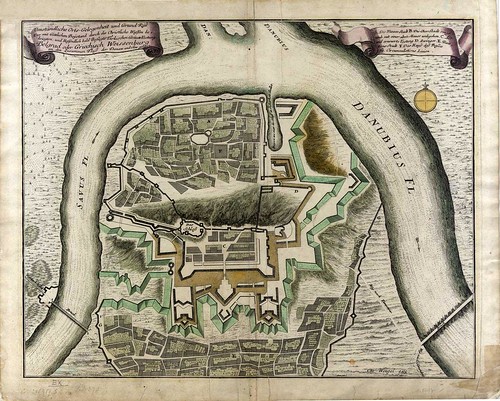
Plan Beograda, 1730s (artist uknown)

Plan Beograda, 1730s (artist uknown)


Plan grada i tvrdave Beograda by S Mancini, 1780s

Plan grada i tvrdave Beograda by S Mancini, 1780s


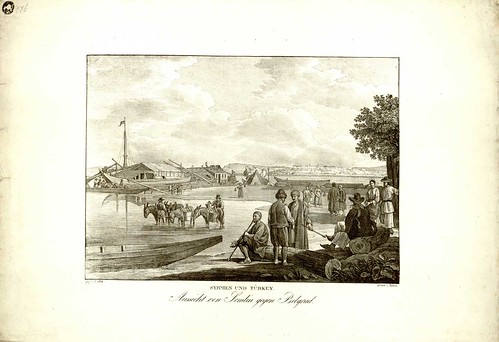
Pogled sa Zemuna na Beograd. Jacob Alt - umetnik, Adolf Kunike - stampar. 1826 (Syrimen und Turkey)
Pogled sa Zemuna na Beograd. Jacob Alt - umetnik,
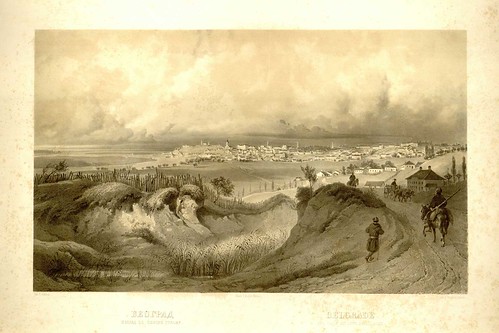
Adolf Kunike - stampar. 1826 (Syrimen und Turkey)


Predstavljanje velicanstvene pobede Karla 6. nad Turksom kod Beograda by Joh David + Ben Kenckel, 1717

Predstavljanje velicanstvene pobede Karla 6.
nad Turksom kod Beograda by Joh David + Ben Kenckel, 1717


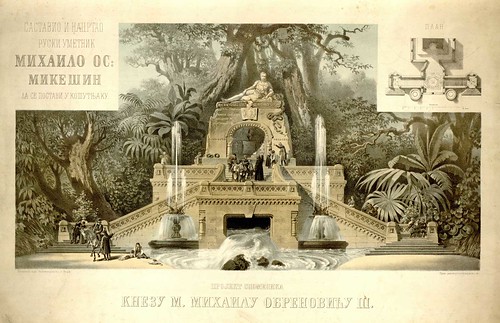
Projekt spomenika knezu M. Mihailu Obrenovicu 3. Mikesin, Mihailo Osipovic, 1860s

Projekt spomenika knezu M. Mihailu
Obrenovicu 3. Mikesin, Mihailo Osipovic, 1860s


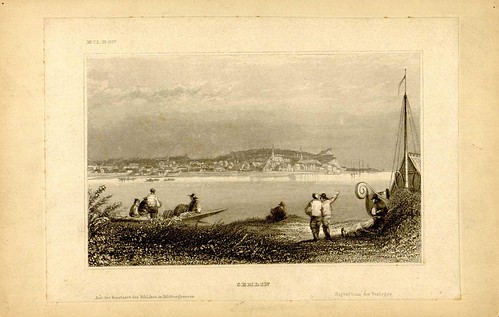
Zemun. Hildburghausen. undated

Zemun. Hildburghausen. undated


Creative Commons License