Sunday, January 08, 2006

Garden Architecture

"The composition of picturesque gardens requires, at least a knowledge of the principles of elementary structures, and of ornamenting, since their embellishment consists partly in the erection of little allegorical monuments, the whole richness of which often depends but on their foreign form on their ornaments, these gardens, therefore, could not remain any longer under the direction of mere ordinary gardeners, but are become the province of artists, painters and architectects: it was for the latter in particular to being these gardens to perfection."

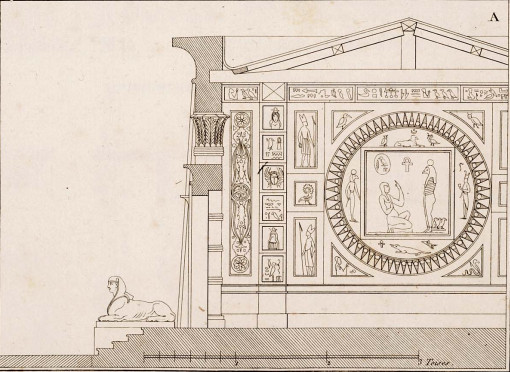
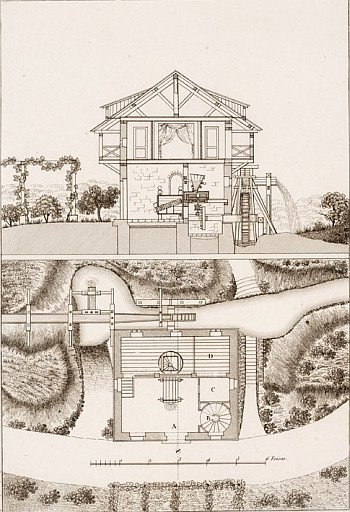
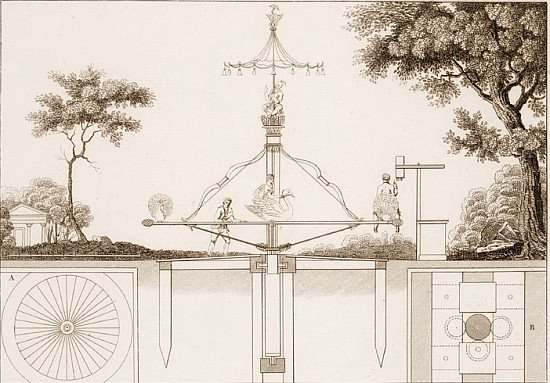
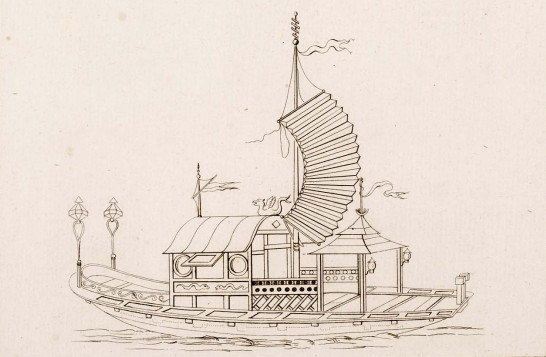


This 1809 trilingual book was written by German-born, French-naturalized architect and draftsman, Jean Charles Krafft. Krafft did almost all of the 92 drawings and the corresponding engravings were done by Boulay, Gossard and Joannee.

I'm presuming Krafft wrote the english translation - somewhat more embellished than the engravings themselves but somewhat less aesthetically pleasing. This is one of a number of architectural publications he released.

Plans of the most picturesque gardens in France, England and Germany, and of the edifices, monuments, fabrics etc which contribute to their embellishment, of every kind of architecture, such as Chinese, Egyptian, English, Arabian, Moorish, etc is online in multiple sized formats at the wonderful University of Wisconsin 'Digital Library for the Decorative Arts and Material Culture: Image and Text Collections' website. (thumbnail page)
Saturday, January 07, 2006

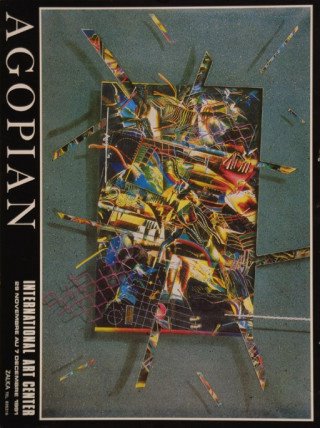
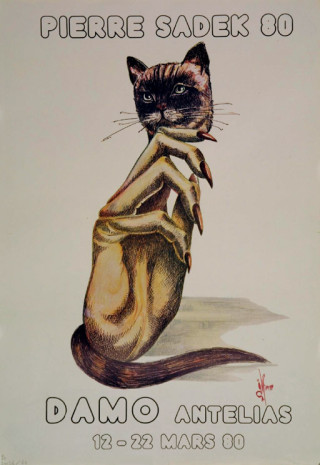
Art Posters in Lebanon


Art Posters in Lebanon from the Jafet Library at the American University of Beirut
.
[inadvertently via Agence E]

The History of Geology in Rare Books

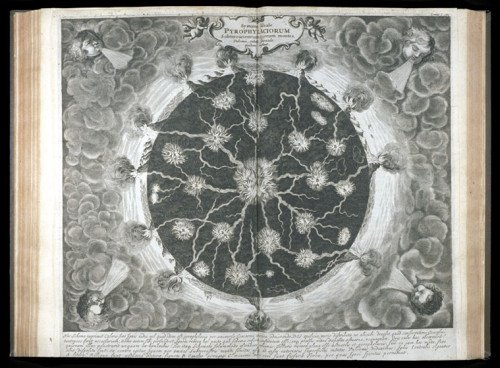
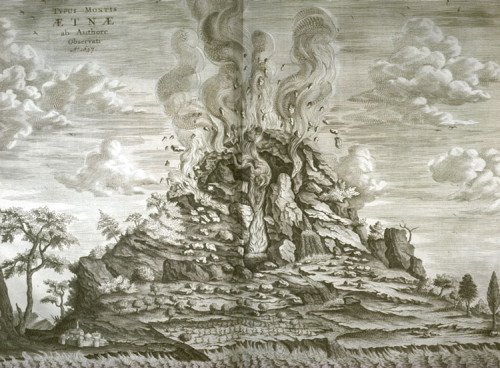
The above images come from the amazing Jesuit polymath,
Athanasius Kircher. He was moved to produce a sort of
pre-geological treatise, Mundus Subterraneus (1665), after having witnessed
the eruption of Mount Etna (2nd image) and visiting the dynamic
summits of both Etna and Vesuvius. The top image shows Kircher's
understanding of the origin of volcano eruptions.

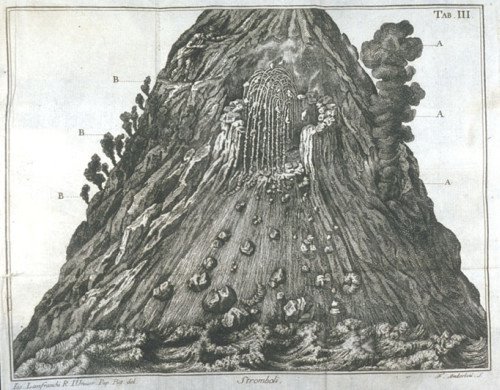
Priest and naturalist Lazzaro Spallanzani spent time in the
Aeolian islands off Italy where he descended into the craters
of both Vulcano and Stromboli to collect specimens. His later laboratory
testing introduced an experimental dimension to vulcanological
studies. The engraving Stromboli comes from his multi-volume
Travels series, published 1792-1799.

Although unattributed, an engraving of Susanna Drury's
gouache drawing of the Giant's Causeway in Northern
Ireland from 1740 was included in Volume 12 of Diderot's
famous Encyclopédie, published in 1765.

A view of a castle in Stolpen, Germany, built on
columnar basalt in Institutiones géologiques by
noted geologist, Scipione Breislak in 1818.

Sir Joseph Banks made Staffa (Fingal's cave) island in the Scottish Hebrides
known to the outside world and used some engravings
made by Thomas Pennant when he published
Tour in Scotland, and Voyage to the Hebrides in 1772.
Pennant also wrote the section of text about the island's
hexagonally-jointed basalt formations.

Vulcan’s Forge and Fingal’s Cave - Volcanoes, Basalt, and the Discovery of Geological Time is a 70 webpage exhibition at the Linda Hall Library of Science Engineering and Technology which displays illustrations from rare texts published between 1565 and 1835.

The eruption of Ecuador's Cotopaxi in 1742 is (vaguely) shown at the far left from
Journal du voyage fait par ordre du roi, a l'équateur
by mathematician Charles Marie de La Condamine, 1751.

Friday, January 06, 2006

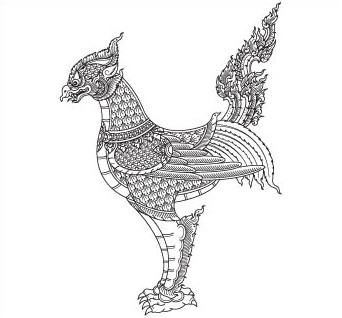
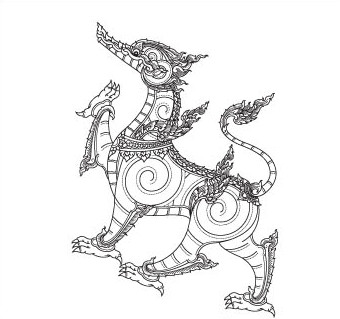
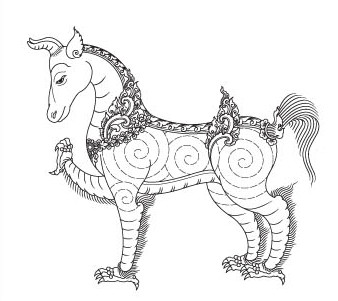
Himmapan Mythical Creatures

Nok Insee

Hemaraj

Kraisorn Jumlang

Thai Ghilen
"If you have ever visited Asian countries such as Thailand or India, you may find some similarities in their art and architecture. If you look closely into these arts and crafts, you will see many strange animals decorating the scenes. Most of them are what can be described as a "combined-animal" as for example, a horse with a bird's head, a man with lion body, etc. These animals are actually mythical creatures who dwell in the legendary Himmapan Forest. The forest is said to be located in the Himalaya Mountains."

Images © Himmapan.com [via Jaf Project](Thanks for the reminder D)

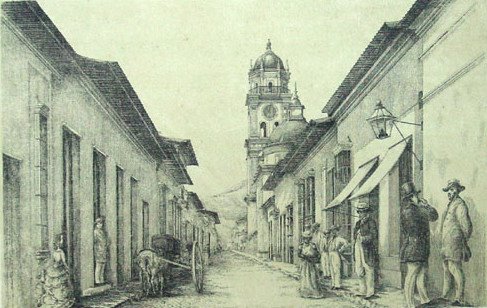
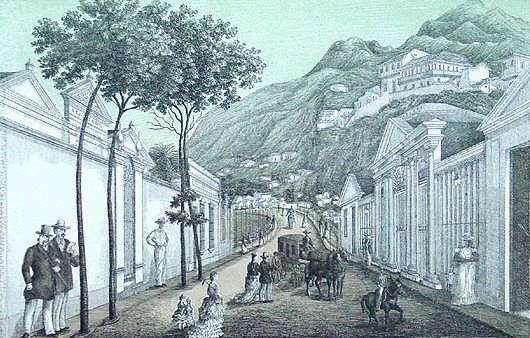
Carácas in 1877

Plaza Guzman Blanco en Carácas

Valencia Calle de Colombia

Casa Amarilla, Residencia Presidencial

Pasage del Cardonal La Guaira

Puente de Curamichate


Álbum de Carácas y Venezuela contains 30 lithographs and was published by Henrique Neun in 1877-1878. It's online at the Venezuela portal of the Biblioteca Virtual Miguel de Cervantes. (2 thumbnail pages)

Mystic Seaport


Mystic Seaport is in Connecticut and proclaims itself to be the 'Museum of America and the Sea'.

It was founded in 1929 and has a substantial online presence. Although I wouldn't describe the site(s) as counter-intuitive, it took a fair amount of sifting and retracing of steps to get an appreciation for just what's available. I'm sure I'll return here in the future - but it will be with some hesitation (maybe it's just me or today or something). The website is partly funded by and connected to the Library of Congress.

This is the link to a full list of Mystic Seaport's digital holdings by subject. The compilations online are partly itemization lists of collections and partly digital examples. But there is everything from fully uploaded books to crew journals to passenger lists to maps and charts, to correspondence to scrapbooks to inventories and bills of sales, to ship plans and much more besides. There is a host of material available for any maritime aficionados, that's for sure.
(I'm getting server errors trying to load any of the prints at present)

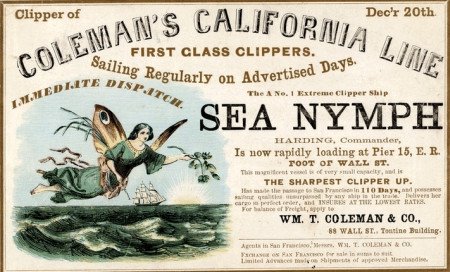
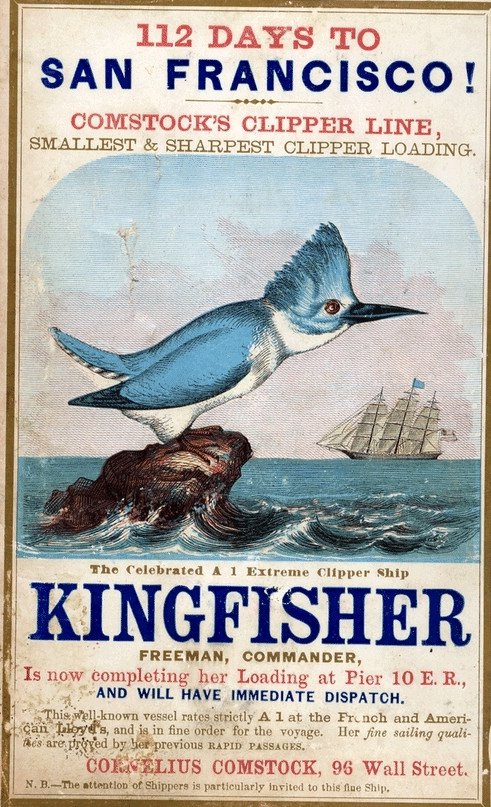
The images above are from the sailing card collection .....

"Agents or owners commonly advertised the availability and loading of their vessels in the local newspapers, but by the mid-1850's the colorful sailing cards began to appear in the windows of shipping firms, banks, and public shops along the waterfronts in ports like New York and Boston."

 
Creative Commons License