
Wednesday, January 18, 2006

Codex Borbonicus


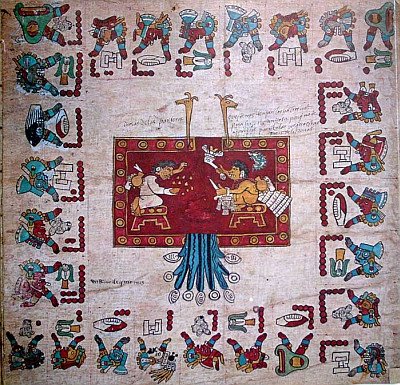
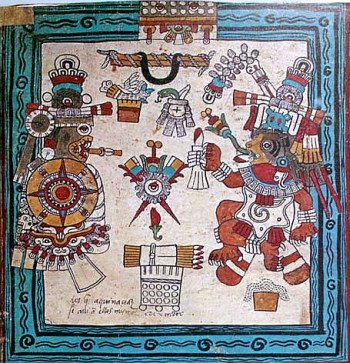
The Codex Borbonicus consists of 32 leaves of amátl fig paper and is likely the oldest of the surviving Aztec manuscripts from Mexico.

It was produced early in the 16th century and although 1507 is bandied around as the date, it's more likely the work was completed after the conquest by the Spanish in 1521. The contents are definitely all pre-Columbian however.

The majority of the scroll displays a divinatory calendar from which one could derive predictions about a birth from an illustration of the date and influencing Gods. It is also a guide of sorts to important feasts but this latter section of the work is better preserved and was probably consulted less often.

There are quite a few images from this manuscript on the internet but none are of high quality. The original is available in its entirety but at relatively low magnification.

Tuesday, January 17, 2006

Speculum Musico-Mortuale


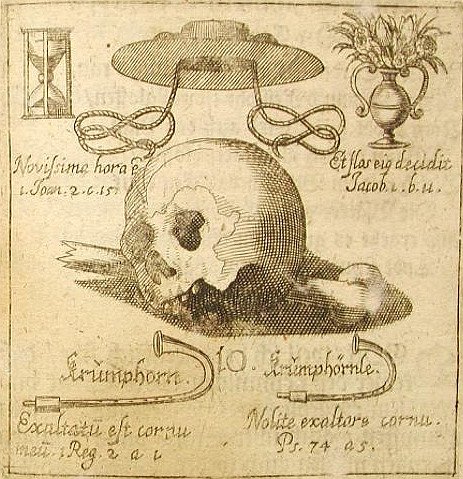
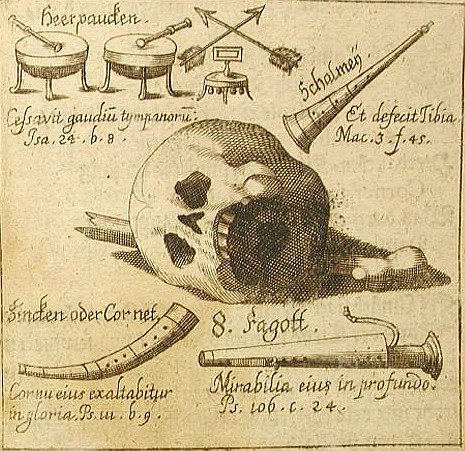
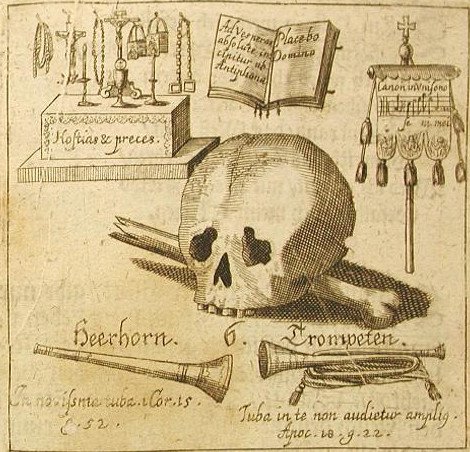
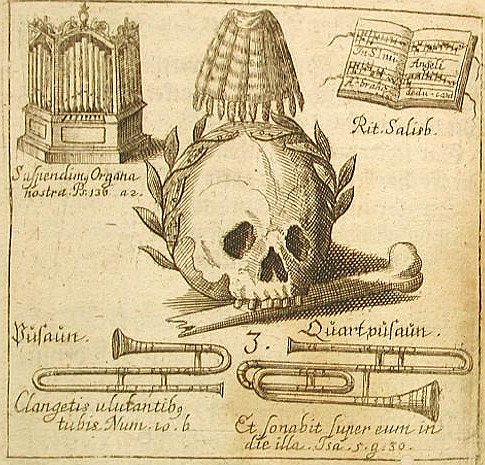
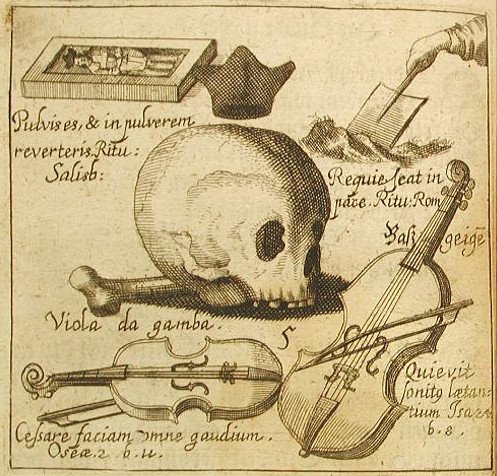
These interesting engravings come from a 1672 Salzburg manuscript, Speculum Muscio-Mortuale by baroque composer Abraham Megerle(s).

To the best of my limited understanding (limited by the dearth of relevant information on the web and by the usual translational aberrances) Megerle (1609-1670) was from Innsbruck, Austria and pursued something of a religious life as Director of Cathedral Music in Konstanz, Germany and was a music pupil of Johann Stadlmayr.

It would seem that these Totenköpfen ('deadheads' - skulls) form some sort of allegorical centrepiece, augmented by the musical instruments and symbols in each illustration. The engravings are placed among descriptive and biblicial text and give the appearance to my mind of some kind of musical half-cousin to the emblemata genre. I saw some passing reference to this volume being an autobiography but I'm not sure about that.

It's best to see them in their original context, particularly if you read german (and latin moreso). I'm very curious so if anyone knows what the book is about or has any edumacated guesses to offer, please go right ahead.

There is also reference to a Peter Tenhaef and his " Abraham Megerles "Speculum musico mortuale" and its dead-liturgical parallels in the "Beylag to my will" in: Music in Bavaria 56 (1998), 15-40 ".. [I've half a mind to contact him at his university email address and ask some questions]

The above Megerle images are nearly the total on display at the Universitätsbibliothek Salzburg (translation page)

Monday, January 16, 2006

Remixing the Firmament


Johannes Hevelius (1611-1687) from the Pomeranian area of Poland was a town counsellor, lawyer, brewer and a devotee of Tycho Brahe and astronomy. He was also trained as an artist/engraver.

He built a large observatory in his house and spent 4 years charting the lunar surface and the results were released as Selenographia (previously mentioned briefly here). Other works followed on comets and constellation maps.

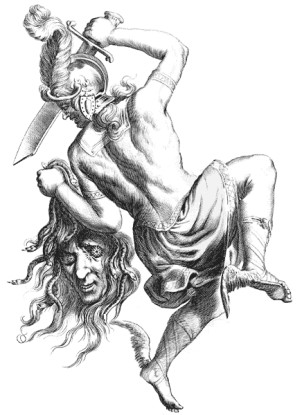
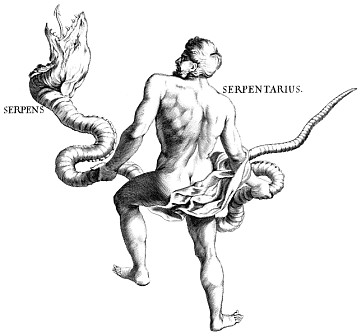
His final great work, Firmamentum Sobiescianum sive Uranographia, was published 4 years after his death by his wife. It includes some 52 engravings by Hevelius of constellations, including new observations which are still recognized today. The engravings are unusual in that they need to be reversed to fit onto starmaps. Hevelius had mapped the skies as an observer from the other side!

The images here (Perseus, Taurus, Serpens and Leo) are from a set produced by the Space Telescope Science Institute
(STScI)* in which they digitized an original copy of Uranographia and set about removing the stars and paper artifact, leaving only the original figures. They have so far posted about 1/2 of the original engravings.

  • Uranographia at HubbleSource (STScI) - the remix.
  • Digitized copy 1 of Uranographia at the Astronomical Observatory of Brera.
  • Digitized copy 2 of Uranographia at the wonderful Atlas Coelestis site.
  • Hevelius biography: I, II, III.
  • *The convolutions of administration:
    "We’re the Space Telescope Science Institute (STScI), established by NASA to operate the Hubble Space Telescope (and Hubble’s successor, the James Webb Space Telescope, scheduled for launch in 2010). We’re part of AURA, the Association of Universities for Research in Astronomy, a research consortium that also operates Kitt Peak National Observatory in Arizona, Cerro Tololo Inter-American Observatory in Chile, and the Gemini Observatories in Hawaii and Chile. We’re located on the grounds of the Johns Hopkins University in Baltimore."

    Sunday, January 15, 2006

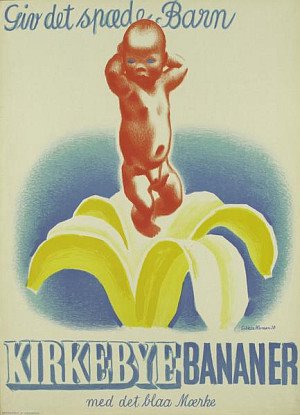
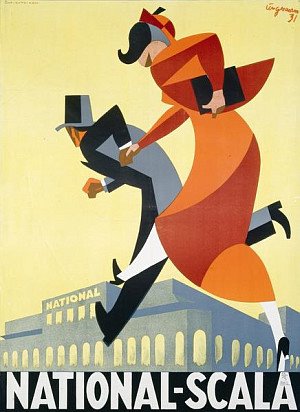
    Poster Danish

    1911

    1938

    1945

    1983

    1930

    1931


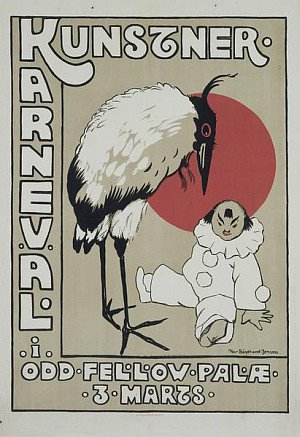
    1100 posters from the Danish Museum of Art & Design ranging from 1911 to 2002. Excellent.
    Click on 'Digitized posters'.

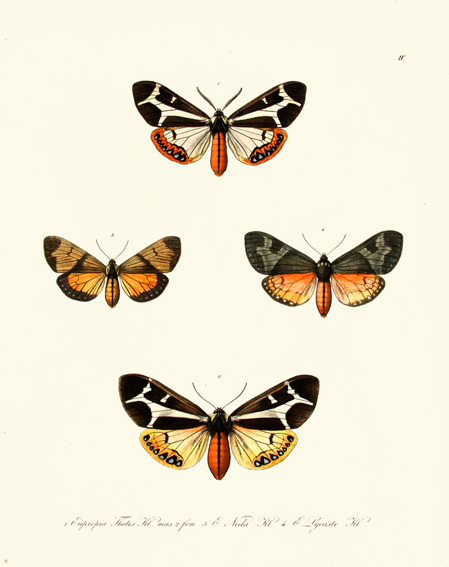
    German Plant and Garden Book Images

    Georgina variabilis 1824

    by Johann Wolf 1818

    by Johann Seligmann 1773

    Cypripedium calceolus
    by Christian Schkuhr 1808

    by Johann Klug 1836

    11 pages of thumbnail images from a range of rare books and manuscripts at the German city Trier's Municipal Library - Gartenbuecher.
    [Thanks again D]

    Paris in the 19th Century


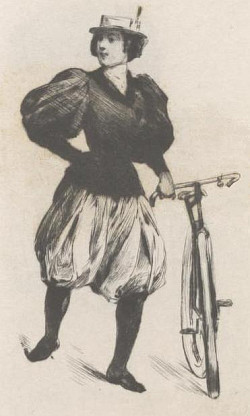
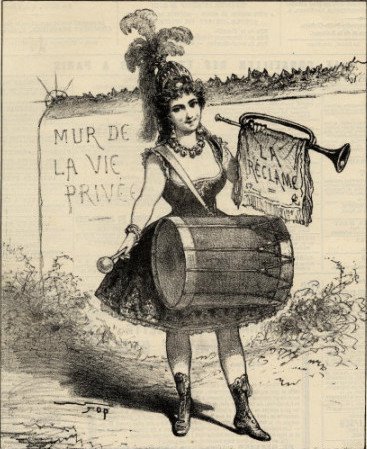
    The female cyclist and caricature
    in La Parisienne peinte par elle-même
    Engraved by Henry Somm
    (the caricature in brown ink - is on the same page)

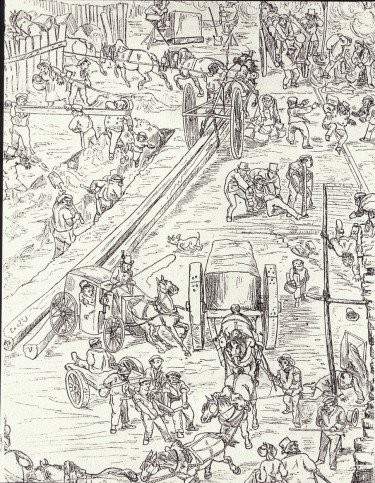
    Drawing by 'Crafty'
    "While Haussmann is himself responsible for the "charm" of Paris as we know it today, urbanization of the city depended on the demolition and destruction of many residential properties and traditional quarters. Haussmann's work was therefore often the inspiration for a variety of satirical and political cartoons. The undated caricature shown here is not the first to illustrate and criticize the often chaotic and overwhelming nature of Haussmann's demolition work."

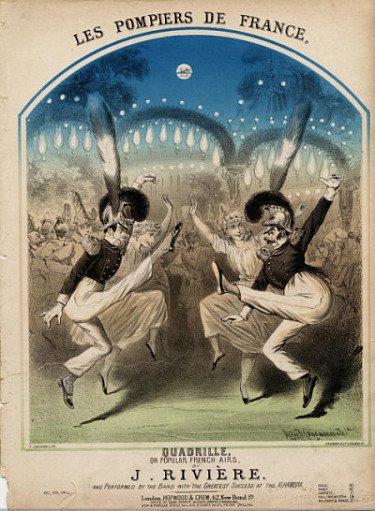
    Lithograph by Alfred Concanen 1857
    "The Quadrille, introduced in France around 1760, continued to be a popular dance in 19th century Paris. Originally performed in sets of two couples, the quadrille evolved into different forms and variations, many of which were similar to the waltz and the polka."

    Garde champêtre - 'Local Police'
    Lithograph by Paul Gavarni 1840 in Le Charivari
    "This caricature is a reference to the Bal Chicard,
    where party-goers dressed in costume."

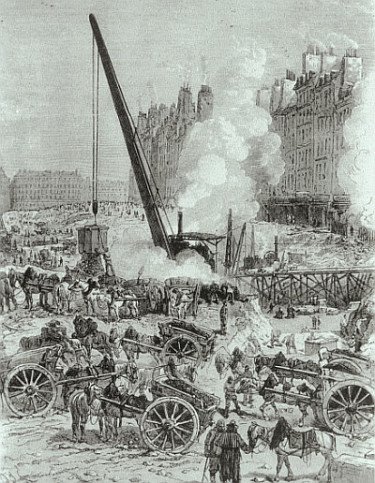
    "Construction for the Avenue de l'Opéra officially began in 1854, though it was not until 1873 that it received its name (it was originally called "Avenue Napoléon"). The avenue was initially opened in 1864 and situated between Rue Louis-le-Grand and the Boulevard des Capucines. It was extended, however, in 1867 and again in 1876, and was officially and permanently inaugurated at this latter date. It is now located between the Place du Théâtre-Français and the Place de l'Opéra. Like most of Haussmann's work, the construction of the Avenue de l'Opéra resulted in massive demolition of certain quarters and residences (portrayed here by Jules Férat). By 1876, the total construction costs reached 9.8 million dollars, and 168 homes were destroyed."

    Bah ! Ils seront les premiers à faire une brèche pour me laisser passer -
    'Bah! They'll be the first ones to pull thorugh the breach so that I can get through.'
    Lithograph by A deVresse 1868 in Le Charivari

    Nouveau Blason Prussien - 'New Prussian Emblem'
    Lithograph by Jules Draner 1870
    "Prussian emblem of an eagle with the names of
    the newly unified eight German states."

    "The project, "Paris, Capital of the 19th century," initiated by the French Studies and Comparative Literature Departments of Brown University, provides a window into the cultural, political and social context of 19th century Parisian culture."

    Most of the 825 images available are cartoons/caricatures drawn from the local press but there are some photographs and newspaper images as well. You can load all the images as thumbnails on a single page or search/browse by category. Large jpegs are available.

     
    Creative Commons License