Showing posts sorted by relevance for query wunderkammer. Sort by date Show all posts

Friday, June 12, 2009

A Cabinet of Natural Curiosities

Albertus Seba y


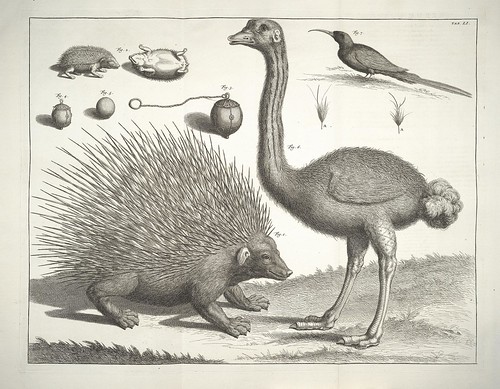
wunderkammer: ostrich & porcupine


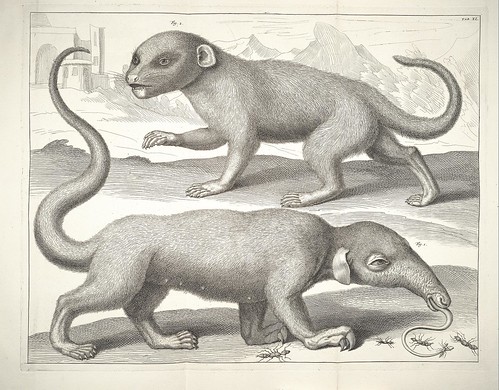
Albertus Seba cabinet of curiosities - anteater and mammal


7-headed hydra : Albertus Seba


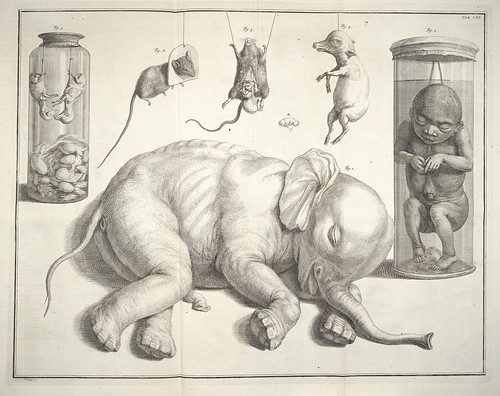
preserved mammal species in jars


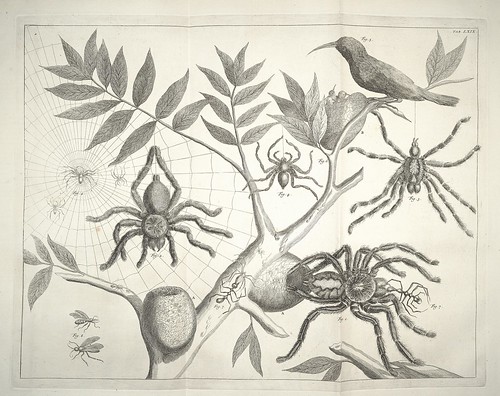
arachnids: spider species


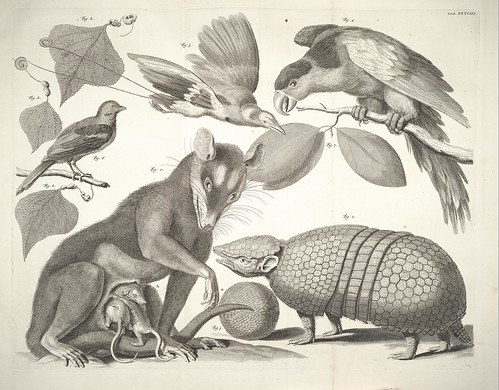
armadillo, rat-like mammal + birds


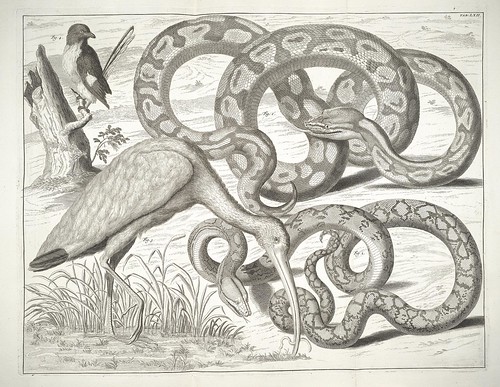
snake and ibis-like bird


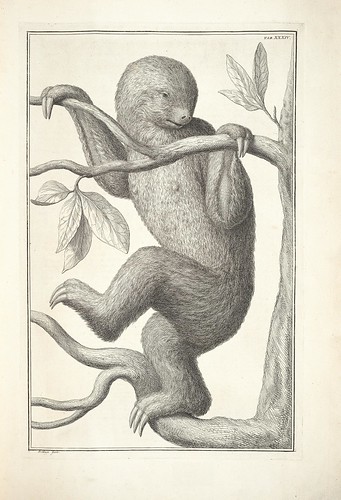
engraving of a sloth (wunderkammer)


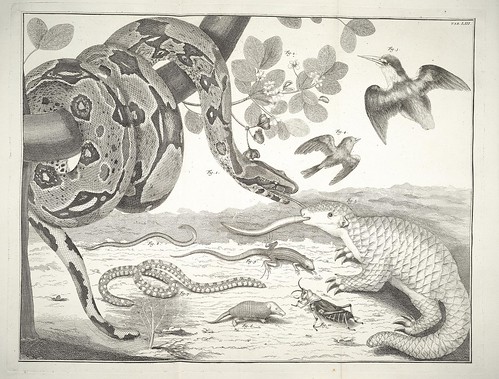
snake and pangolin


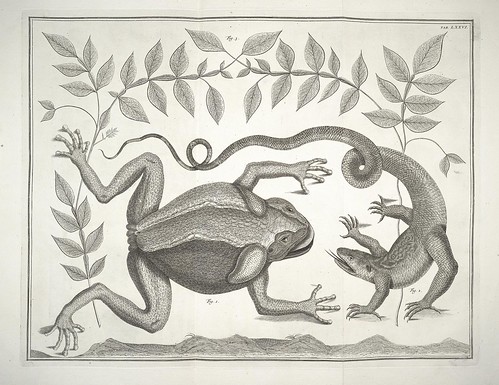
frog and lizard - cabinet of curiosities


turtle or tortoise species engravings


18th century wunderkammer - frogs and snakes


frog, lizard, snake illustrations


Albertus Seba's cabinet - chameleon engravings


engraved plates of lizards - 1734


3-toed sloth and stylised ape figures


Albertus Seba - snakes and rat-like mammals


stylised alligator or crocodile


illustrated snake + lizard species - decorative design


mammal and bird drawings


Albertus Seba


goats and fanciful mammal sketches


stylised rat-like mammal sitting upright


anteaters and snakes


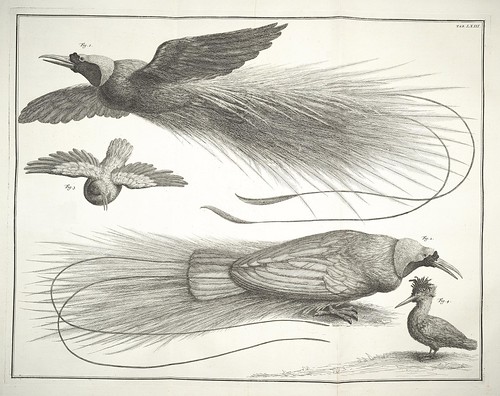
bird of paradise illustrations 18th century


birds nests


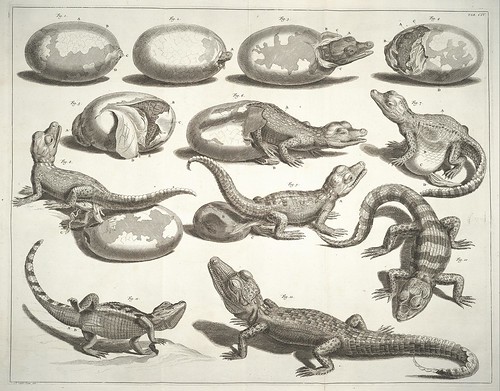
hatching alligator drawings


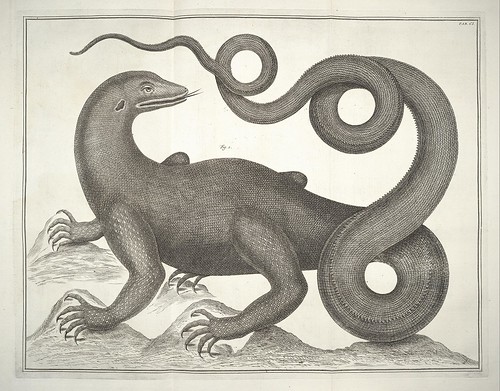
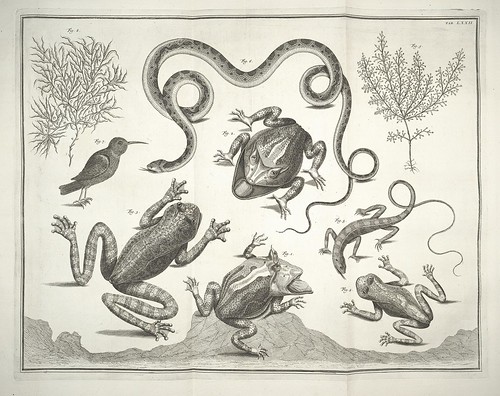
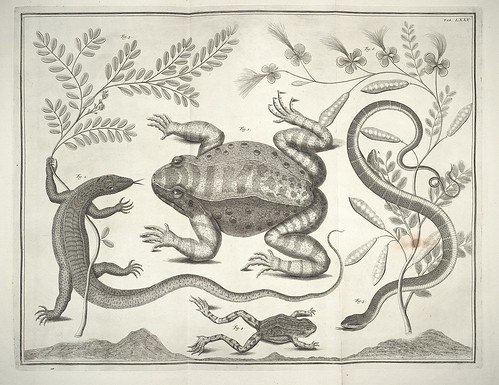
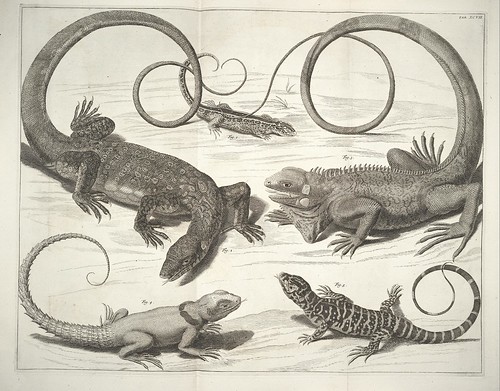
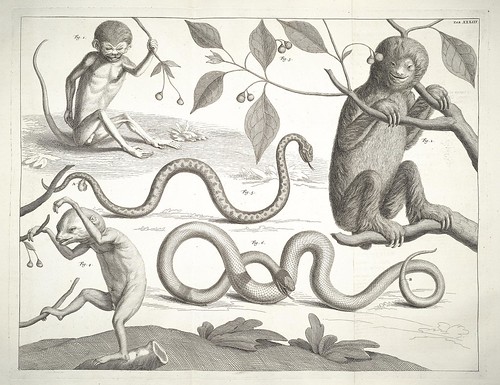
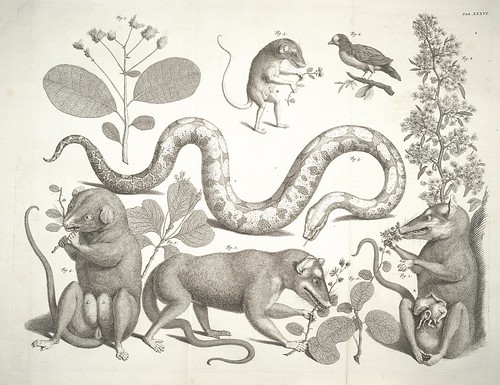
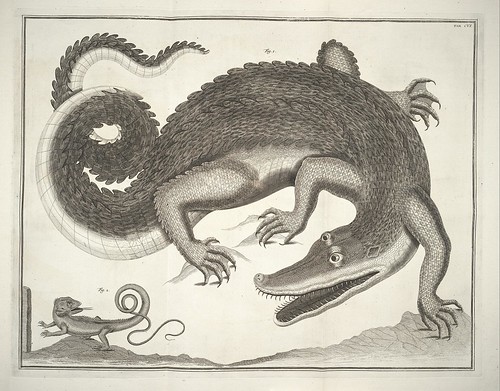
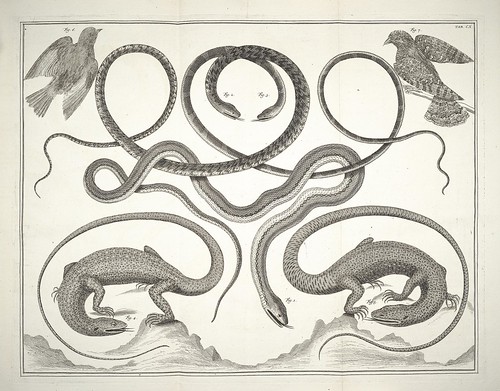
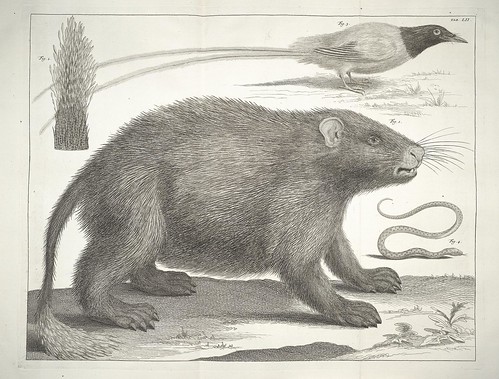
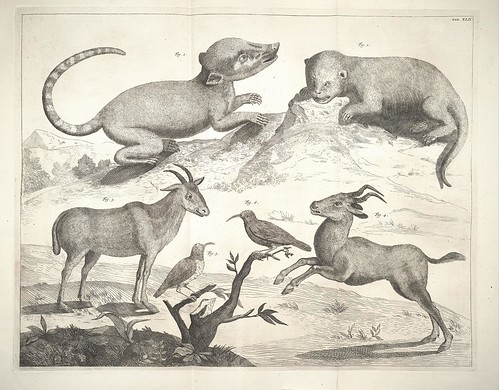
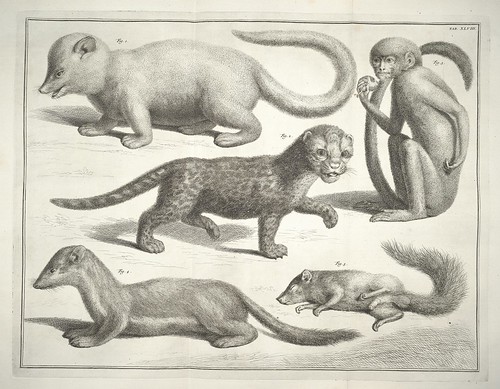
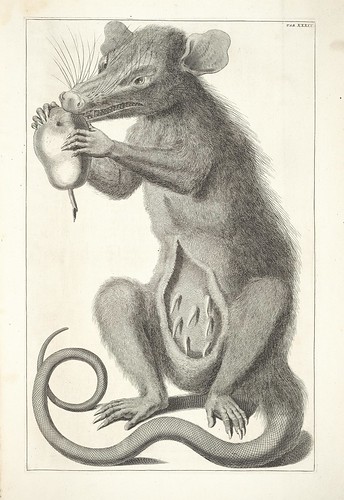
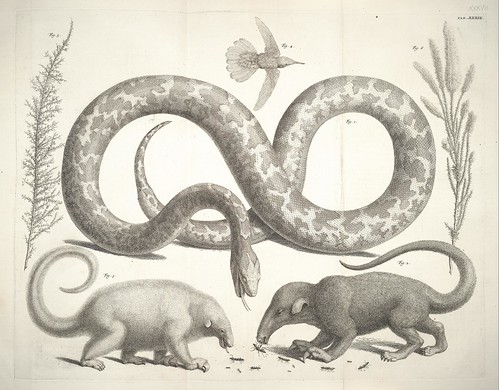
The images above come from Volume One of 'Locupletissimi Rerum Naturalium Thesauri' by Albertus Seba, 1734, newly available from the Missouri Botanical Garden's Botanicus website.

More than a hundred plates are accessible and can be individually downloaded in enormous jp2 image files. I have uploaded very large images to flickr, but the source site is the place to go for the 7000+ pixels-wide versions. We must thank blind luck for my even bothering to load this book; fairly obviously I can only look at a very small amount of material that passes across my screen and I didn't recognise the title. It was a totally random click.

I have posted a few plates from Seba previously and Mr H uploaded some photographs of other images a few years ago, but relatively few good quality scans from Seba's renowned publication have been easily accessible on the web before now. Two other sources I know of are: the University of Göttingen Volume I and Volume IV; and the Digital Library at Gdansk University of Technology appear to have a complete (microfilm) scan of the series. The quality of images at each of these sites is less than wonderful however. Let's hope Botanicus proceeds to digitise the remaining three volumes. There are more than four hundred plates in total.

"Albertus Seba's "Cabinet of Curiosities" is one of the 18th century's greatest natural history achievements and remains one of the most prized natural history books of all time.

Though it was common for men of his profession to collect natural specimens for research purposes, Amsterdam-based pharmacist Albertus Seba (1665-1736) had a passion that led him far beyond the call of duty. His amazing, unprecedented collection of animals, plants and insects from all around the world gained international fame during his lifetime. In 1731, after decades of collecting, Seba commissioned illustrations of each and every specimen and arranged the publication of a four-volume catalog detailing his entire collection-from strange and exotic plants to snakes, frogs, crocodiles, shellfish, corals, insects, butterflies and more, as well as fantastic beasts, such as a hydra and a dragon.

Seba's scenic illustrations, often mixing plants and animals in a single plate, were unusual even for the time. Many of the stranger and more peculiar creatures from Seba's collection, some of which are now extinct, were as curious to those in Seba's day as they are to us now."
That quote is taken from the Taschen site. They published an oversized (hand-coloured) facsimile version of Seba's 'Cabinet of Natural Curiosities' a few years ago and by all accounts it is a superb production. [Amazon page]

Friday, March 03, 2006

Settala's Wunderkammer

"...a goodly, huge cabinet, wherein whatsoever the hand of man by exquisite art or engine has made rare in stuff, form or motion; whatsoever singularity, chance, and the shuffle of things hath produced; whatsoever Nature has wrought in things that want life and may be kept; shall be sorted and included." [Bacon]


[click the images for full size versions]

It's little wonder that the drama and embellishment of the baroque aesthetic gave rise to a 17th century enthusiasm for the wunderkammer or 'cabinets of curiosity' that would eventually beget our modern museums. I was a little surprised in reading around at just how popular they were across Europe. Increased world travel and trade brought a variety of oddities back to the monied elite who would display them in order to demonstrate a deeper understanding of their changing world.

One such famous collector was Manfredo Settala (1600-1680) of Milan who Filippo Picinelli described as "the Archimedes of our century". Settala was from a noble family and had an opportunity to travel abroad early in life when his fascination for collecting all manner of unusual naturalistic, ethnological and artistic specimens began. He was also interested in science and became proficient in metalwork and the instruments he crafted on a lathe were added to his collection; which also included a huge library.

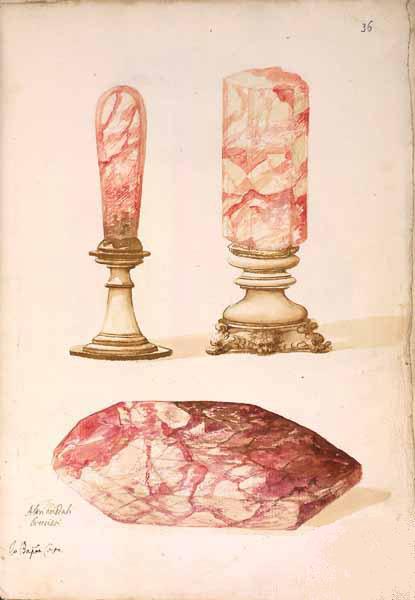
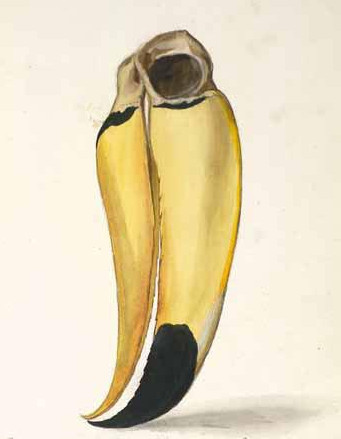
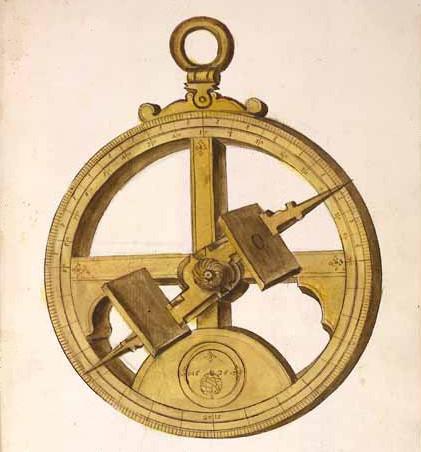
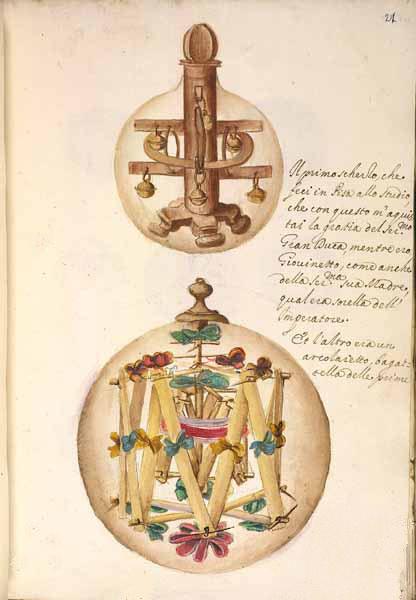
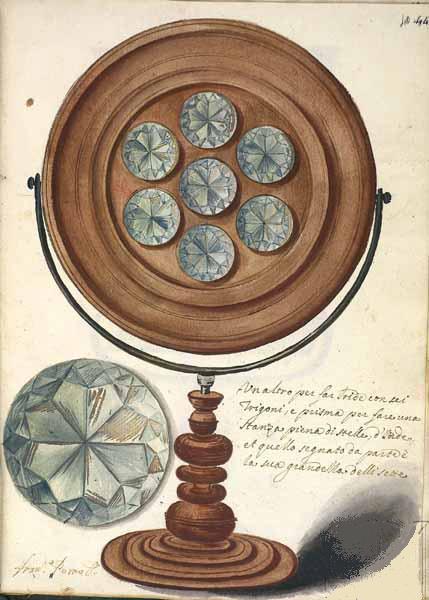
During the 1660s a catalogue of his 3000-odd specimens was commissioned and artistic contributions to the inventory were made by Domenico Tencala, Francisco Porro, Giovanni Battista, Francisco Volpino, Alfonso Coast, Carolo a Sole and Carolo Galluzio. The images here are from the 3rd volume (the first 2 are housed in the library at Modena) and depict vases, clocks, animals, skulls, jewellery, crockery, precious stones and crystals and the instruments made by Settala himself. Some of these latter objects were modified with for instance magnets (eg. the fish in the image above would spin) so as to increase their novelty value.

I've only skimmed the wide selection of online sources and hope I've understood the translations correctly - as always, buyer beware. I've retouched most of the above images to try to remove the watermarks.

Friday, August 31, 2007

Museum Gottwaldianum

garland of flowers


wunderkammer showroom


2 sets of medical instruments


gastro-intestinal system


turtle anatomy without organs


turtle anatomy with organs


sea shells


nautilus shell


3 shells


starfish


fish and squid


beaver


beaver skull


moths and butterflies


nautilus lamp


detail of swine
"Christoph Gottwald(t) (1636-1700) was a German physician in Danzig and created one of the largest cabinets of curiosities of his time. His collection was purchased by Tsar Peter the Great together with the famous collections of Seba and Ruysch. Like more of Gottwald's works, publication was realized long after the author's death when the publisher Raspe purchased the manuscripts."
Gottwald commissioned the Polish baroque painter, Daniel Schultz the Younger, to render drawings he made himself of the contents of his wunderkammer into engravings, which was undertaken in about 1665. A handwritten inventory of the shells, anatomical specimens and marine creatures accompanied the engravings in a 1714 compendium of which only three copies were made. The copper plates were obtained by Raspe, a conchology enthusiast, and a German version of the 'Museum Gottwaldianum' first appeared in 1782.

The illustrations above come from one of the original 1714 prints and are online at the University of Strasbourg (huge images available). There are perhaps forty further plates - many of them shells or anatomical deformities. There is little in the way of background information online. See: i, ii, and a review of conchological literature [link updated Oct '08] by Peter S Dance [pdf], courtesy of the Conchological Society of Great Britain and Ireland. [previously]

 
Creative Commons License