Sunday, March 23, 2008

The Grand Master

"He has covered with his never-flagging pencil enough
charta pura (white paper) to placard the whole walls of China,
and etched as much copper as would sheathe the British Navy."
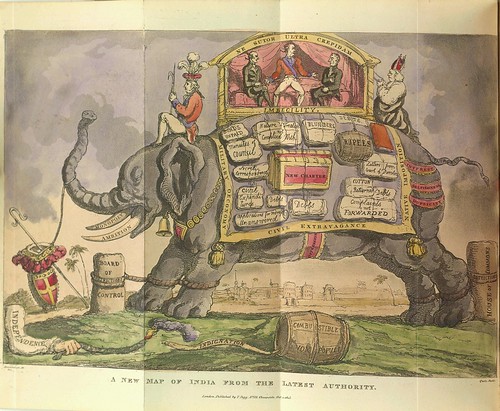

A New Map of India from the Latest Authority p9 by Thomas Rowlandson


Grand Master or Adventures of Qui Hi (frontispiece)


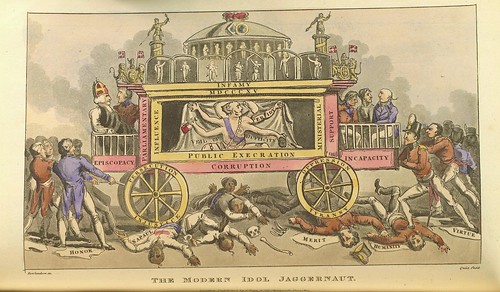
The Modern Idol Jaggernaut p67


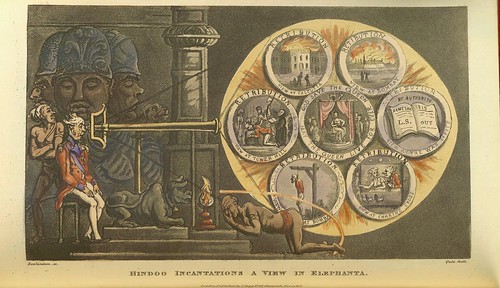
Hindoo Incantantations a View in Elephanta p99


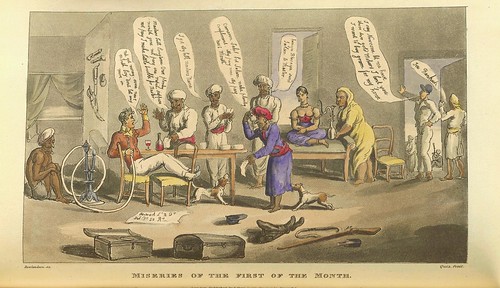
Miseries of the First of the Month p75


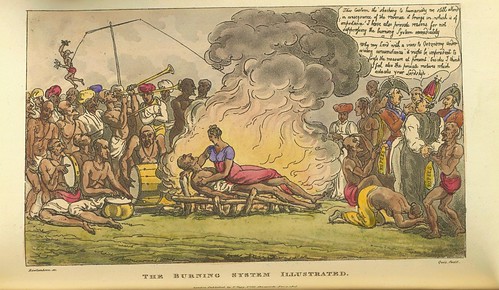
The Burning System Illustrated p79


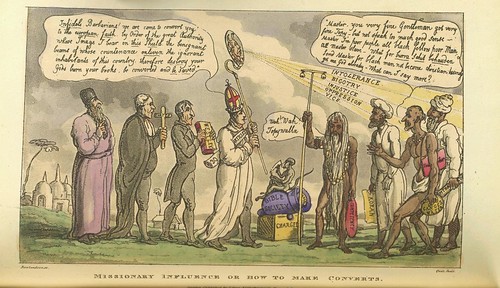
Missionary Influence or How to Make Converts p95


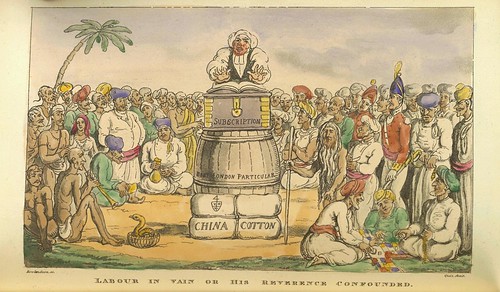
Labour in Vain or His Reverence Confounded p117


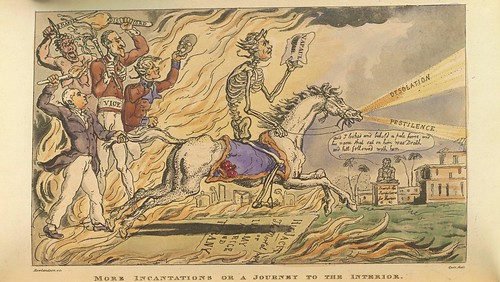
More Incantations or a Journey to the Interior p169


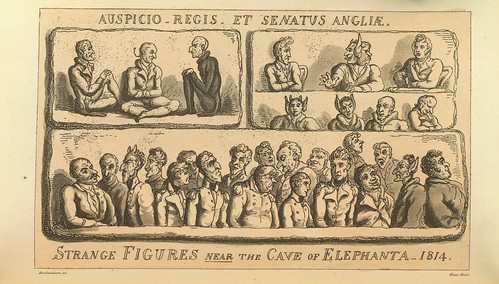
Strange Figures near the Cave of Elephanta 1814 p239


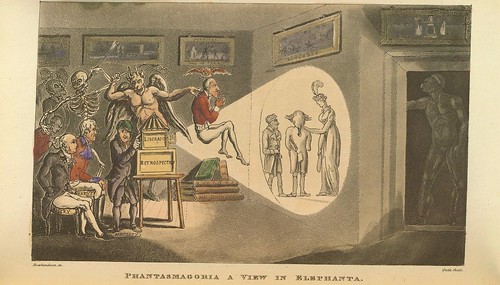
Phantasmagoria a View in Elephanta p243


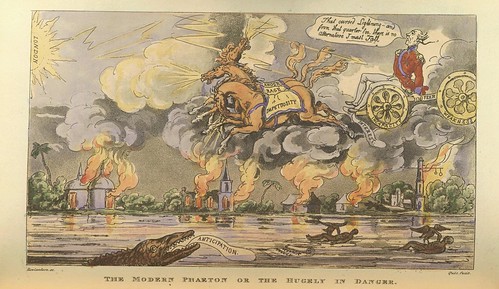
The Modern Phaeton or the Hughly in Danger p249


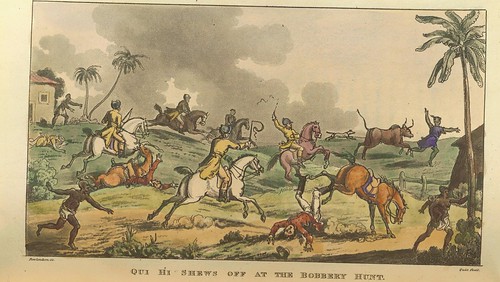
Qui Hi Shews off at the Bobbery Hunt p291


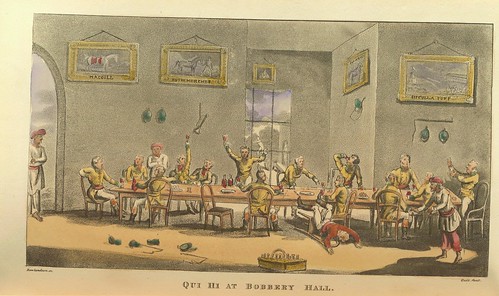
Qui Hi at Bobbery Hill p295


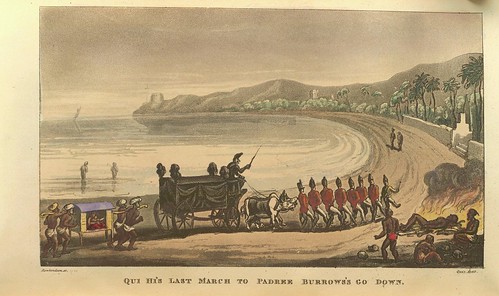
Qui Hi's Last March to adree Burrows's Go Down p321


During his career, Thomas Rowlandson (1756-1827) produced some ten thousand engravings, etchings, ink and watercolour illustrations, in the era known as the Golden Age of British illustration.

His satirical prints were generally funnier than his predecessor, William Hogarth and less overtly political than those of his friend and fellow Royal Academy attendee, James Gillray.

Rowlandson provided the illustrations for a series of books in which Dr William Coombe contributed the accompanying verse. Most famous among these was the 2-volume work, 'The English Dance of Death' (see previous entry). There was also the recurring character of Dr Syntax together with a final collaboration, seen in the illustrations above, in which it is presumed that 'Quiz' is a pseudonym for Coombe. It hardly matters - see a random snippet of the lacklustre verse below - as it was Rowlandson's comical illustrations that attracted the public and for which any of the books produced by this partnership are remembered.

'The Grand Master; or, Adventures of Qui Hi? in Hindostan. A Hudibrastic* poem in eight cantos by Quiz. Illustrated with engravings by Rowlandson' was released in 1816. I'm not overly sure I picked up the plot elements, such as they are, but Rowlandson's satirical blade cuts much more sharply upon the British colonial mindset in India than in any of the simplistic caricatures of the local inhabitants.

'The Grand Master' is online at Posner Library in a page-by-page arrangement.

All of the large versions of the images above were reduced in size somewhat (but are still very large), as Posner's huge jpeg files lose some of their quality as full enlargements.
San's ceremonie now our griffin,
Sat down and made an Indidan tiffin;
Billiards and brandy, beer and hock,
Employs his time till six o'clock;
When he endeavours to find out
Fort William, by the shortest rout.
What various figures now he meets,
Crowding by thousands in the street!
To his astonish'd sight appears
Soldiers, Civilians, and Fakeers.
It happen'd that he chanc'd to stroll,
Near the identical black hole,
Where long ago, by tyrants fated,
Some Englishmen were sorely sweated:
Upon a tablet he might read
The story of that horrid deed:
But while this tale employ'd his thought,
He saw the idol Jaggernaut
Approach, amdist a num'rous croud
Of Zealots, praising him aloud;
The idol, mounted on a car,
Bore all the savage marks of war;
No mercy e'er his bosom feels,
For victims crush'd beneath his wheels
Our hero wish'd with all his soul,
He had him in the old black hole.--

Saturday, March 22, 2008

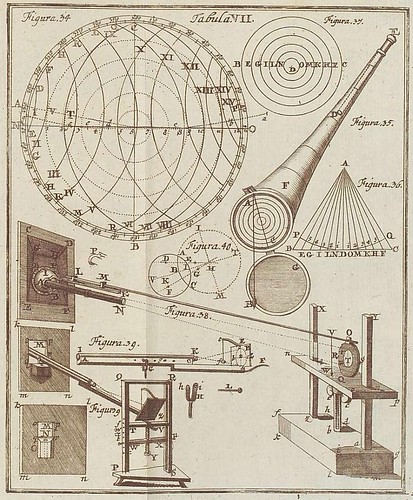
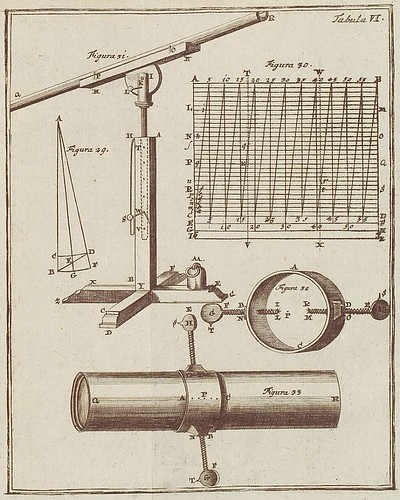
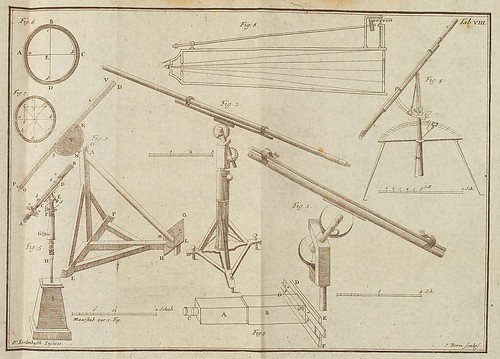
Astronomical Handbook of 1718

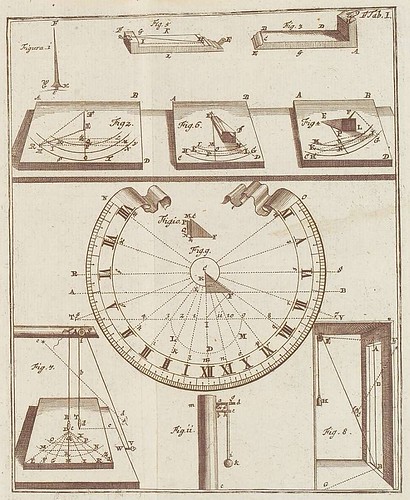
Astronomical observations


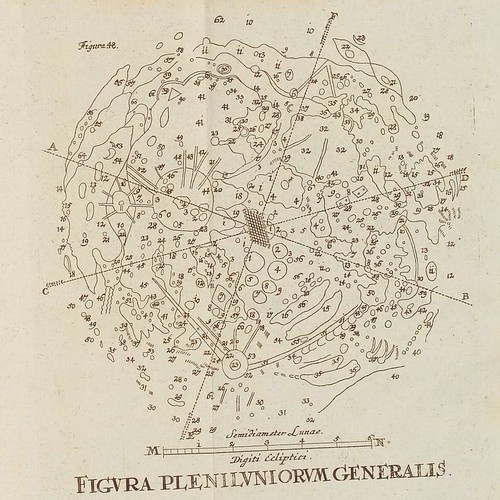
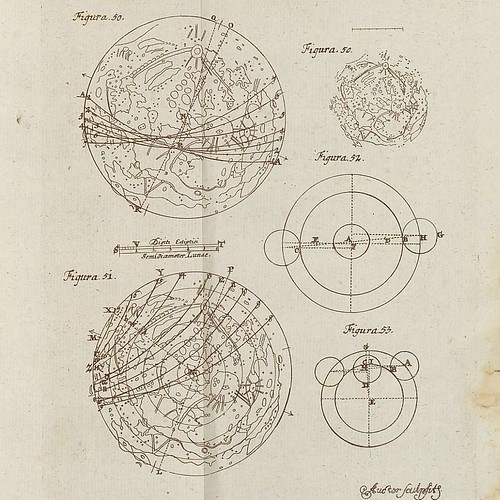
Figura Pleniluniorum Generalis


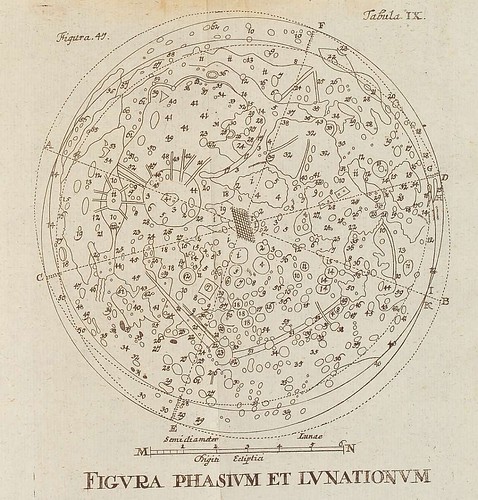
Figura Phasium et Lunationum


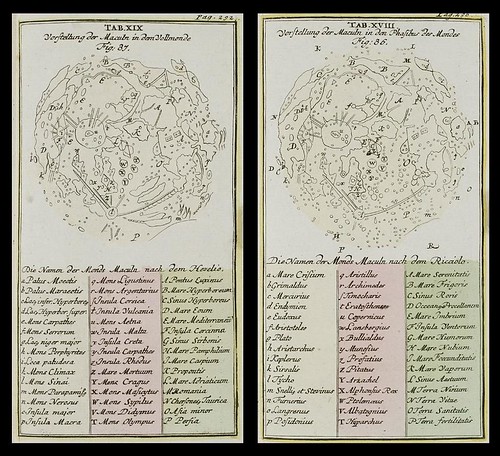
Atlas Portatilis Coelestis 1723


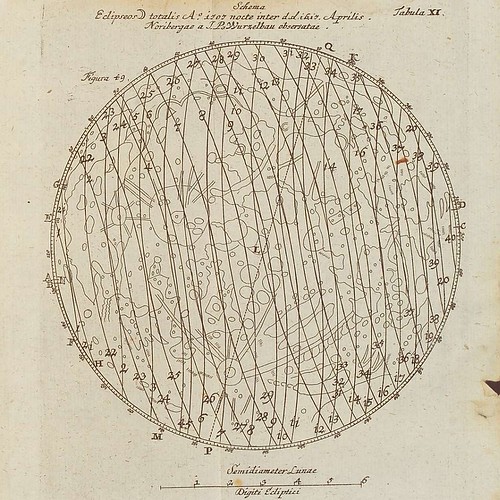
Eclipse tracking


Measuring eclipse


Astronomical measuring


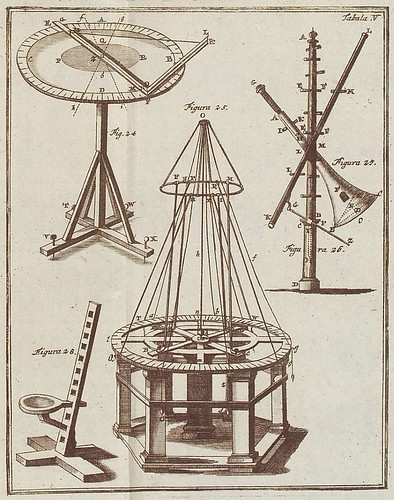
Astronomy devices


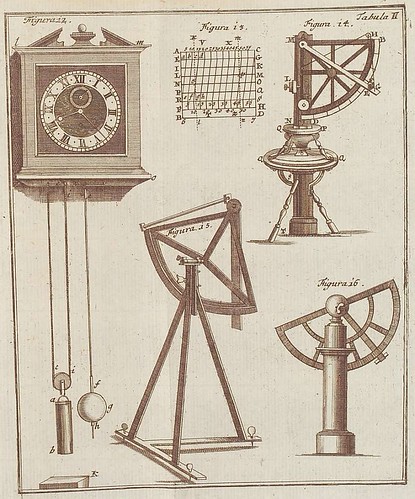
Celestial elevation measuring


Declination measurement


Pendulum measuring


Astronomy measuring


Telescopic devices

Johann Leonhard Rost (1688-1727) published the first practical astronomy text in Germany in 1718. It might also be described as the first ever German book devoted to astronomy, as the (very few) earlier works were either translations or simply chapters in larger publications.

Rost obtained a clandestine income from writing romance novels under a pseudonym (Meletaon) and studied his beloved astronomy in Altdorf, Leipzig and Jena. He was to become an assistant at the observatory in his birth town of Nuremberg, initially under its founder, Georg Eimmart, and later under Johann von Wurzelbau; but Rost made significant astronomical observations of his own and many of his findings appeared in scientific publications.

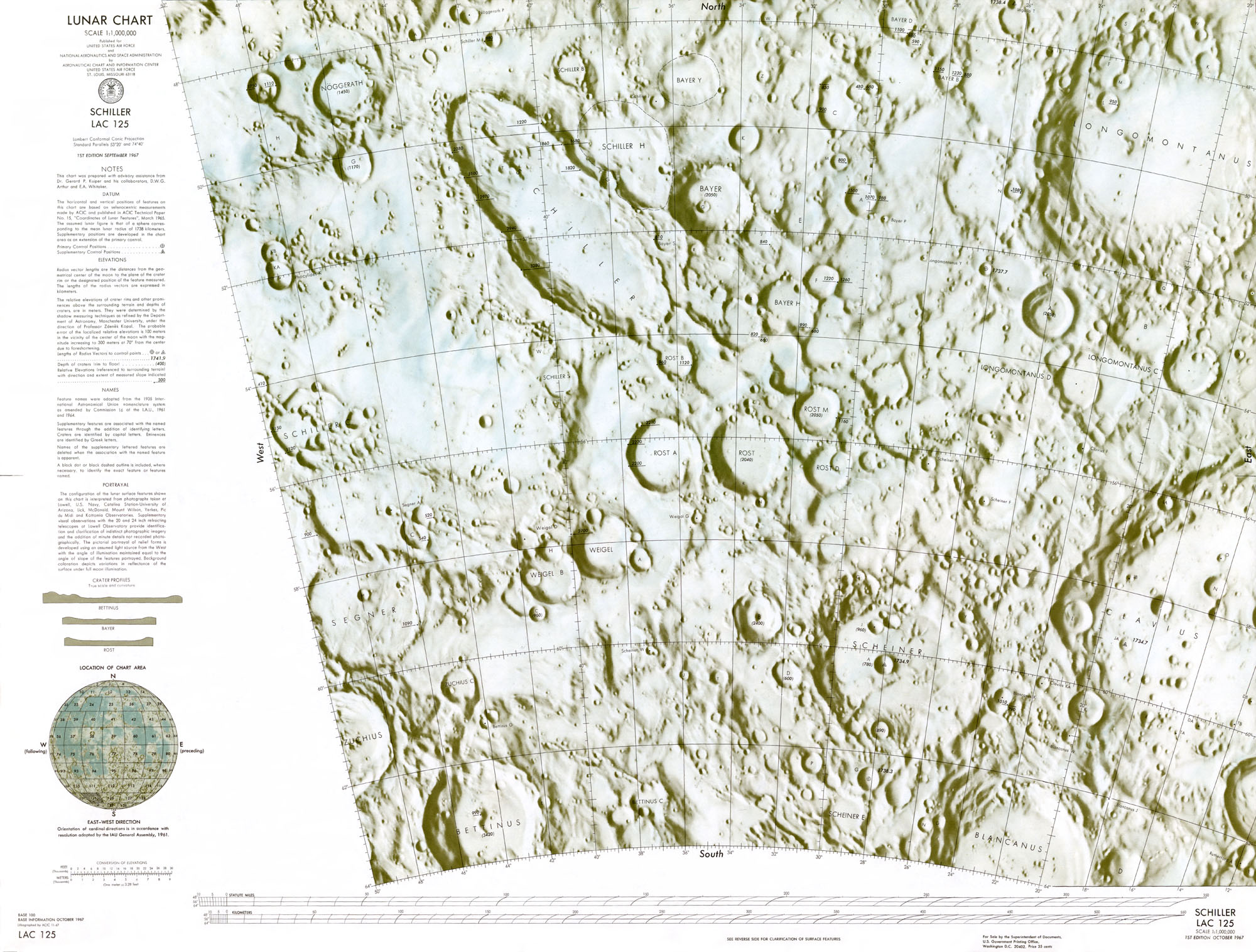
'Astronomisches Handbuch' from 1718 is online at Wolfenbütteler Digitale Bibliothek. The bulk of the illustrations appear above and they mostly pertain to the art of selenography (moon mapping) - I believe Rost's most significant observations related to solar and lunar appearances during eclipses and with the effects of the Northern Lights.
The coloured dual-image above comes from Rost's other main astronomical book, 'Atlas Portatilis Coelestis' (1723), available from the Linda Hall Library of Science, Engineering & Technology. The zodiac plates are based on the constellation arrangements of Johannes Hevelius (who was, incidentally, also the 'father' of moon mapping).

Tuesday, March 18, 2008

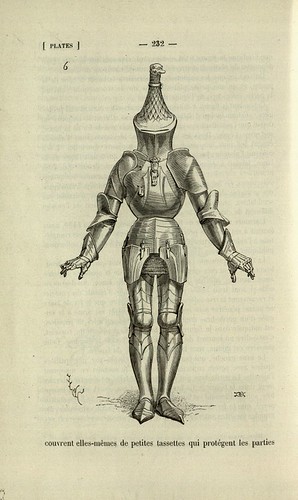
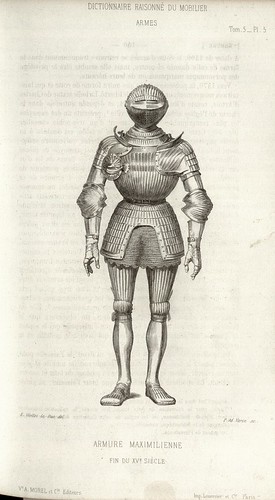
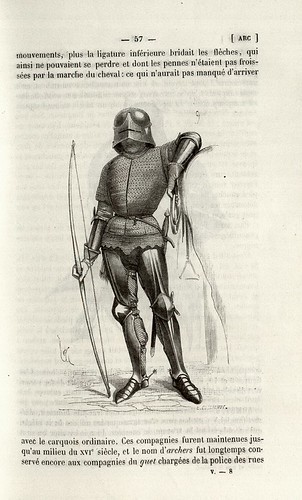
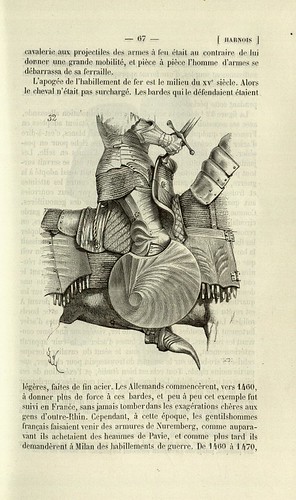
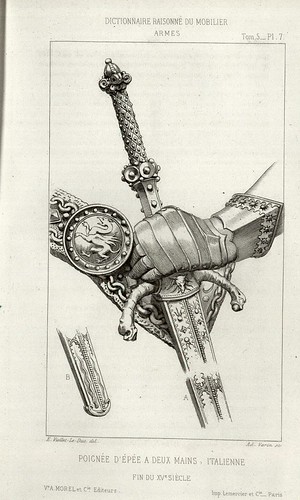
Knight Attire

Armour and top hat


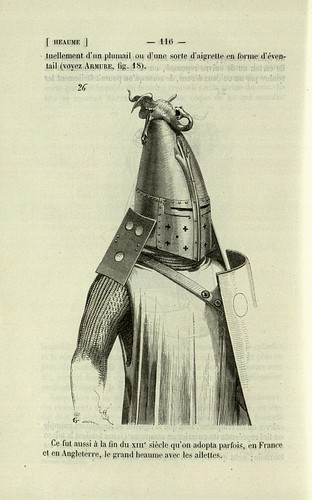
Eccentric helmet and suit of armour


Tall helmet


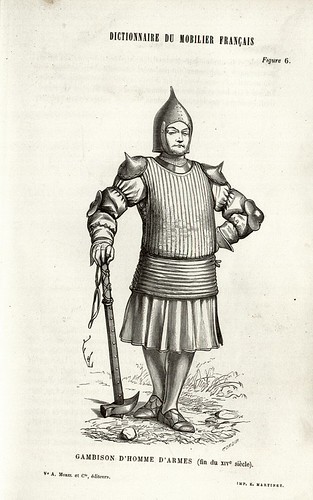
Soldier wearing gambison


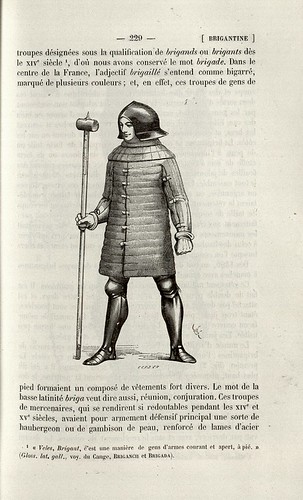
Brigand soldier


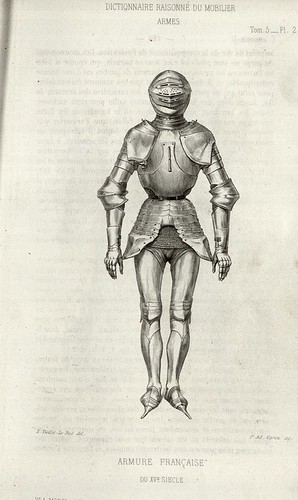
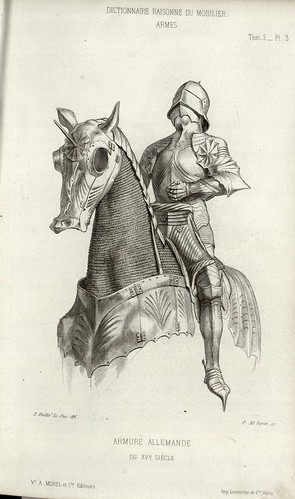
15th century armour


Knight in armour end 14th cent.


Knight with bow


Lateral view rider's armour


15th century sword hilt


15th century horse and rider armour


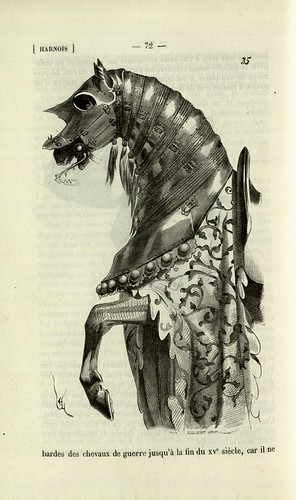
Horse armour late 1400s


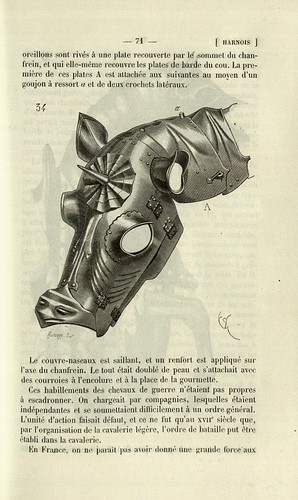
Horse head armour


Eugène Viollet-le-Duc (1814-1879) was an influential French architect, particularly noted for his central role in the Gothic Revival* movement. In the aftermath of the French Revolution, he carried out a number of significant restoration projects on prominent buildings, including Notre Dame.

In addition to his practical work, Viollet-le-Duc taught art history at L'École des Beaux-Arts and published several renowned works that had considerable impact on the Art Nouveau movement by inspiring Gaudi and Horta, among others.

Chief among his writings were 'Dictionnaire Raisonné de L’Architecture' (Dictionary of Architecture), from 1854, and the wider ranging series, from which the above images were taken, 'Dictionnaire Raisonné du Mobilier Français de L'Époque Carlovingienne à la Renaissance' (Dictionary of French Furniture from the Carolingian era to the Renaissance).

The furniture series - which obviously goes far beyond furniture - consisted of 12 volumes and its publication began in 1858. The first six volumes are available online. The first two volumes feature domestic and religious tools and furniture as well as ornamental motifs in building and objets d'art. Volumes II + III are approximately devoted to costumes. The last two books relate to armour and weapons, essentially.

The illustrations are more along the lines of technical drawings rather than artistic pieces, per se; but it's definitely worth skimming through them all. There is some interesting and quirky material depicted. I imagine this series would be a useful authority for clothing and decor accuracy in period illustration work, re-enactments, craft or dressmaking and the like.

The series is online at the University of Heidelberg: Volume I «» Volume II «» Volume III «» Volume IV «» Volume V «» Volume VI.
(note: click anything below 'Inhalt' and then the '-' sign at the top of the page to get thumbnail images)

Information about Eugène Emmanuel Viollet-le-Duc: one, two, three, four.

Kitab al-Bulhan

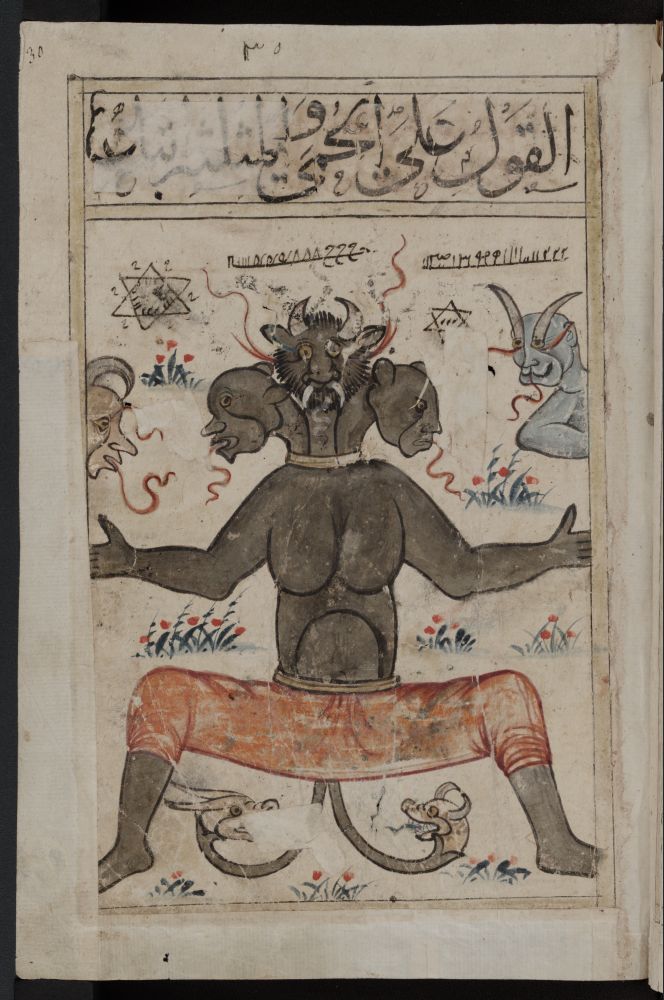
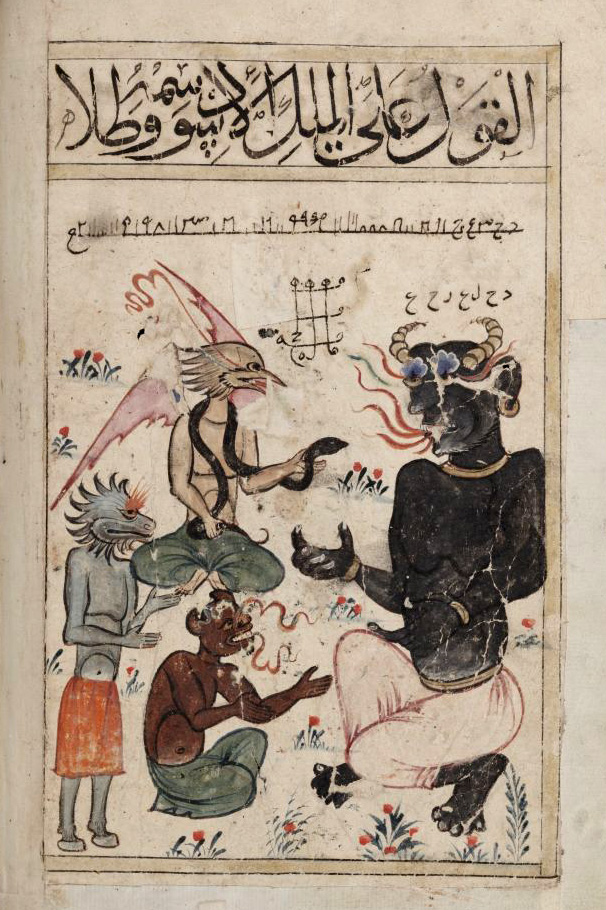
3=headed devil in arabic manuscript


devils in a group


group of devils in arabic manuscript


many devils with captured human


stylised flames arising from rocks


man on camel and dragon snake


human holding snake


birds swoop on snakes


zodiac fish pisces arabic


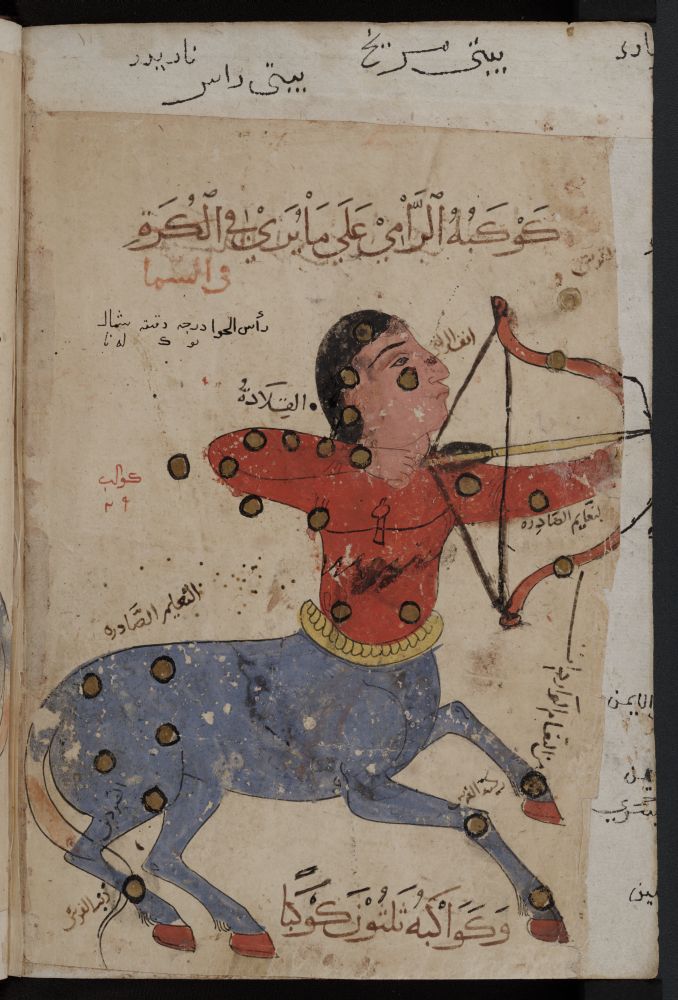
centaur zodiac sagittarius arabic


arabic zodiac figure - man riding goat and vignettes


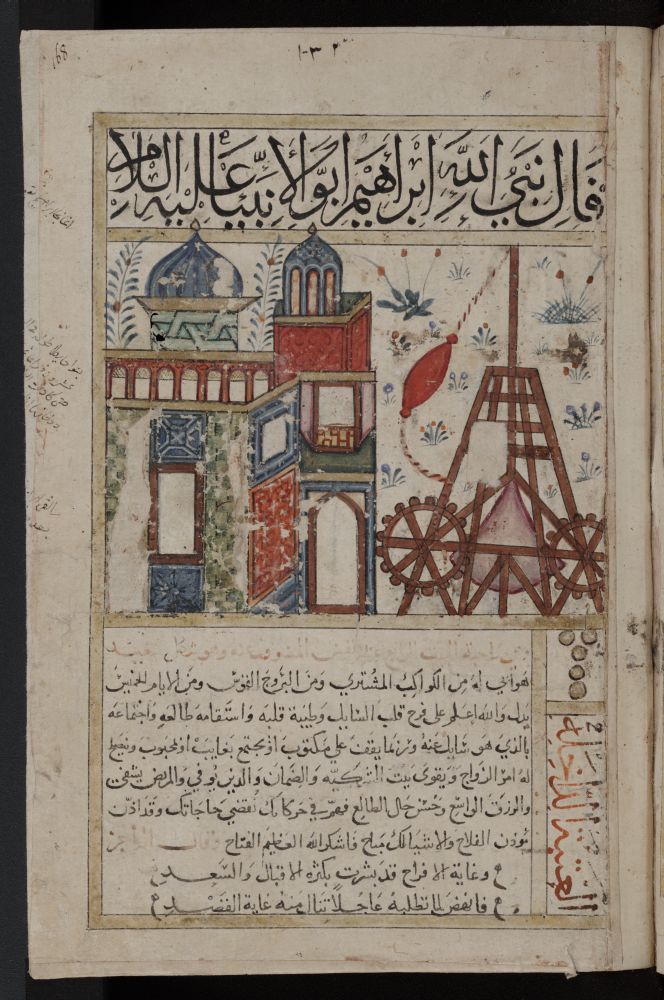
middle eastern house and lifting machine


middle eastern house and palm tree


arabic mss - middle eastern buildings


arabic manuscript curved design


The 'Kitab al-Bulhan' (Book of Wonders) [MS. Bodl. Or. 133] manuscript is a collection of Arabic divinatory treatises produced in the late 14th century hosted by the Oxford Digital Library. (note the thumbnails button up top once you click through into the manuscript proper)

There are approximately 80 illustrations among the astrological, astronomical and geomantic texts in the ~180pp manuscript. Many of the pages without illustrations have patterned arrangements of the text.
"Contents:
1. fols. 1a-80b, Kitab al-Bulhan / Isfahani, including:
--fols. 2b-25a, Kitab al-Mawalid, Book of Nativities,
--fols. 28a-33a a catalogue of demons,
--fols. 33b-43b, 45b-46b, Marvellous stories (of the prophet Muhammad),
--fols. 44a-45b, 47a-49b, The seasons and the climates.
2. Fol. 81a, page in Turkish.
3. fols. 81b-93b, paintings of the constellations of the zodiac
4. fols. 94a-130a, al-Durar wa-l-yawaqit fi ilm al-rasd wa-l-mawaqit, Astronomical tract / Abu al-Abbas Ahmad bin Abi Abd Allah Muhammad
5. fols. 131-163, Kitab al-Fal (Treatise on kur'ah / Ja'far al-Sadik
6. Fols. 163b-169a, al-Kurat al-mubarakah / Irbili
7. fols. 170a-173b, Alphabetic divination
8. fols. 174a-176a, Treatise on the zodiac"

Some of the zodiac illustrations are very similar to those seen in a BNF manuscript from a little later (Persian Zodiac) - no doubt both were derived from the same 9th century Persian astrology work by Abû Ma'shar.

All of the above images (and a few more) were uploaded to Wikimedia. [previously]

 
Creative Commons License