Tuesday, October 25, 2005

In a Manner Lepidopterous


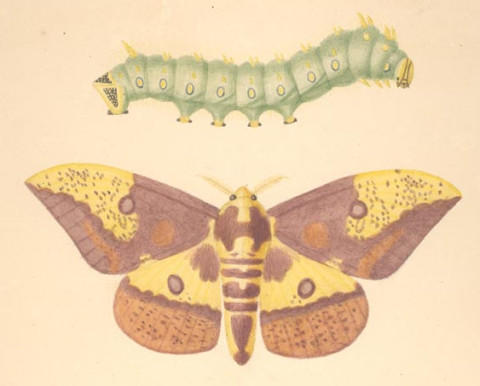
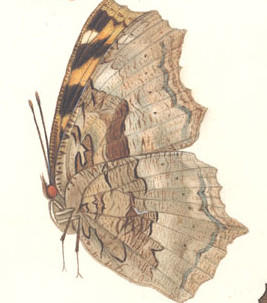
John Abbott (1751-1840) pursued his love for natural science rather than follow his father into law. He was artistically educated in England under the engraver Jacob Bonneau and established a reputation of sufficient quality that two patrons sponsored his voyage to America at the start of the revolutionary war.

He settled in Georgia and was commissioned by a property owner to paint a series of watercolours of butterflies, moths, pupae and caterpillars from the local environs. The 147 paintings from which these examples here were selected have a complex history. They were relied upon as source material, copied outright or formed the core basis for a number of natural history books. Although only one publication bearing Abbott's name was ever released, it is believed that he produced some 5000 watercolour images of natural science subjects in his life.


Scrapbook Indeed


"Alexander Lawson, engraver, died in 1846, leaving behind a great quantity of his own and other artist's work. His daughters, Malvinia and Mary, constructed a scrapbook filled with these artworks, which they donated to the Academy. The scrapbook contains 532 prints, drawings, and watercolors illustrating natural history and scientific books or periodicals, including zoological, ornithological and medical illustrations, as well as technical illustrations and illustration for novels and histories. The engravings cover a wide variety of subject matter, such as ornithology, mollusks, medicine and chemistry, poetry and literature, history, engineering and architecture."
These deteriorating engravings and drawings that form part of the Lawson Scrapbook are all displayed on a single non-firefox compatible page of very large size at the Academy of Natural Sciences. I'll probably make up a couple more posts from that page in the future.

Monday, October 24, 2005

Big Little Books


Broward County Library's Big Little Books Exhibition from the Duane H Siers Family Collection - Whitman Publishing Company's Golden Age (1932-1938)

Architectura Curiosa Nova


While on the subject of Böckler, his magnum opus was considered to be Architectura Curiosa Nova, published in 1664. I can't find a complete copy online

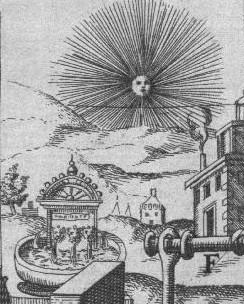
"The work of Böckler, professional architect and engineer working in Germany, is known only through drawings and references. His career as an architectural theorist, however, is well documented. His subject matter ranged from a translation of Palladio, to fortifications, heraldry, mechanics, and hydraulics. It is the latter that is the subject of this book, which presents a variety of options for the creation of fountains and the different effects that can be produced by manipulating the flow of water. The second half of the volume is devoted to a discussion of notable private residences and their grounds and includes magnificent engraved plates of fountains, grottoes, gardens, flowerbeds, and castles."

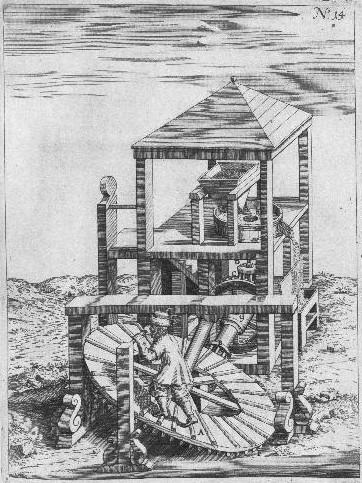
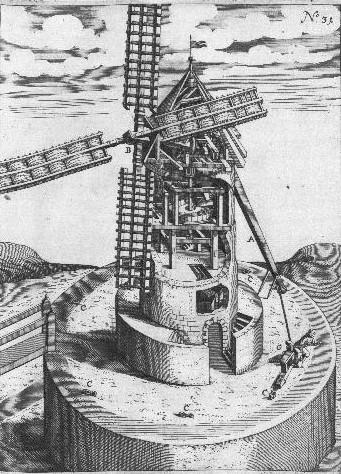
Theatrum Machinarum Novum


Alternative entry titles:

  • Vintage Mechaporn
  • MC Escher Engineering
  • Renaissance Coffee Grinding
  • others?
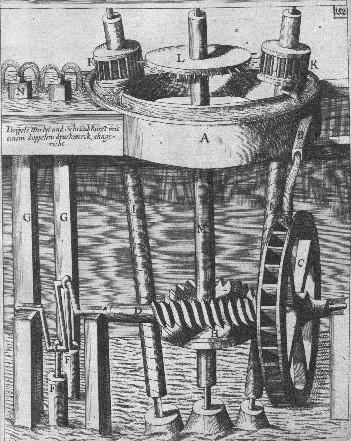
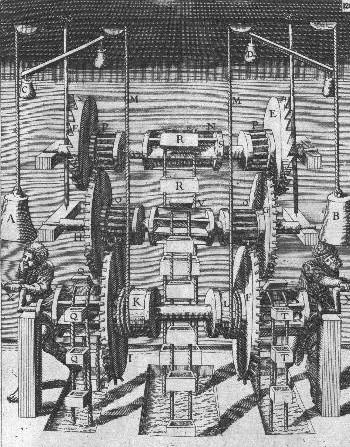
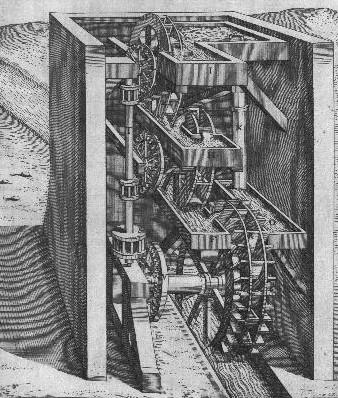
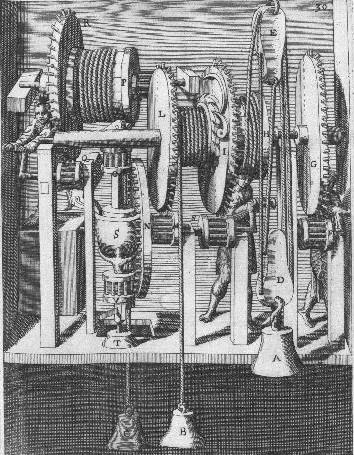
Georg Andreas Böckler (1644-1698) was a German architect, author and engineer who designed Nuremburg. The above illustrations come from his hydraulic, milling, mining and industrial design book (and homage to Archimides), Theatrum Machinarum Novum, first published in 1671.

The whole book is online at the Cornell University Kinesmatic Models for Design Digital Library website - you will find the 150-odd pages of illustrations in 'Part 2' from the drop down menu. Multiple resolution images are available.


Mushroom Magic


Lewis David von Schweinitz moved to Germany from America when he was 18 and he met Professor Albertini at the Moravian Theological Seminary. They studied fungi from the local area and in 1805 published Conspectus Fungorum in Lusatiae superioris agro Niskiensi crescentium e methodo Persooniana. Schweinitz provided 940 watercolour paintings of fungi for the 5 volume work.

The Ewell Sale Stewart Library at the Academy of Natural Sciences have about 500 Schweinitz mycological watercolours on display. This is a ~25Mb pageload, incompatible with firefox.

 
Creative Commons License