The illuminated manuscript images below are owned by Fondation Martin Bodmer in the Geneva municipality of Cologny and hosted online through the esteemed Virtual Manuscript Library of Switzerland.

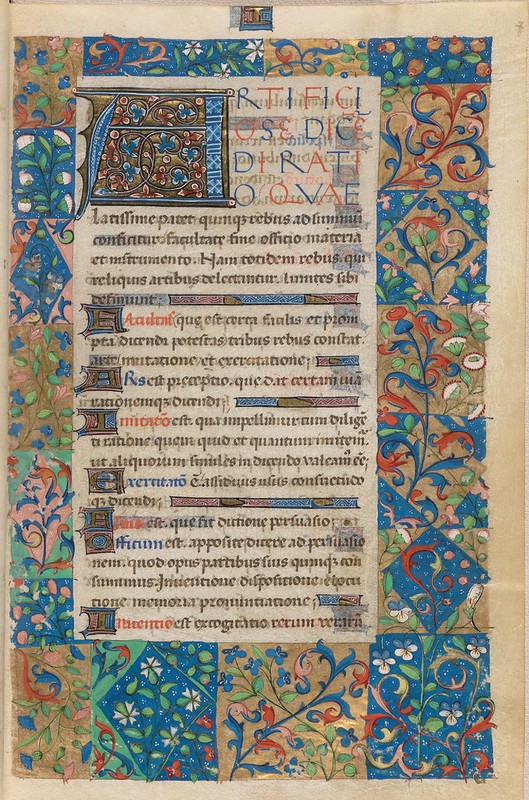
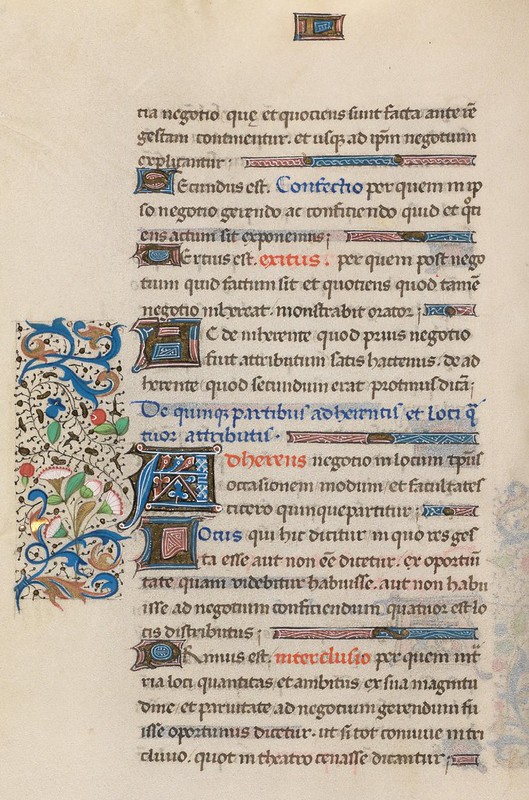
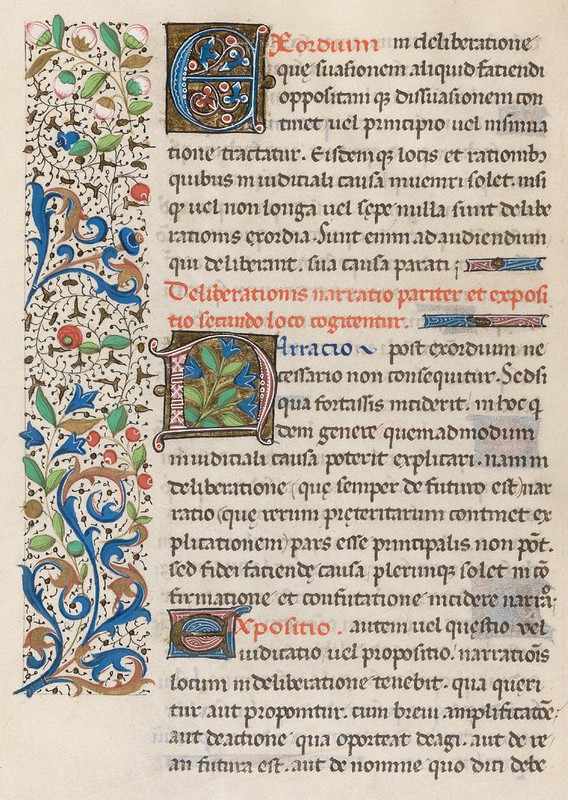
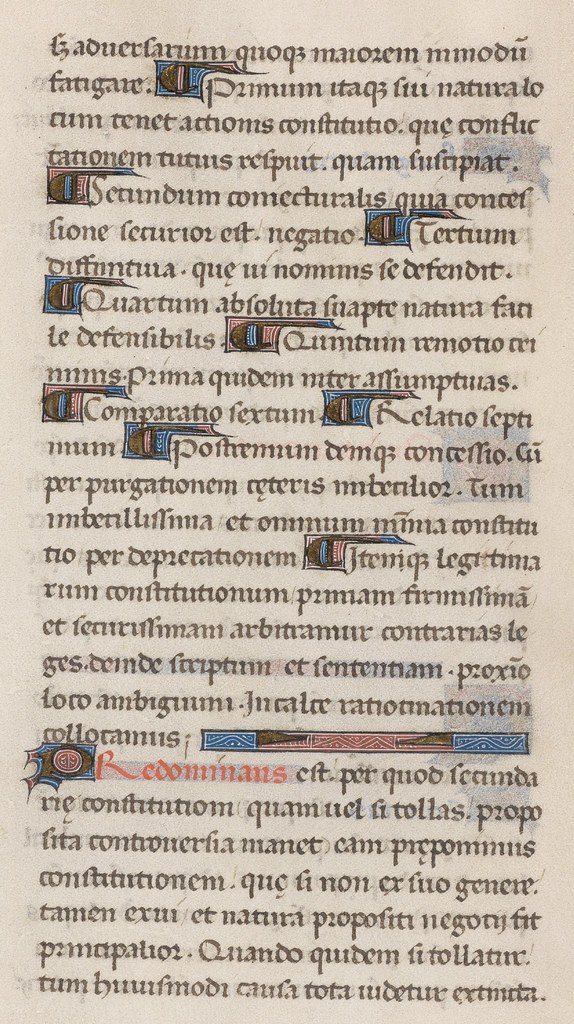
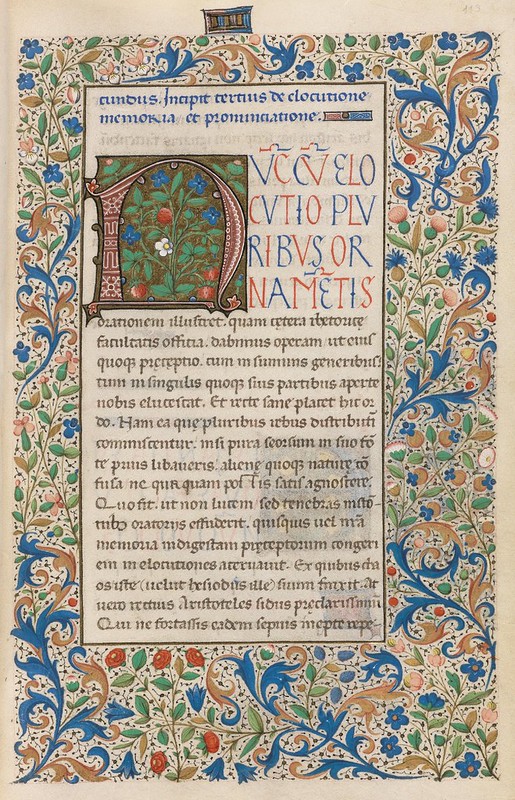


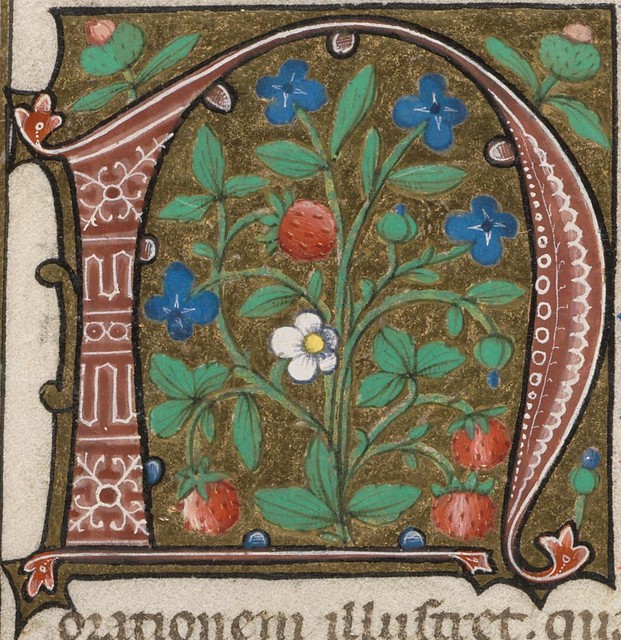
(e-codices Terms of Use)
(All the images above have been cropped slightly)
Guillaume Fichet (1433-?1480) was a leading humanist figure during the French Renaissance. As a lecturer in theology, philosophy and rhetoric, Fichet was awarded a doctorate and professorship and became Rector of the University of Paris (Sorbonne).
Together with an academic colleague, Fichet was responsible for bringing the newly created printing press to Paris for the first time in 1471, where it was installed at the Sorbonne.
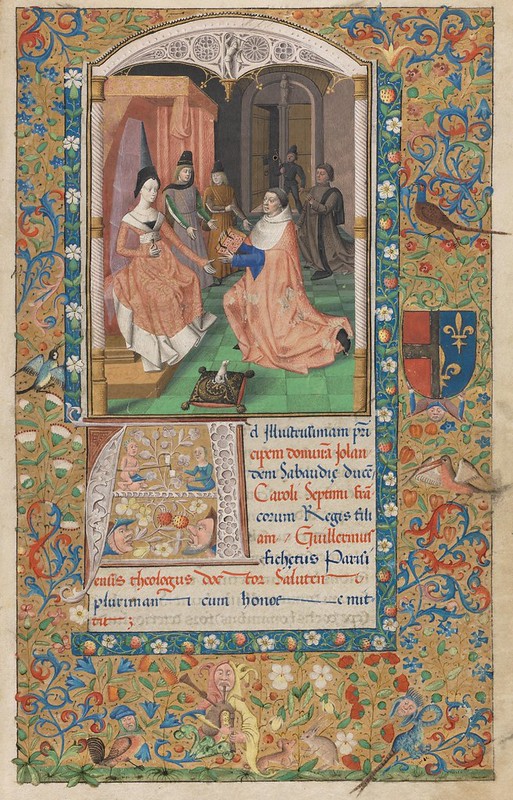
It is with some measure of irony that the manuscript seen above from 1471 - essentially a record, in Latin, of 10 years of secular teachings by Fichet on the art of rhetoric - was also among the earliest books to be published by Fichet's printing press in that first year.
The top image above shows this manuscript of Fichet's teachings being presented to a representative from the royal family who sponsored the work, Princess Yolanda of Savoy. A total of four hand-written manuscripts of 'The Rhetoric' were known to have been produced.
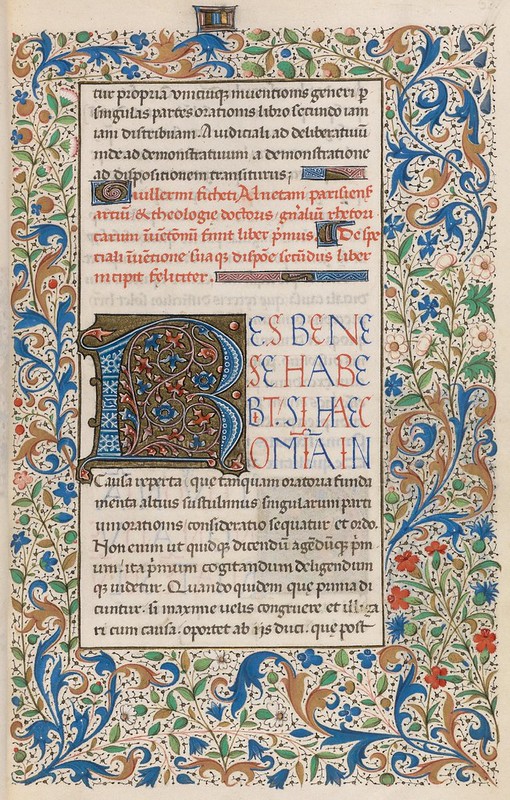
There appears to be few details online about the scriptorium origins for the Fondation Martin Bodmer illuminated manuscript version, as seen above. It consists of about 180 parchment folio pages with text by a couple of different hands (at least) in Latin, with beautiful, detailed initials and floriated border and full page decoration, including a few drollery inclusions.
- 'The Rhetorica' by Guillaume Fichet, 1471 (Cologny, Fondation Martin Bodmer Cod. Bodmer 176) is available through the Virtual Manuscripts Library of Switzerland (thumbnail page).
- 'Guillaume Fichet's Literary Gift to Duke François II of Brittany' 2009 by Diane Booton IN: Nottingham Medieval Studies is available in full from Academia.edu.
- The first page of 'The Rhetorica' by Guillaume Fichet by George Kennedy 1987 (IN: Rhetorica) is available for free via JSTOR.
- Wikipedia (on Fichet) : English & French [T].
- 'The first Paris Press; an Account of the Books Printed for G. Fichet and J. Heynlin in the Sorbonne, 1470-1472' (1897) at the Internet Archive. [Amazon]